
Why Cloud Mining Matters in Australia
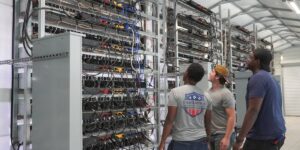
Bitcoin in Australia’s Investment Landscape
In Australia, Bitcoin has moved from experiment to recognised asset. Local exchanges, custody providers, advisers and funds make it straightforward for both retail investors and professionals to buy and hold Bitcoin. What remains far less accessible is direct participation in bitcoin mining, even though mining is the process that actually issues new coins and secures the network.
Why Traditional Mining is Difficult for Australians
Traditional bitcoin mining expects you to behave like an industrial operator. You need:
- Significant upfront capital for specialist ASIC miner hardware
- Access to cheap and reliable electricity
- Adequate cooling and ventilation
- Space for loud, heat generating machines
- Technical confidence to configure, secure and maintain equipment
For many Australians in rentals or apartments, or on high electricity tariffs, this is simply not practical. A single high end bitcoin miner running around the clock can consume as much electricity as several households combined and create constant noise.
Bitcoin Cloud Mining as an Accessible Gateway
Bitcoin cloud mining removes most of those hurdles. Instead of buying and running your own cryptocurrency miner fleet, you rent hash rate from a provider that already operates large mining farms. The provider pays for electricity and maintains the machines. You receive a share of the rewards proportional to the hash rate you have rented.
This approach is attracting Australian interest because it avoids:
- Large upfront hardware purchases
- Household power bill shocks
- Noise, heat and local infrastructure issues
Yet it still gives exposure to bitcoin mining economics.
What Is Bitcoin Cloud Mining?
Core Definition
Bitcoin cloud mining is the renting of computing power, measured as hash rate, from a third party that operates its own bitcoin miner fleet. Instead of buying ASIC miners yourself, you purchase a contract that entitles you to a certain amount of hash rate for a given period. The provider points that hash rate at the Bitcoin network and shares the rewards with you.
Cloud Mining vs Traditional Bitcoin Mining
In traditional bitcoin mining you:
- Buy and own ASIC miner hardware
- Pay your own electricity bill
- Manage cooling, networking, firmware and repairs
- Connect your machines to pools and receive rewards directly
In Bitcoin cloud mining you:
- Rent a specified amount of hash rate
- Rely on the provider to own and run the bitcoin miners
- Pay an upfront contract price plus any ongoing fees
- Receive regular payouts in Bitcoin, minus electricity and maintenance charges
Cloud mining therefore turns mining from an engineering problem into a contractual and financial one.
Cloud Computing and Storage

The closest analogy is cloud computing or cloud storage. Rather than buying a server and hosting it at home, you rent capacity in a data centre. With Bitcoin cloud mining, that “capacity” is applied to solving SHA-256 puzzles on the Bitcoin network. The hardware, noise and heat exist in the provider’s facilities, not in your living room.
Who Bitcoin Cloud Mining Suits in Australia
Cloud mining particularly suits Australians who:
- Lack space or permission for noisy equipment
- Face high residential electricity tariffs
- Prefer a more passive, less technical involvement
- Want to experiment with bitcoin mining before committing to hardware ownership
It is not a perfect solution, but it opens the door to mining for people who cannot realistically host a cryptocurrency miner at home.
How Does Bitcoin Cloud Mining Work?
Step 1: Choosing a provider and contract
Your journey starts by selecting a Bitcoin cloud mining provider and reviewing its contracts. Each contract specifies:
- Hash rate allocation (for example 20 TH/s, 100 TH/s, 1 PH/s)
- Contract term (for example 6 or 12 months)
- Upfront price and any daily or monthly fees
- Payout currency and schedule
You sign up, complete onboarding and purchase the contract that suits your budget and risk appetite.
Step 2: Allocation of Real ASIC miners
The provider runs a large farm of bitcoin miners such as Bitmain Antminer S19, S21 or T21 units. Your contract entitles you to a defined slice of the farm’s total hash rate. Internally, the operator points that portion of its ASIC miner fleet to an account representing you, although you never see or handle the machines physically.
Step 3: Connection to Bitcoin Mining Pools
The farm connects to one or more bitcoin mining pools. Pools combine hash rate from many miners to smooth the randomness of finding blocks. Rather than waiting for rare block wins, participants earn smaller, more frequent payouts.
Common pool payout structures include:
- PPS (Pay Per Share)
- PPLNS (Pay Per Last N Shares)
- FPPS and other variants
The provider chooses the pools and payout schemes, then aggregates the pool rewards.
Step 4: Fees, Margins and Payouts
When the pool pays out, the provider:
- Receives the mining rewards from the bitcoin mining pools
- Deducts electricity costs, maintenance and its own margin
- Allocates the remaining rewards across all cloud mining contracts in proportion to hash rate
Step 5: Mining Difficulty and its Effect
Bitcoin’s protocol adjusts mining difficulty roughly every 2,016 blocks, about every two weeks, in order to keep block times around ten minutes. When global hash rate rises, difficulty increases so each TH/s earns fewer coins. When hash rate falls, difficulty drops so each TH/s earns more.
In Bitcoin cloud mining:
- Your contracted hash rate is fixed
- Network difficulty is variable
- Your share of global rewards therefore changes over time
A contract that looked promising when difficulty was moderate may become marginal if difficulty climbs sharply and fees stay constant.
Profitability Inputs and Daily Experience
Your profitability depends on:
- Contracted hash rate
- The Bitcoin price in AUD and USD
- Provider fee structure and underlying power costs
- Network hash rate and difficulty path
- The timing of halving events
From your perspective, the day to day experience is simple. You log into a dashboard, check your active hash rate, view daily rewards and withdraw coins to your wallet. Underneath that simplicity is a complex interplay of hardware, markets and protocol rules.
Different Models of Cloud Mining
Hosted Mining Ownership with Outsourced Operations
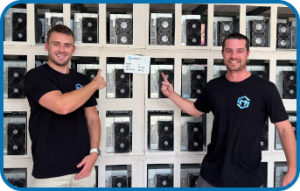
Hosted mining sits close to traditional bitcoin mining. In this model you:
- Purchase ASIC miners in your own name
- Place them in a professional facility under a hosting agreement
- Pay the host for power, cooling, maintenance and rack space
- Choose pools and receive rewards directly to your wallet
You own the bitcoin miners and therefore retain the ability to relocate or sell them. You gain professional infrastructure and access to cheaper electricity, but you still carry hardware and market risk.
Virtual Hosted Mining: Software on Cloud servers
Virtual hosted mining relies on virtual private servers rather than purpose built hardware. You rent CPU or GPU instances, install mining software and connect to a pool. For bitcoin mining, this model is largely obsolete. ASIC hardware is vastly more efficient, so CPU and GPU mining are not competitive. Virtual hosted mining is more relevant to some alternative algorithms, but it is rarely suitable for Australians who want genuine Bitcoin exposure.
Leased hash power – the classic Bitcoin cloud mining model
Leased hash power is what most people think of when they say Bitcoin cloud mining. The provider:
- Aggregates total hash rate from its bitcoin miner fleet
- Slices it into small units sold as contracts
- Assigns each customer a defined hash rate and term
You pay for the lease, and rewards are paid to you after fees. You never own any ASIC miner hardware. This model is the most accessible for Australian retail users and SMSFs experimenting with mining.
Peer to peer cloud mining – Hash Rate Marketplaces
Peer to peer cloud mining introduces a marketplace. Independent miners list spare hash rate, prices and duration. Buyers select offers and rent hash rate directly from those miners through the platform’s escrow system. In theory, this model can be more transparent. In practice, it still demands careful vetting of sellers, as misreporting and sudden shutdowns are common risks.
Managed Cloud Mining – Fully Outsourced Decisions
Managed Bitcoin cloud mining pushes abstraction further. You deposit capital into a managed plan, and the provider chooses:
- Which ASIC miners to deploy
- Which pools to connect to
- How to reallocate hash rate over time
You simply receive reports and payouts. Convenience is high, but so is your dependence on the provider’s competence and honesty. For Australians, this is the ultimate “hands off” option, yet it requires the greatest trust.
Which models fit Australian investors?
For most Australians:
- Leased hash power and managed cloud mining are likely entry points
- Hosted mining suits those who plan to scale and value hardware ownership
- Virtual hosted mining is rarely appropriate for bitcoin mining
- Peer to peer marketplaces are viable only if you are prepared to do serious due diligence
Cloud Mining vs Home Bitcoin Mining in Australia
Home Bitcoin Mining in Australian conditions
Home bitcoin mining means installing one or more ASIC miners in your house or apartment, connecting them to power and internet and running them continuously. This raises several issues:
- Residential electricity tariffs often sit around 25 to 35 cents per kWh
- A modern high end bitcoin miner can use around 3.6 to 3.7 kW
- Daily consumption can exceed 80 kWh per unit
- Noise levels are comparable to a constant vacuum cleaner
- Summer heat adds strain to both miners and your home
Unless you have access to unusually cheap electricity or substantial excess solar, those power costs can quickly overwhelm mining revenue.
Practical Constraints: space, power and neighbours
Beyond raw economics, Australians face practical constraints:
- Switchboards and wiring may not support additional high loads
- Strata or landlords may prohibit loud equipment or modifications
- Neighbours may complain about noise and vibration
- Heat output may make rooms uncomfortable, especially in summer
Home mining demands both technical adjustments and household compromises.
Bitcoin Cloud Mining in Contrast
With Bitcoin cloud mining you:
- Avoid on site hardware entirely
- Do not pay a residential power bill linked to mining
- Eliminate noise, dust and heat in your home
- Scale exposure simply by buying more hash rate
The trade off is that:
- Provider margins eat into potential profits
- You have limited control over the mining environment
- You do not own any hardware that can be sold later
Cloud mining is therefore more convenient but often less economically efficient per unit of hash rate.
Example comparison: A$1,000 home mining vs A$1,000 cloud contract
Imagine you have 1,000 Australian dollars to allocate. You could:
- Buy a share of a second hand bitcoin miner and run it at home, paying retail electricity prices
- Purchase 1,000 dollars of Bitcoin cloud mining contracts for equivalent hash rate
On standard residential tariffs, the home miner may cost more in electricity each day than it earns in Bitcoin, particularly when difficulty is high. You end up subsidising mining with your household budget. The cloud contract caps your direct financial exposure at the upfront payment, yet returns are reduced by provider fees and there is no salvage value.
In both cases, poor market or difficulty conditions can produce losses. However, for most Australians on grid power, home bitcoin mining is challenging, and cloud mining is one of the few pathways to participation without immediately facing negative daily cash flow.
Cloud Mining vs Bitcoin Miner Hosting Services
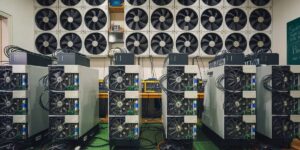
What is Bitcoin Miner Hosting?
Bitcoin miner hosting is a middle ground between home mining and Bitcoin cloud mining. You:
- Buy ASIC miners outright
- Ship them to a professional mining facility
- Sign a hosting agreement that covers power, cooling, rack space and maintenance
- Pay hosting fees, usually based on kWh usage plus a service margin
- Receive rewards directly from the pool to your own wallet
You retain ownership of the bitcoin miners, which gives you control and optionality.
Benefits of ASIC Miner Hosting
Hosting offers several advantages:
- Access to cheaper electricity than Australian household tariffs
- Professional grade cooling and power distribution
- 24/7 monitoring and on site technicians
- Ability to move miners between hosts or sell them later
For Australians, the main attraction is accessing industrial or wholesale power rates that would be impossible at home, while still keeping hardware ownership.
Drawbacks compared with Bitcoin Cloud Mining
The main drawbacks are:
- Higher initial capital outlay for ASIC miner purchases
- Logistics around procurement, shipping and insuranc
- Need for more knowledge about hardware models and lifecycles
While cloud mining converts everything into simple contracts, hosting requires more planning, but it can deliver more attractive long term economics.
Mining Store Hosting in the Australian context
Mining Store is a prominent Australian provider that combines hardware sales, education and hosting. Its hosting services offer:
- Data centres optimised for bitcoin mining
- Transparent pricing for rack space and electricity
- Access to competitive power rates that may be as low as 0.069 dollars per kWh in some configurations
- Integration with modern ASIC miners such as the Bitmain Antminer T21
For Australians, hosting with such a provider can bridge the gap between unworkable home mining and opaque Bitcoin cloud mining contracts.
Positioning Cloud Mining, Home Mining and Hosting
On a spectrum:
- Home bitcoin mining offers full control but rarely works on standard Australian tariffs
- Bitcoin cloud mining offers simplicity and low entry cost but no hardware ownership
- ASIC miner hosting combines ownership with professional infrastructure, offering a more balanced approach for serious participants
The Role of Bitcoin Mining Pools in Cloud Mining
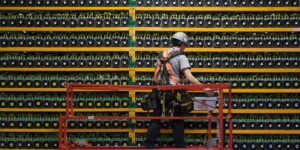
What are Mining Pools?
Mining pools are cooperatives of miners who combine their hash rate and share rewards. Instead of each bitcoin miner waiting for rare block finds, pools deliver:
- More predictable income streams
- Lower variance for individual miners
- Economies of scale in block discovery
Pools have become essential in modern bitcoin mining.
How providers use pools in Bitcoin cloud mining
Cloud mining providers connect their farms to large pools and direct all hash rate, including that leased to customers, into those pools. The pools:
- Track how many valid shares each contributor submits
- Distribute block rewards based on contribution and payout scheme
- Provide performance statistics that can be audited
The provider then converts pool payouts into customer payouts under the terms of each contract.
Payout schemes: PPS vs PPLNS and others
Two common payout schemes are:
- PPS (Pay Per Share) – miners are paid a fixed amount per valid share submitted, smoothing income but usually attracting higher pool fees
- PPLNS (Pay Per Last N Shares) – rewards are based on actual blocks found, with more variance but potentially lower fees and slightly higher long term returns
Variants like FPPS adjust fee handling, but the principle remains similar.
Why Australian Cloud Miners should care about Pools
Australians using Bitcoin cloud mining should understand pools because:
- Pool choice affects variability and size of payouts
- Pool fees influence net rewards
- Transparent providers publish pool information, allowing cross checking of reported hash rate
Later, if you move into hosted or owned ASIC miners, you will select and manage pool connections directly. Cloud mining can therefore be a way to learn pool dynamics indirectly.
Contract Structures and Payout Mechanisms in Cloud Mining
Fixed term Bitcoin Cloud Mining Contracts
Fixed term contracts are the most familiar format. They specify:
- A defined hash rate allocation
- A fixed duration, typically 6, 12, 24 or 36 months
- An upfront payment and possibly daily maintenance fees
Some include clauses that suspend or terminate the contract if revenue drops below operating costs for a set number of days. This protects the provider but can crystallise losses for customers.
Hash rate Marketplaces and Flexible Contracts
Hash rate marketplaces treat hash rate as a commodity. Miners list available hash rate and prices, and buyers:
- Bid for hash rate for specific durations
- Adjust positions in response to price and difficulty changes
- Treat mining more like active trading than passive investment
This structure offers flexibility but demands ongoing attention and understanding of mining economics.
“Lifetime” and Open Ended Contracts
Some platforms advertise open ended or “lifetime” Bitcoin cloud mining contracts that continue as long as mining remains profitable. In reality, they usually reserve the right to end contracts when revenue fails to cover costs. Historically, this category has been associated with unrealistic promises and, in some cases, outright scams.
Payout schedules and linkage to Pools

Most Bitcoin cloud mining providers:
- Accrue rewards daily in internal balances
- Pay out to customer wallets daily, weekly or monthly
- Combine multiple pool payouts into a single customer ledger
The underlying pool payout scheme and the provider’s own fee structure determine how smooth or volatile your payouts appear.
Why Contract Length Matters for Australians
For Australian investors, contract length is critical because:
- Bitcoin’s price and difficulty can swing dramatically inside a year
- Exchange rate movements between AUD and USD add another layer
- Halving events mechanically cut block rewards on a known schedule
Shorter contracts and flexible marketplace positions allow you to adapt. Long multi year commitments that cross halving events without clear adjustment terms embed substantial uncertainty.
Profitability Factors in Bitcoin Cloud Mining
Contract price, fees and break even analysis
The starting point for profitability is contract pricing. You should examine:
- Cost per TH/s of hash rate
- Any daily or monthly maintenance fees
- Pool fees and withdrawal fees
Then ask: “If I owned equivalent ASIC miners directly, what would my revenue and costs look like?” If the cloud contract implies an underlying electricity price or margin that is clearly unfavourable, break even may be unrealistic.
Hardware Efficiency and Model choice

Providers that use modern ASIC miners such as:
- Bitmain Antminer S21
- Bitmain Antminer T21 190 TH/s
achieve higher efficiency measured in joules per terahash. That reduces electricity cost per unit of hash rate. If a cloud provider is mining mainly with older generations, its margins are thin and its customers’ contracts are at greater risk when difficulty rises or power prices increase.
Global Hash Rate, Difficulty and their Trajectory
Bitcoin’s global hash rate has historically trended upward as more bitcoin miners come online. Difficulty adjustments keep block times stable but constantly shift revenue per TH/s. For Bitcoin cloud mining contract analysis, this means:
- Do not assume today’s difficulty will remain unchanged
- Expect difficulty to rise over the life of a contract, especially when new hardware is shipping in volume
- Recognise that higher difficulty shrinks your share of block rewards
Electricity costs at the provider’s Locations
Cloud providers can access:
- Very cheap hydro, wind, solar or geothermal power
- Stranded or flared gas that is otherwise wasted
- Industrial tariffs unavailable to households
If those advantages are genuine and partly shared with customers, cloud contracts stand a chance of being competitive. If not, providers must either subsidise contracts or charge high fees, both of which undermine long term viability.
Market volatility and exchange rates
Bitcoin’s price can move rapidly in both directions. For Australians, AUD/USD movements add volatility. A contract that barely breaks even at one price and exchange rate may become unprofitable if BTC price drops or if the Australian dollar strengthens substantially.
Halving events and structural revenue cuts
Every halving event cuts the block subsidy in half. Unless:
- Bitcoin’s price rises materially
- Difficulty falls because inefficient miners shut down
- Providers adjust fees or optimise hardware
revenue per TH/s declines sharply. Any Bitcoin cloud mining contract that spans a halving is inherently vulnerable.
Using profitability calculators before signing
Australians should use mining profitability calculators as a standard step. These tools let you:
- Input the hash rate and power draw for a given ASIC miner
- Set electricity prices, pool fees and hardware costs
- See projected profits under different Bitcoin prices and difficulty levels
Even though you are not running the hardware yourself, the same maths applies to cloud contracts. It helps you understand what the provider must earn before it can offer you a fair deal.
The Impact of Bitcoin Halving on Cloud Mining Contracts
How Bitcoin’s halving schedule works
Bitcoin’s design includes a fixed issuance schedule. Roughly every 210,000 blocks, the block reward halves. This has already taken rewards from 50 BTC down through 25, 12.5, 6.25 and, most recently, 3.125 BTC per block. The next halving will cut it again to 1.5625 BTC per block.
Direct impact on miner revenue and hash rate
At the moment of halving:
- New coins per block are reduced by 50 percent
- Revenue per TH/s is halved if price and difficulty do not adjust immediately
- Inefficient miners may switch off if they become unprofitable
- Difficulty may later adjust as a response to miners leaving
This process creates a period of uncertainty in which mining economics can change quickly.
What halving means for Bitcoin cloud mining contracts
For Bitcoin cloud mining:
- Contracts that were profitable pre halving can become marginal overnight
- Multi year contracts may see their economics fundamentally altered mid term
- Providers may change fee structures or terminate unprofitable contracts
If you sign a contract six months before a halving, you must be prepared for a step change in revenue per TH/s. The Bitcoin price may or may not offset this.
Planning horizons for Australian investors
Australian investors should consider:
- Avoiding long Bitcoin cloud mining commitments that extend well beyond the next halving unless terms explicitly address post halving conditions
- Treating pre halving contracts as short term, speculative positions rather than reliable income streams
- Reviewing the provider’s communication around halving and asking how they model it internally
Halving is not an unexpected event. Any provider that fails to discuss it candidly deserves scrutiny.
Risks and Drawbacks of Cloud Mining
Scam and fraud prevalence
Bitcoin cloud mining has a long history of scams. Typical patterns include:
- Platforms that collect deposits and never run real bitcoin miners
- Pseudo “lifetime” contracts funded by money from new users rather than mining
- Sudden disappearances once marketing has attracted enough capital
Guaranteed returns, secretive operations and anonymous teams are strong warning signs.
Counterparty and business risk
Even legitimate providers can:
- Mismanage funds
- Misjudge hardware purchases
- Fail to hedge electricity contracts
- Become insolvent during market downturns
As a cloud mining customer without hardware ownership, you have limited recourse if the provider fails.
Profitability volatility and contract rigidity
Cloud mining returns can be highly volatile. You are exposed to:
- Bitcoin price swings
- Difficulty and hash rate changes
- Fee adjustments
- AUD exchange rate movements
Yet your contract terms are usually fixed. If conditions move against you, you cannot reconfigure hardware or change strategy. You are simply locked into a less favourable deal.
Lack of hardware ownership and exit options
Without ownership of ASIC miner hardware:
- You cannot sell miners to recover capital
- You cannot relocate hardware to a cheaper host
- You cannot repurpose machines to mine other SHA-256 coins easily
Your contract behaves more like a pre paid service subscription than an asset with residual value.
Security risks and cryptojacking
Cloud mining operations and user accounts can be targets for:
- Cryptojacking, where attackers hijack compute resources to run unauthorised cryptocurrency miner software
- Platform hacks that compromise payout systems
- Phishing and credential theft aimed at customers
A single major incident can disrupt payouts, damage the provider’s finances and affect contract holders.
Regulatory uncertainty for Australians
Australian regulators such as ASIC and AUSTRAC take an increasing interest in crypto schemes. Some Bitcoin cloud mining offerings may fall within definitions of managed investment schemes or other financial products. Where providers are offshore, enforcement can be difficult, but Australian participants may still face complications if a platform is later deemed non compliant.
Given these risks, Australians should approach Bitcoin cloud mining with realistic expectations and only allocate capital they can afford to lose.
Cryptocurrencies Beyond Bitcoin in Cloud Mining
Alternative coins commonly offered
Many cloud mining providers supplement Bitcoin with other coins, including:
- Litecoin (LTC), often mined alongside Dogecoin using Scrypt ASICs
- Dash (DASH), using the X11 algorithm
- Zcash (ZEC), focused on privacy and running on Equihash variants
- Monero (XMR), using ASIC resistant, CPU friendly algorithms such as RandomX
Each has its own mining ecosystem, hardware profile and market liquidity.
Pros and cons of altcoin cloud mining for Australians
Potential benefits include:
- Diversification across different networks and reward dynamics
- Occasional periods where specific altcoins are temporarily more profitable to mine than Bitcoin
Risks include:
- Thinner liquidity and higher price volatility
- Greater sensitivity to changes in mining hardware availability
- Higher odds that a network loses relevance or support over time
For Australian investors, Bitcoin usually remains the anchor asset, while altcoin mining contracts may form only a small, speculative satellite.
Ethereum’s transition and non-mineability
A crucial point is that Ethereum moved from proof of work to proof of stake in 2022. It is no longer mineable. Any Bitcoin cloud mining provider advertising Ethereum mining is either badly out of date or intentionally misleading. Australians should treat such marketing as a major red flag.
Taxation of Cloud Mining in Australia
ATO view on mined coins as income
The Australian Taxation Office generally treats crypto assets obtained through mining as ordinary income when received. For Bitcoin cloud mining, this means:
- Each payout of Bitcoin is assessable income
- The amount included is the Australian dollar value at the time of receipt
- It applies whether you mine via hardware you own or rented hash rate
Cloud mining payouts are not normally treated as salary. Depending on the scale and organisation, they may be considered business income or income from a profit making undertaking.
Capital gains when disposing of mined Bitcoin
When you later sell, swap or spend mined Bitcoin:
- A capital gains tax (CGT) event occurs
- Your cost base is the value when you received the coins
- Any gain between that value and the disposal price may be subject to CGT
- Holding for more than twelve months may qualify for CGT discounts, depending on structure
This combination of income tax at receipt and CGT at disposal makes accurate records essential.
Record keeping obligations for Australian cloud miners
Australians using Bitcoin cloud mining should maintain:
- Copies of all contracts and invoices
- Detailed payout histories, including dates and amounts
- Australian dollar values at the time of each payout
- Wallet addresses used for receiving and holding mining rewards
- Records of eventual sales or swaps of mined coins
Without these records, tax reporting becomes difficult and error prone. Given the ATO’s increasing focus on crypto, careful documentation is prudent.
When to seek professional advice
Because tax law is complex and individual circumstances differ, anyone planning significant cloud mining or bitcoin mining activity should consult a tax adviser who understands both cryptocurrency and Australian rules. Good advice upfront can prevent expensive mistakes later.
Evaluating Cloud Mining Providers: What Australians Must Consider
Reputation and operational transparency
When assessing a Bitcoin cloud mining provider, start with:
- Visible company details and legal entities
- Verifiable data centre locations
- Photographs or videos of actual ASIC miner installations
- Evidence of long term operation rather than a newly created website
Opaque or anonymous providers warrant scepticism.
Understanding cost structures
Contract documentation should clearly explain:
- Price per TH/s or per contract
- Daily, weekly or monthly maintenance fees
- Pool and withdrawal fees
- Conditions under which fees may change
If costs are vague or scattered across multiple documents, treat that as a warning sign.
Contract length, flexibility and exit terms
Australians should consider:
- Whether contracts are short enough to manage risk sensibly
- How easy it is to stop or pause mining if markets deteriorate
- What happens if mining becomes unprofitable after fees
Rigid, multi year commitments with harsh penalties or no clear exit mechanisms increase risk.
Security measures and user protection
Verify that the provider supports:
- Strong authentication for customer accounts
- Secure wallet infrastructure and withdrawal controls
- Regular security audits or assessments
A cavalier attitude towards security is incompatible with holding customer funds.
Community feedback and independent reviews
Seek:
- Longstanding community discussions, not just curated testimonials
- Reports from technically literate users
- Balanced feedback that highlights both strengths and weaknesses
Be cautious of review sites that appear to exist solely to promote specific providers.
Regulatory fit for Australians
Consider whether:
- The provider’s marketing complies with ASIC guidance on crypto assets
- The business has engaged with AUSTRAC obligations where applicable
- There is any history of regulatory warnings or enforcement
While many Bitcoin cloud mining platforms operate offshore, Australians should still avoid products that appear to breach local laws.
Red flags to avoid
Strong red flags include:
- Guaranteed fixed returns with no caveats
- Heavy emphasis on referrals and multi level bonuses
- Lack of verifiable hardware or pool information
- Aggressive pressure to “invest now”
Any one of these is reason to walk away.
Security And Scam Prevention in Cloud Mining
Understanding cryptojacking and malicious mining
Cryptojacking describes the unauthorised use of someone else’s compute resources to run cryptocurrency miner software. Attackers compromise servers, desktops or cloud instances and secretly direct their hash rate to wallets they control. This can:
- Degrade performance for legitimate users
- Increase electricity costs for victims
- Distort cloud providers’ operations
A provider that suffers large scale cryptojacking may have difficulty delivering promised hash rate to cloud mining customers.
Choosing legitimate, security conscious providers
To reduce risk, Australians should favour Bitcoin cloud mining providers that:
- Publicly document security practices
- Support strong authentication and withdrawal protections
- Have a track record of investigating and disclosing incidents
The absence of any security information is a worrying sign in an industry that is a frequent target for attackers.
Protecting your accounts and mining rewards
On the personal side:
- Use unique, strong passwords and password managers
- Enable two factor authentication where available
- Be suspicious of unsolicited emails or messages asking you to log in
- Check URLs carefully to avoid phishing sites
Once you receive Bitcoin payouts:
- Withdraw meaningful balances to wallets you control
- Consider hardware wallets for larger holdings
- Integrate mining rewards into your broader security and custody plan
Due diligence for Australian businesses
Australian businesses engaging in cloud mining at scale should:
- Treat provider selection as a vendor risk management exercise
- Require documentation of security controls and incident handling
- Embed mining arrangements into broader cyber security and compliance frameworks
This helps ensure that mining exposure is aligned with corporate governance standards.
Environmental and Sustainability Considerations
Australia’s energy mix and retail prices
Australia’s electricity system is undergoing a major transition. Coal still supplies a substantial portion of power in several states, yet solar and wind penetration has increased sharply and national targets call for a much higher share of renewables in the coming decade. Retail electricity prices, however, remain elevated for households, which shapes both the economics and perception of home bitcoin mining.
Running energy intensive bitcoin miners in urban homes, particularly where the grid is still heavy on fossil fuels, can clash with personal and public sustainability priorities.
How Bitcoin cloud mining intersects with energy sources
Many Bitcoin cloud mining providers locate hardware where energy is:
- Cheap
- Abundant
- Often produced from hydro, wind, geothermal or other low carbon sources
By doing so, they seek both cost advantages and a more favourable environmental profile. Some also utilise stranded gas or otherwise wasted energy, arguing that this reduces overall emissions compared with flaring.
For Australians, this raises questions about:
- The actual energy mix behind their rented hash rate
- Whether providers’ sustainability claims stand up to scrutiny
- How comfortable they are with outsourcing energy decisions to foreign jurisdictions
Sustainable mining and domestic hosting
Domestic ASIC miner hosting can also support sustainability objectives. Australian hosts can:
- Choose locations with growing renewable penetration
- Invest in efficient cooling systems to minimise waste
- Participate in demand response programmes that help stabilise the grid
While power may not be as cheap as in some overseas regions, transparency and alignment with local climate policy are strengths.
Weighing ethics, cost and transparency
Ultimately, Australians need to balance:
- Economic outcomes from bitcoin mining and Bitcoin cloud mining
- Environmental impact and energy sources
- Confidence in provider claims and reporting
Sustainability is no longer a peripheral issue. For many, it is central to deciding whether and how to engage with mining.
Is Bitcoin Cloud Mining Worth It in Australia?
Advantages of Bitcoin cloud mining
Bitcoin cloud mining offers:
- Low barriers to entry compared with buying ASIC miners
- No need for electrical upgrades or cooling systems at home
- No household noise and heat from bitcoin miners
- Simple dashboards that turn complex operations into clear metrics
For beginners, the ability to see mining rewards accumulate in real time can be a powerful educational experience.
Limitations and drawbacks
Against those advantages, cloud mining suffers from:
- Thin or negative margins once fees are considered
- Significant scam and counterparty risk
- No hardware ownership or salvage value
- High sensitivity to Bitcoin price, difficulty and halving cycles
It is not a reliable substitute for long term investment strategies based on simply buying and holding Bitcoin.
Suitable role in an Australian portfolio
For most Australians, Bitcoin cloud mining is best viewed as:
- A speculative, high risk satellite position
- An educational tool for learning bitcoin mining dynamics
- A stepping stone towards more transparent arrangements such as ASIC miner hosting
Allocations should be sized with the assumption that some or all of the capital might not be recovered.
Why many shift towards ASIC miner hosting
More experienced participants often gravitate toward:
- Owning efficient ASIC miner hardware
- Hosting it in professional facilities with competitive electricity rates
- Retaining control over firmware, pools and long term strategy
This approach demands more planning and capital but aligns incentives better and provides asset ownership that cloud contracts cannot match.
Mining Hardware Spotlight: Bitmain Antminer T21 190 TH/s Bitcoin miner
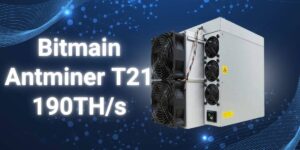
Overview of the T21 as a next generation ASIC miner
The Bitmain Antminer T21 190 TH/s is a next generation ASIC miner designed specifically for bitcoin mining on the SHA-256 algorithm. It embodies the latest advances in chip design and thermal engineering, delivering high hash rate with excellent energy efficiency.
Performance, efficiency and reliability
Key characteristics include:
- Hash rate around 190 terahashes per second
- Power consumption typically in the 3.6 to 3.7 kilowatt range
- Energy efficiency approximately 19 joules per terahash
Compared with older models like the S19 series, the T21 delivers more hashing power for the same or lower electricity consumption. Its cooling system and component quality are optimised for 24 hour operation in dense, professional environments, which reduces failure rates and maintenance needs.
Why the T21 suits hosting and professional mining
For both large farms and hosted bitcoin mining setups, the T21 offers:
- High hash rate density per rack
- Predictable performance across varied operating conditions
- Compatibility with standard data centre power infrastructure
Australian investors using hosting services benefit from the T21’s efficiency because electricity costs are a dominant driver of profitability. The more efficient the bitcoin miner, the more competitive it remains at higher difficulty levels.
Buying the T21 from Mining Store
Mining Store supplies the Bitmain Antminer T21 190 TH/s to Australian customers. Its role includes:
- Sourcing T21 units directly from reliable channels
- Handling logistics, customs and shipping
- Providing local support for configuration and deployment
Typical delivery time from order to arrival is short, with options for domestic and international delivery using major couriers and signature on receipt. Buyers can opt to have units shipped to their own premises or directly to hosting facilities.
Hosting, wholesale and consulting services
Beyond simple sales, Mining Store supports:
- Hosting of T21 units in professional mining facilities
- Wholesale pricing for orders ranging from 10 to thousands of cryptocurrency miners
- Consulting on site design, electrical infrastructure and long term scaling strategies
This ecosystem allows Australians to progress from initial hardware purchases to fully fledged bitcoin mining operations.
Positioning the T21 for Australian miners
In the Australian context, where electricity cost and infrastructure constraints weigh heavily, the Antminer T21 190 TH/s is a strong candidate ASIC miner. Paired with hosting through Mining Store or similar providers, it allows local investors to build efficient, scalable mining fleets that stand a far better chance of long term profitability than ad hoc home mining or opaque Bitcoin cloud mining contracts.
Conclusion: Cloud Mining And Australia’s Mining Future
Cloud mining as a gateway, not a destination
Bitcoin cloud mining gives Australians a gateway into bitcoin mining without the practical and financial burdens of owning and operating ASIC miners at home. It turns noisy, power hungry infrastructure into a simple set of contracts and dashboards. For curious newcomers and small scale investors, this can be an appealing way to learn.
However, cloud mining is far from a guaranteed path to profit. Margins are squeezed by provider fees, scams are common, and you never own any bitcoin miners that can be sold or repurposed. Halving events and difficulty changes can sharply erode returns, particularly for longer contracts.
Why ASIC miner hosting often offers a stronger path
For Australians seeking a more robust, transparent and potentially profitable mining strategy, ASIC miner hosting with reputable partners frequently offers a better balance. By:
- Owning efficient hardware such as the Bitmain Antminer T21 190 TH/s
- Hosting that hardware in professionally managed facilities
- Accessing electricity rates that are far lower than household tariffs
- Retaining control over pool selection and long term strategy
investors can align economic incentives more closely with their own interests.
How Mining Store can support Australian miners
Mining Store provides personalised guidance tailored to the Australian market, helping you:
- Decide whether bitcoin mining, Bitcoin cloud mining or hosting fits your goals
- Use software tools and dashboards to track cryptocurrency miner performance
- Understand how energy costs, halving events and tax treatment affect profitability
- Navigate ATO, ASIC and AUSTRAC considerations with clear, practical frameworks
Mining Store complements this advisory layer by supplying and hosting ASIC miners such as the Antminer T21, delivering:
- Professional hosting infrastructure in and for Australians
- Competitive, transparent electricity rates
- Cooling, uptime monitoring and maintenance under one roof
Together, they create a coherent path from initial curiosity about bitcoin mining to carefully structured, Australian focused mining operations.
If you are considering Bitcoin cloud mining or moving towards hosted hardware, the logical next step is to book a free consultation with BetMate. With expert support, you can design a strategy that reflects Australian energy realities, regulatory settings and your own risk tolerance, while deciding where cloud mining, hosting and direct Bitcoin exposure each fit in your long term plan.