
Bitcoin Cloud Mining and Australia’s Changing Crypto Mining Landscape

The world of cryptocurrency mining in Australia has evolved significantly over the past decade. What once started as DIY operations in garages has transitioned into large-scale industrial setups, both onshore and offshore. As Bitcoin’s network difficulty has steadily increased and ASIC (Application-Specific Integrated Circuit) technology has improved, Australian miners are facing new challenges that demand more efficient and cost-effective solutions.
At the same time, the rise of cloud mining and hosted mining has given miners the ability to scale operations quickly, without the need to maintain costly infrastructure at home. While both methods have their advantages, they also come with distinct challenges. In Australia’s unique environment where electricity costs are relatively high, and regulations are tightening miners must carefully evaluate these options to ensure profitability and sustainability.
In this post, we will explore the two main models of Bitcoin mining: cloud mining and hosted mining. Both offer scalability and accessibility but differ sharply in terms of operational control, profitability, and risk exposure. We will break down each model’s features, advantages, and drawbacks while considering Australia’s high electricity costs and regulatory landscape.
Understanding Bitcoin Mining: The Foundation of the Network
How Bitcoin Mining Works
Bitcoin Miners compete to solve cryptographic puzzles, and the first one to succeed adds a block to the Bitcoin blockchain. In return, the miner receives block rewards, which currently stand at 3.125 BTC (following the 2024 halving). Additionally, miners also earn transaction fees for verifying transactions within the blocks they add.
Mining requires specialised hardware ASICs that is capable of performing trillions of hash calculations per second. The primary metric used to measure the computational power of a miner is the hash rate. A higher hash rate results in a greater likelihood of solving a block and earning a reward.
Key Concepts in Bitcoin Mining
- Hash Rate: This measures the computational power of a miner. It indicates the number of hashes an ASIC miner can compute per second. The higher the hash rate, the greater the chances of solving a block.
- Difficulty Adjustments: Bitcoin adjusts the difficulty of mining every 2,016 blocks to ensure that a new block is added to the blockchain approximately every 10 minutes. This keeps the mining process stable even as more miners join the network.
- Electricity Consumption: Mining consumes significant energy, with the cost of electricity often being the largest operational expense. Energy efficiency directly impacts the profitability and security of mining operations.
As Bitcoin mining has become more specialised, solo mining is no longer a viable option for most miners. Instead, miners are turning to cloud mining or hosted mining to stay competitive and profitable.
What Is Bitcoin Cloud Mining?
Cloud Mining Defined

Bitcoin Cloud mining is a model that allows individuals to mine Bitcoin without owning or maintaining any hardware. Instead, users rent computational power from third-party data centres, often located in regions with cheap energy. The cloud mining provider manages the hardware, electricity, and cooling infrastructure.
How Cloud Mining Works
- Contract Agreement: The miner signs a contract with a cloud mining provider, agreeing to rent a certain amount of hashing power.
- Payment: The miner typically pays an upfront or periodic fee, often in USD, BTC, or USDT.
- Power Allocation: The provider allocates a portion of its computational power to the miner.
- Earnings Distribution: The provider sends earnings to the miner based on the share of the hash rate they own, after deducting maintenance and operational fees.
Advantages of Cloud Mining
- No Hardware Purchase or Maintenance: Since the miner does not own any hardware, they don’t need to worry about setting up or maintaining mining rigs.
- Lower Technical Barrier: Cloud mining is ideal for those who are not tech-savvy and wish to enter the Bitcoin mining world with minimal hassle.
- Scalability: Miners can easily scale their operations by purchasing additional hash power from the provider, allowing for growth without the need for physical infrastructure.
- No Noise or Electricity Bills: Mining operations typically create significant heat and noise, which is not a concern for cloud miners. Additionally, they do not have to pay for high electricity costs.
Drawbacks of Cloud Mining
- Lack of Control: Miners have no control over the hardware or configuration of the mining rigs. This limits their ability to optimise performance or switch coins.
- Hidden Fees: Many cloud mining providers have opaque pricing structures and may charge hidden or poorly disclosed fees, which can eat into profitability.
- Risk of Scams: The cloud mining space is notorious for scams, with many providers shutting down unexpectedly or engaging in fraudulent practices.
- Limited Flexibility: Cloud miners are often locked into long-term contracts with limited options to adjust mining strategies or configurations based on market conditions.
What Is Hosted Bitcoin Mining?
Hosted Mining Defined
Hosted mining is a hybrid model that offers miners more control while removing the logistical burden of operating hardware at home. In this model, miners own the ASIC machines but place them in professional mining facilities managed by a third-party hosting provider, such as Mining Store Australia.
How Hosted Mining Works
- Purchase ASICs: Miners purchase the necessary ASIC hardware (such as the Bitmain Antminer S21).
- Facility Setup: The ASIC units are installed in a mining facility with optimised cooling, electricity, and internet access.
- Maintenance and Management: The hosting provider manages day-to-day operations, including technical maintenance, uptime, and troubleshooting.
- Ownership and Earnings: Miners retain ownership of the hardware and mining output, paying a monthly hosting fee that typically covers electricity, cooling, and management services.
Why Hosted Mining Appeals to Australians
Australia’s high residential electricity costs (often above AUD 0.25/kWh) make home mining less profitable. Hosted mining offers a way for Australians to benefit from bulk power rates (often below AUD 0.10/kWh) and professional cooling, all while avoiding the technical headaches of managing mining equipment at home.
In particular, Mining Store Australia provides Australian miners with renewable energy-powered hosting facilities, offering competitive electricity rates, technical expertise, and transparent pricing.
The Role of Bitcoin Mining Pools in Cloud and Hosted Operations

In both cloud mining and hosted mining, miners typically join mining pools to increase their chances of earning consistent rewards.
Mining Pools Explained
A mining pool is a group of miners who combine their hashing power to increase the likelihood of solving a block. In return, the pool shares the block rewards based on each miner’s contributed power.
- Cloud Mining Pools: Most cloud mining providers automatically allocate the miner’s hash power to a pool, ensuring they receive regular payouts.
- Hosted Mining Pools: Hosted miners have the flexibility to choose which mining pool they want to join, allowing for optimisation based on factors like pool fees, location, and payout structures.
Pool Fees and Payout Structures
- PPS (Pay Per Share): Miners earn a stable income, but the pool charges higher fees.
- PPLNS (Pay Per Last N Shares): Offers variable payouts, usually with lower fees.
- FPPS (Full Pay Per Share): Includes transaction fees in the payout.
Choosing the Right Pool
Choosing the right mining pool is crucial for maximising profitability. Australian miners often opt for pools that are geographically closer to them or use proxy servers for lower latency and faster communication.
The Core Differences Between Cloud and Hosted Mining
| Factor | Cloud Mining | Hosted Mining |
| Hardware Ownership | None – you rent power | Full – you own ASICs |
| Control | No control over hardware or configuration | Full visibility and control over machines |
| Location | Offshore data centres | Domestic or international hosting sites under contract |
| Upfront Cost | Low (subscription-style entry) | High (purchase of ASIC units) |
| Operational Fees | Maintenance is deducted from rewards | Electricity + service fee billed monthly |
| Profit Transparency | Often opaque; relies on provider honesty | Fully auditable; payouts from your pool |
| Flexibility | Locked contracts | Machines can be relocated or resold |
| Risk Profile | Provider risk, scam exposure | Hardware depreciation, but verifiable operation |
Equipment and Technology: ASICs, Efficiency, and Obsolescence
ASICs (Application-Specific Integrated Circuits) are the cornerstone of Bitcoin mining technology. Unlike traditional hardware, ASIC miners are custom-built to perform a single task: mining Bitcoin. These machines have a distinct advantage in terms of performance, offering the highest hash rate and energy efficiency compared to other hardware types, such as GPUs.
The Power of ASICs: Efficiency and Performance
One of the standout models in the market is the Bitmain Antminer S21. This machine delivers a hash rate of over 200 TH/s, significantly outperforming earlier generations of miners. Its energy efficiency of approximately 17.5 J/TH is a major leap forward, reducing the cost of electricity and increasing profitability. As mining difficulty increases and the network grows, ASICs like the Antminer S21 remain crucial to maintaining competitive operations, as they offer both speed and efficiency that general-purpose hardware cannot match.
Obsolescence: The Lifespan of ASIC Miners
However, ASICs come with a downside: obsolescence. Typically, these machines have a competitive lifespan of about three years, after which advancements in network difficulty or improvements in newer models make older ASICs less profitable. As new, more energy-efficient models emerge, older machines experience diminishing returns.
This is where the contrast between cloud mining and hosted mining becomes significant:
- Cloud mining provides protection against obsolescence, as the provider is responsible for updating and maintaining the hardware. Users simply rent hashing power, meaning they are shielded from the risks of hardware depreciation.
- On the other hand, hosted mining involves purchasing the ASIC hardware, meaning miners are exposed to the risk of hardware obsolescence. However, they retain the asset value of the machine, and it can be resold or upgraded when necessary.
Mining Store Australia’s Upgrade Pathways
To help mitigate the impact of hardware obsolescence, Mining Store Australia offers hardware upgrade pathways for hosted mining clients. This includes bulk purchasing capabilities and expert advisory services to assist in transitioning to newer ASICs efficiently. By providing discounts on upgrades and helping miners navigate the market for new ASIC models, Mining Store ensures that its clients can stay competitive and avoid the financial burden of depreciating hardware.
Cost Structure and ROI Comparison

Now that we’ve covered ASIC technology and obsolescence, let’s delve into the cost structures and ROI of both cloud mining and hosted mining in the Australian context.
Cloud Mining
- Entry Costs: Cloud mining offers a relatively low entry point, with contracts typically ranging from USD $100 to $1,000. This affordability makes cloud mining an attractive option for beginners or small investors.
- No CapEx: Since cloud mining doesn’t require the purchase of ASIC hardware, miners avoid upfront capital expenditure (CapEx) for purchasing machines or setting up a mining facility.
- Fee Structure: Cloud providers typically charge maintenance, service, and sometimes withdrawal fees, which are deducted directly from the mining rewards.
- ROI Factors: The ROI of cloud mining depends on several factors, including the Bitcoin price, network difficulty, and the transparency of the contract. Cloud mining tends to offer lower profit margins but more predictable returns for small investors.
Hosted Mining
- Entry Costs: Hosted mining requires a significant initial investment, usually between AUD $5,000 and $12,000 per ASIC miner.
- Electricity Fees: One of the biggest advantages of hosted mining is the significantly lower electricity costs. Facility rates are often 60–70% lower than residential electricity tariffs, making hosted mining more cost-effective in the long run.
- Maintenance: In hosted mining, maintenance is professionally managed and included in the hosting fee, eliminating the need for miners to handle technical issues themselves.
- ROI Factors: The ROI for hosted mining is influenced by factors such as Bitcoin market price, energy efficiency, uptime, halving cycles, and the quality of the hosting provider’s management.
- Profit Potential: Hosted mining offers the potential for higher long-term yields due to hardware ownership and lower electricity costs. Additionally, miners can resell or relocate their equipment if needed, offering more flexibility.
Comparative Model (Based on Antminer S21)
Consider a 100 TH/s Antminer S21 operating in both cloud mining and hosted mining models:
- Hosted Mining: With hosting at a rate of 8¢/kWh, hosted mining saves approximately AUD 400/month compared to home mining with 25¢/kWh electricity costs. Over 12 months, this difference could equate to AUD 4,800+ additional profit from hosted mining.
- Cloud Mining: Cloud mining typically offers steadier but smaller returns due to the provider’s fees and Bitcoin price fluctuations. While cloud mining is less capital-intensive, it tends to yield lower profits than hosted mining in the long run.
Energy, Sustainability, and Australian Power Economics
Electricity costs are central to Bitcoin mining profitability, especially in Australia, where energy prices vary widely by state.
- Queensland and Tasmania benefit from cheaper, renewable power sources like solar and hydroelectricity, making these regions ideal for sustainable mining operations.
- NSW and Victoria, in contrast, face higher electricity prices, which makes home mining and inefficient operations less profitable.
Profitability After the 2024 Bitcoin Halving

The April 2024 Bitcoin halving reduced the block rewards from 6.25 BTC to 3.125 BTC, which significantly reshaped the economics of Bitcoin mining. As a result, profit margins tightened globally, forcing less efficient miners offline. This halving event increased the network difficulty while simultaneously reducing the block reward, making mining less profitable for those using older, less efficient equipment.
Key Factors Influencing Profitability Post-Halving:
- High-Efficiency ASICs and Cheap Electricity: With profitability shrinking, high-efficiency ASICs and cheap electricity became essential for survival. Miners with powerful, energy-efficient machines such as the Antminer S21, boasting 200 TH/s and 17.5 J/TH, were better positioned to handle the increased difficulty.
- Cloud Mining Profitability: Cloud mining faced a drop in profitability as providers absorbed the impact of increased difficulty but maintained contract fees. Miners renting hashing power saw reduced returns, as providers struggled to adjust the contract terms to account for the lower block reward while maintaining high fees.
- Hosted Mining Flexibility: In contrast, hosted mining with optimised infrastructure and direct control over ASICs allowed miners to adapt their strategies. Miners could adjust settings, such as switching mining pools, tuning firmware, or leveraging spikes in transaction fees to increase profitability. This flexibility allowed hosted miners to navigate the post-halving landscape more effectively.
Security, Transparency, and Trust
Cloud mining often operates under offshore jurisdictions, lacking proper oversight, which exposes users to risks like scams, sudden closures, or misallocation of funds. Many providers, especially from 2021-2023, were found to be fraudulent or unsustainable.
In contrast, hosted mining offers tangible verification, where miners can track equipment, monitor uptime, and even conduct physical audits. Mining Store Australia provides secure infrastructure, real-time monitoring, and transparent contracts, ensuring peace of mind and reliability for Australian miners.
Regulatory and Tax Considerations for Australian Miners
The ATO treats mining income as ordinary assessable income based on the AUD value of Bitcoin mined. When Bitcoin is sold, capital gains tax (CGT) applies on any price appreciation. Cloud mining complicates tax reporting due to foreign contracts and lack of transparency.
Hosted mining, however, offers clear invoices and operational documentation, making it easier to comply with Australian tax laws. Mining Store Australia ensures traceability, simplifying the tax process for miners.
Risk Management and Mitigation Strategies
Cloud Mining Risks:
- Scam exposure and counterparty risk due to offshore operations.
- Fee uncertainty with unclear cost structures.
Hosted Mining Risks:
- Hardware depreciation, which can be mitigated by reinvestment or resale.
- Market volatility, which can be managed with hedging or reinvesting mined BTC.
Choosing the Right Mining Model in 2025

Guide readers through a logical framework based on their budget, goals, and risk appetite:
| Profile | Recommended Option | Rationale |
| Beginner / Low Budget | Cloud Mining | Simple start, minimal capital exposure |
| Intermediate Investor | Hosted Mining | Asset ownership, steady ROI, professional management |
| Business / Institutional Miner | Hosted Mining | Scalable operations, predictable costs, full transparency |
| Hobbyist / Experimental Miner | Hosted Mining (1–2 units) | Learn with real hardware, minimal noise & heat issues |
Hosted mining serves as a strategic bridge between the simplicity of cloud mining and the profitability of owning an efficient mining operation. Whether you’re starting small or looking to scale, hosted mining offers the perfect balance of flexibility, control, and long-term profitability.
Product Highlight: Bitmain Antminer S19k Pro 120TH/s
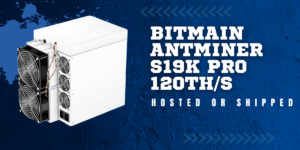
- Price: $7,699 inc. GST
- Hashrate: 120 TH/s
- Power Usage: 2800W ±10%
- Algorithm: SHA-256 (Bitcoin)
- Availability: Hosted or Shipped
Why It’s Ideal for Hosted Mining:
- The 120 TH/s hashrate, combined with its efficient 2800W power consumption, makes it perfect for industrial hosting setups.
- Proven Bitmain reliability ensures low failure rates and efficient cooling design, maximising uptime and performance.
- Mining Store Australia’s energy-optimised hosting environment maximises the ROI for Australian miners, with hosting rates ranging from 8–10¢/kWh.
Why Buy from Mining Store Australia:
- #1 ASIC supplier and mining community in Australia.
- 24/7 online & phone support for all customers.
- Worldwide delivery with signature confirmation.
- Consultations available for commercial-scale operations (10 to 5000+ units).
- A 100% satisfaction record with transparent warranty support.
The Antminer S19k Pro is the perfect entry-level to professional ASIC for those seeking to enter the hosted Bitcoin mining space in Australia.
Conclusion: Why Hosted Bitcoin Mining Is the Smarter Path for Australians
In summary, both cloud mining and hosted mining have their pros and cons. For Australian miners, hosted mining offers the best value in terms of control, profitability, transparency, and long-term growth potential.
By choosing hosted mining, Australian miners can avoid high residential electricity costs, benefit from renewable energy sources, and gain full ownership of their ASIC hardware. This model provides a secure and scalable investment option that ensures transparency and long-term success.
For those ready to take the next step in Bitcoin mining, Mining Store Australia offers the perfect solution with secure hosting facilities, renewable energy-powered setups, and industry expertise to help miners maximise their returns and optimise operations.
Call to Action: Learn more about Mining Store Australia’s Bitcoin Miner Hosting Facilities and start your mining journey today. Let us help you navigate the world of Bitcoin mining with professional management, transparent pricing, and energy-efficient infrastructure.