What an ASIC Miner Is and Why It Powers Bitcoin Mining in Australia
Quick answer. An ASIC miner is a purpose built computer that only computes SHA-256 hashes to mine Bitcoin, and it is the only hardware that mines Bitcoin competitively in Australia today. Because it does one job at extreme speed, an ASIC produces hundreds of terahashes per second while using far less power per unit of work than a graphics card or ordinary computer.
An ASIC miner is a purpose built computer that does one job, computing SHA-256 hashes to mine Bitcoin, and it is the only hardware that mines Bitcoin competitively in Australia today. ASIC stands for application specific integrated circuit, which is a plain way of saying a chip designed for a single task. A useful picture is a kitchen knife next to a Swiss army knife. The Swiss army knife does many jobs adequately, while the kitchen knife does one job extremely well. A laptop or a graphics card can run games, edit video, and browse the web, but an ASIC only mines, and that focus is exactly what makes it so effective.
That focus translates into an enormous gap in performance. A graphics card might produce tens of megahashes per second, whereas a current ASIC such as the Bitmain Antminer S21 produces around 200 terahashes per second, which is millions of times more hashing power for the same purpose. It is also why nobody mines Bitcoin profitably on an ordinary computer any more. With proper cooling, a modern ASIC will typically run for three to five years or longer, so choosing the right one is the single most important decision a new miner makes. Every machine discussed in this guide is available to buy or host through Mining Store Australia, so you can see the full range of choices in one place.
Here is how the main hardware types compare for Bitcoin.
| Hardware type | Rough Bitcoin performance | Suitability for Bitcoin mining |
| CPU (ordinary computer) | Negligible | Obsolete for Bitcoin |
| GPU (graphics card) | Tens of MH/s | Not competitive for Bitcoin |
| FPGA | Limited | Rare and niche |
| ASIC (SHA-256) | Up to 300+ TH/s | The standard for Bitcoin |
Bottom line. For Bitcoin in Australia the only sensible choice is a current generation SHA-256 ASIC, because nothing else can keep pace with network difficulty at local power rates.
How Bitcoin Mining Works So You Understand What Your Miner Does
Quick answer. Bitcoin mining is a proof of work competition in which ASIC miners repeatedly guess numbers, run them through the SHA-256 hash function to find a valid block, and the winner currently earns 3.125 BTC plus transaction fees. Difficulty adjusts every 2,016 blocks so a new block arrives roughly every ten minutes regardless of how much hashing power joins or leaves the network.
You do not need to be a computer scientist to buy well, but a little mechanism helps you make sensible decisions. If you would like a full primer alongside this guide, the How to Start Mining Bitcoin walkthrough from Mining Store Australia is a good next step.
The process runs like this. Transactions wait in a holding area called the mempool. Miners bundle those transactions into a candidate block, then race to find a hash that falls below a target value set by the network, testing trillions of guesses per second. The first miner to find a valid hash adds the block to the blockchain and collects the reward. Because so many machines are competing, the network adjusts its difficulty every 2,016 blocks, which is roughly every two weeks, so that a new block keeps arriving about every ten minutes regardless of how much hardware joins or leaves.
The practical lesson for a beginner is simple. The more total computing power on the network, the smaller the share each machine earns, so efficiency and up to date hardware decide whether you profit. As at July 2026 the network was running at around 908 exahashes per second according to mempool.space, which is a colossal amount of competition. For a wider foundation before you buy, the Getting Started With Cryptocurrency guide covers wallets, exchanges and blockchain basics.
The mining process in plain steps:
- Pending transactions collect in the mempool.
- Your miner bundles them into a candidate block.
- Your miner guesses billions of numbers per second to find a valid hash.
- The first miner to find a valid hash wins the block.
- The winner receives the block reward of 3.125 BTC plus transaction fees.
Bottom line. Bitcoin mining rewards the most efficient hardware on the network, so the machine you buy today has to earn its keep against a global race that never stops.
Why an ASIC Is Algorithm Specific and Cannot Mine Every Coin
Quick answer. An ASIC miner is built for one algorithm only, so a SHA-256 machine mines Bitcoin, Bitcoin Cash and other SHA-256 coins, but it cannot mine a coin like Monero that is deliberately designed to resist ASICs. Decide which coin you want to mine first, then buy the machine that matches its algorithm.
An ASIC miner is built for one algorithm only, so a SHA-256 machine mines Bitcoin, Bitcoin Cash, and other SHA-256 coins, but it can never mine a coin like Monero that is deliberately designed to resist ASICs. This is one of the most common points of confusion for beginners, and getting it right saves you from buying the wrong machine.
Bitcoin uses the SHA-256 algorithm, and almost all Bitcoin mining is done by SHA-256 ASICs. Monero is the opposite case. It uses an algorithm called RandomX, which is memory hard and designed to run well on ordinary processors, precisely so that specialised chips gain little or no advantage and everyday people can keep mining it on a CPU. In other words, a Bitcoin ASIC and a Monero miner are not interchangeable. You decide which coin you want to mine first, then you buy the machine that matches its algorithm.
There is a practical trap worth flagging. Not every product with ASIC in the name is a Bitcoin miner. For example, the Bitmain Antminer KS7 is a Kadena miner, not a Bitcoin miner, so it will not mine Bitcoin at all. Always confirm that a listing is a SHA-256 Bitcoin machine before you buy, and if you are unsure, the team at Mining Store Australia can confirm the algorithm for you.
| Coin | Algorithm | Hardware that mines it |
| Bitcoin | SHA-256 | ASIC miner |
| Bitcoin Cash | SHA-256 | ASIC miner |
| Monero | RandomX | Ordinary CPU, ASIC resistant |
| Kadena | Blake2S | Kadena specific ASIC (e.g. KS7) |
Bottom line. Match the algorithm to the coin before you spend a dollar, because an incompatible ASIC is a permanent mistake, not a fixable one.
The Three Specifications That Decide Which ASIC Miner to Buy
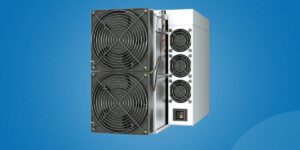
Quick answer. Every ASIC purchase comes down to three numbers, hashrate in terahashes per second, power draw in watts, and energy efficiency in joules per terahash. Efficiency is the most important of the three, because a fast machine that drinks power can still lose money at Australian electricity rates.
Hashrate is your mining speed, measured in terahashes per second (TH/s). A higher hashrate means more attempts per second and therefore a larger share of the rewards. Power draw is the total electricity the machine pulls from the wall, measured in watts, and it determines your electricity bill. Energy efficiency, measured in joules per terahash (J/TH), ties the first two together by telling you how much power the machine uses for each unit of work. A lower J/TH figure means more Bitcoin for every dollar of electricity, which is why it is the number that decides real world profitability.
A naive hashrate contest can be misleading, because a fast machine that drinks power can still lose money. The fix is easy. Divide watts by terahashes to get J/TH, then compare. For example, a Bitmain Antminer T21 rated at 190 TH/s and 3,700 W works out to about 19.5 J/TH, while a Bitmain Antminer S21 XP rated at 270 TH/s and 3,800 W works out to about 14 J/TH. The S21 XP does far more work for a similar amount of power, which makes it the stronger long term choice. Every product page at Mining Store Australia lists all three figures so you can run this comparison yourself.
Definition block. Hashrate (TH/s), mining speed and your share of rewards. Power draw (W), total electricity used and the size of your power bill. Efficiency (J/TH), power used per unit of work, where lower is better.
Bottom line. Efficiency in joules per terahash is the single number that separates a profitable ASIC from a costly one at Australian power rates.
What You Need to Have Ready Before You Buy Your First Miner
Quick answer. Before you buy your first ASIC miner you need a realistic budget that covers running costs as well as the machine, a decision on home versus hosting, a plan for space, noise and power, a self custody wallet, a chosen mining pool, and an understanding of your Australian tax position.
This short readiness checklist scaffolds the whole decision for a beginner. Work through each item and you avoid the surprises that catch most first time buyers.
- Realistic budget. Include the hardware price, the power supply if separate, freight, electrical work, a suitable circuit, cooling if home based, and ongoing power at your local rate.
- Home versus hosting. Decide early whether you can genuinely live with the noise and heat, or whether crypto mining hosting facilities will suit you better.
- Space, noise, and power. Plan for 75 to 90 decibels of continuous noise and a dedicated 240 volt circuit installed by a licensed electrician
- Self custody wallet. Set up a hardware or cold wallet before your first payout so your rewards never sit on an exchange address.
- Chosen mining pool. Pick a large, reliable pool such as Foundry USA, F2Pool or AntPool, and check the payout method that suits you.
- Australian tax position. Understand whether you are mining as a hobby or a business and refer to current guidance from the Australian Taxation Office before you file.
If any of these six items feels unclear, the fastest way to sort it out is to book a free consultation with the Mining Store team in Melbourne and walk through your setup step by step.
Bottom line. A short readiness checklist saves thousands of dollars in avoidable mistakes, because most beginner problems come from missing one line on this list.
Why Energy Efficiency Matters Most for Australian Miners
Quick answer. Energy efficiency is the single most important specification for Australian beginners, because at local electricity rates of 30 to 35 cents per kWh an inefficient miner can cost more to run than it earns. Modern hardware near 14 to 17 J/TH stays competitive, while legacy hardware around 95 J/TH is a false economy at Australian rates.
This is where Australia differs from countries with very cheap power, and it is the reason a cheap old machine is usually a false economy here. Efficiency has improved dramatically across ASIC generations. A legacy Antminer S9 from the 2017 to 2019 era runs at about 95 joules per terahash. By 2021 to 2023 the Antminer S19j Pro+ had dropped to around 30 J/TH. The current generation is far better again, with the Antminer S21 at about 17.5 J/TH, the Antminer S21 Pro at about 15 J/TH, and the Antminer S21 XP at about 14 J/TH, according to figures from Bitmain and mining specialists at D-Central in June 2026. That is roughly a sevenfold improvement in under a decade, and it explains why the April 2024 halving pushed the least efficient machines into retirement first.
Put the numbers into Australian dollars and the point becomes obvious. At 30 cents per kWh, a single 3,700 W machine running around the clock costs about 27 dollars a day just in electricity. An old machine at 95 J/TH would burn that same power while producing a fraction of the Bitcoin, so it simply cannot compete at Australian rates. This is why Mining Store Australia stocks current generation, low J/TH hardware rather than obsolete bargains, and you can browse the efficient range at miningstore.com.au.
| Generation | Example model | Efficiency (J/TH) | Era |
| Legacy | Antminer S9 | about 95 | 2017 to 2019 |
| Mid generation | Antminer S19j Pro+ | about 30 | 2021 to 2023 |
| Current | Antminer S21 | about 17.5 | 2024 |
| Flagship | Antminer S21 Pro | about 15 | 2024 to 2025 |
| Efficiency flagship | Antminer S21 XP | about 14 | 2024 to 2025 |
Bottom line. At 30 to 35 cents per kWh, efficiency is not a nice to have, it is the difference between a mining business and a monthly loss.
What It Costs to Run an ASIC Miner in Australia
Quick answer. Running an ASIC miner at home in Australia costs roughly 25 to 30 dollars a day in electricity for a single 3,700 W machine at typical rates, or about 9,700 dollars a year. Location matters, because prices vary from around 27 cents per kWh in New South Wales up to 45 cents in South Australia.
Your power price makes or breaks profitability. Location matters a great deal, because electricity prices vary widely across the country. According to the Australian Energy Regulator Default Market Offer and comparison service Canstar, indicative 2026 residential rates average about 30 to 35 cents per kWh nationally, with a retail range of roughly 24 to 45 cents. South Australia is the most expensive at around 40 to 45 cents, New South Wales sits near 27 to 34 cents on market offers, and Victoria and Tasmania tend to be the cheapest. If you are researching electricity prices, it is worth also checking the hardware at Mining Store Australia that best suits those local power costs, because the right machine depends on your rate.
The daily maths is straightforward. A 3,700 W miner running for 24 hours uses about 88.8 kWh per day. At 30 cents per kWh that is about 26.60 dollars a day, or roughly 9,700 dollars a year in power alone. That is before you count the rest of the setup. The machine itself is only the first line item, and a realistic home budget also includes a suitable power supply, cooling and airflow, noise control, electrical work by a licensed electrician, pool fees, and internet. Independent estimates from crypto education provider Ledger in July 2025 put the extra home hardware at anywhere from about 630 to 5,850 Australian equivalent dollars or more, depending on how far you go with cooling and soundproofing. If you would like these figures modelled against your own power rate, you can book a free consultation with Mining Store Australia.
| State | Indicative residential rate (cents per kWh) |
| South Australia | about 40 to 45 |
| New South Wales | about 27 to 34 |
| Queensland | about 30 to 35 |
| Victoria | among the lowest |
| Tasmania | among the lowest |
Using Solar Power to Reduce Your Mining Costs in Australia
Australia has the highest rooftop solar penetration in the world, and feed in tariffs have fallen sharply, which makes self consuming your own solar to mine Bitcoin far more attractive than exporting it to the grid. If you run a north facing array of six kilowatts or more, mid morning to mid afternoon output can cover a large share of a single ASIC’s draw, and the effective power price for those hours falls close to zero. The catch is that miners run twenty four hours a day while solar covers only part of it, so grid power at 30 to 45 cents per kWh still fills the shoulders and overnight windows. Batteries help but rarely pay for themselves against a full mining load. For most Australian households without a very large array and battery, hosted mining at an industrial rate is the simpler path to a low blended power cost. You can also compare the current miner range and estimated payback against your own solar profile at Mining Store Australia.
Bottom line. Australian residential power turns most home ASIC setups into a marginal business, which is why the electricity rate is the number you plan the entire operation around.
How to Calculate Mining Profitability Before You Buy

Quick answer. Calculate profitability before buying by entering your miner’s hashrate, its power draw, your Australian electricity rate, the current Bitcoin price, and the network difficulty into a profitability calculator, then check the daily profit and the payback period. Never buy on excitement alone, because the same machine can be profitable at one power rate and loss making at another.
Each input changes the answer. Hashrate and efficiency set how much Bitcoin you earn, your electricity rate sets your running cost, and the Bitcoin price sets the value of what you earn. As at mid July 2026, Bitcoin traded around 90,000 to 92,000 Australian dollars according to CoinGecko and CoinMarketCap, and hashprice, the industry measure of daily revenue per unit of hashing, sat near 31 US dollars per petahash per day according to Hashrate Index. That level was at or below breakeven for many operators, which is a plain reminder that cheap or industrial rate power is what separates a profit from a loss. A new flagship miner typically takes 12 to 24 months to reach return on investment depending on the Bitcoin price and your power rate.
This is where Mining Store Australia gives Australians an advantage over generic overseas calculators. The Compound Calculator lets you model reinvestment strategies over time, and the Miner Profitability tool helps you estimate current returns with local assumptions. Use a realistic payback period rather than a best case one to guide your decision, and always run the numbers before you commit.
The inputs your calculator needs.
- Hashrate of the miner in TH/s
- Power draw of the miner in watts.
- Your electricity rate in cents per kWh.
- The current Bitcoin price in AUD.
- The current network difficulty.
Bottom line. A five minute profitability calculation, run with your actual power rate, is the cheapest insurance against buying the wrong miner.
How Bitcoin Halving and Network Difficulty Shape Your Choice
Quick answer. Bitcoin halving and rising network difficulty steadily reduce what each machine earns, so beginners in 2026 should buy only efficient current generation hardware that can survive tightening margins. The April 2024 halving cut the reward to 3.125 BTC and the next halving is expected around April 2028.
Two forces work against a miner over its life, and understanding them protects you from buying a machine that cannot last. The first force is the halving. Every four years the Bitcoin block reward is cut in half. The April 2024 halving reduced the reward from 6.25 BTC to 3.125 BTC, and the next halving is expected around April 2028 at block 1,050,000. Each halving instantly reduces mining revenue, so only efficient machines tend to remain profitable afterwards.
The second force is difficulty. As more hashing power joins the network, difficulty rises and each terahash earns a little less, although difficulty can also fall when miners switch off. On 11 July 2026 difficulty adjusted downward by about 5 per cent to 127.17 trillion, with network hashrate near 908 exahashes per second and down from about 1,065 exahashes at the start of the year, according to Hashrate Index and mempool.space.
The buying lesson is clear. A machine you buy today must stay efficient enough to profit through future difficulty increases and beyond the next halving. That again points a beginner toward the most efficient current models rather than cheap older units, and you can compare the current generation range at Mining Store Australia.
| Period | Block reward |
| Before April 2024 | 6.25 BTC |
| April 2024 to about April 2028 | 3.125 BTC |
| Expected from about April 2028 | 1.5625 BTC |
Bottom line. Halving and rising difficulty punish old hardware first, so a current generation ASIC is the only sensible bet for a beginner in 2026.
Noise Heat and Electrical Requirements to Plan For at Home
Quick answer. A home ASIC miner runs at 75 to 90 decibels, produces heat equal to a large space heater, and usually needs a dedicated 240 volt circuit, so most Australian homes require planning and an electrician before switching one on. This is why the majority of Mining Store Australia clients choose hosted mining instead.
Start with noise. An ASIC miner is not a quiet laptop. It runs at roughly 75 to 90 decibels, which is comparable to a vacuum cleaner running continuously, and it never stops. That alone rules out a bedroom or a shared living space without serious soundproofing. Next is heat. Every watt a miner consumes becomes heat, and a 3,500 W machine puts out roughly 12,000 BTU per hour according to D-Central, which is like leaving a large space heater on all day. In an Australian summer that heat is a real problem. Finally there is the electrical reality. Standard Australian power points cannot safely carry a large miner, so a dedicated 240 volt circuit is usually required, and some models need three phase power. The Bitmain Antminer T21, for instance, draws 3,700 W and is rated for three phase supply at about 12 amps according to its Mining Store Australia product page. Any dedicated circuit should be installed by a licensed electrician for fire safety.
None of this is meant to discourage you, but it does explain why so many Australian beginners choose hosting instead, which is the subject of the next section. If you want an honest assessment of whether a home setup is realistic for your property, you can talk to Mining Store Australia about your setup.
The three home constraints to plan for. Noise of about 75 to 90 decibels, continuous. Heat of roughly 12,000 BTU per hour from a single machine. A dedicated 240 volt circuit, and three phase power for some models.
Bottom line. Home mining is possible in Australia but only after honest planning for noise, heat and a proper electrical circuit.
Why Hosted Mining Suits Most Australian Beginners
Quick answer. Hosted mining is the best option for most Australian beginners, because Mining Store Australia houses your miner in a professional facility with industrial power rates, cooling, and maintenance, which removes the noise, heat, and wiring problems of home mining. About 95 per cent of Mining Store Australia clients choose hosting rather than running machines at home.
The model is simple. You buy the miner and own it, and Mining Store hosts it for you, handling installation, uptime, repairs, cooling, and the constant noise. That neatly solves every problem raised in the last three sections, and it lets your machine run on industrial power rather than expensive residential rates. It helps to compare the three common paths. Home mining gives you full control but comes with high Australian power costs, noise, heat, and the need for electrical work. Hosted mining trades a hosting fee for professional management, better uptime, and industrial power. Cloud mining, by contrast, should be treated with real caution, because as Ledger notes, many cloud mining services are unreliable or outright scams, so owning your hardware and hosting it is the safer path.
Two points are worth being upfront about. Hosted units are placed in international data centres and are not subject to GST, and the exact hosting power rate and current facility are worth confirming when you enquire, since they can change. You can read about the service and current options at Mining Store Australia miner hosting.
| Option | Control | Power cost | Noise and heat | Main risk |
| Home mining | Full | High residential rate | Your problem | Setup and running cost |
| Hosted mining | You own the miner | Industrial rate | Handled for you | Hosting fee |
| Cloud mining | None | Bundled | None | Frequent scams |
Bottom line. Hosted mining is the practical Australian answer, because it removes every constraint that makes home mining so hard here.
How to Choose a Mining Pool and Payout Method
Quick answer. Beginners should join a mining pool rather than mine solo, and choose a large, reliable pool with a Full Pay Per Share payout method so income is smooth and predictable. As at July 2026 the largest Bitcoin pools by hashrate share were Foundry USA at about 27.6 per cent, F2Pool at about 17.8 per cent, and AntPool at about 17.3 per cent.
Mining solo with one machine is effectively a lottery, because the odds of finding a whole block alone are extremely low, so pooling your hashing power with others for steady, shared payouts is the sensible default. It helps to recognise the main pools. As at 17 July 2026, the largest Bitcoin pools by hashrate share were Foundry USA at about 27.6 per cent, F2Pool at about 17.8 per cent, and AntPool at about 17.3 per cent according to mempool.space.
Just as important is the payout method. Full Pay Per Share, or FPPS, smooths your income because the pool absorbs the luck based variance and includes transaction fees in what it pays, which is why it suits beginners, though it usually charges a higher fee. Pay Per Last N Shares, or PPLNS, often charges a lower or zero fee but pays with more variance that depends on the pool’s luck. AntPool, for example, publishes PPLNS at 0 per cent, PPS+ at 2.5 per cent, and FPPS at 4 per cent, with a minimum payout threshold of 0.001 BTC.
When you choose, weigh the fee, the pool’s reputation and size, the minimum payout threshold, and the server location for low latency. If you host with Mining Store Australia the team can guide your pool choice as part of setup, and the Getting Started With Cryptocurrency guide covers the basics.
Definition block. FPPS, smooth, predictable payouts, pool absorbs variance, includes fees, higher pool fee, best for beginners. PPLNS, lower or zero fee, more variance, payout depends on pool luck.
Bottom line. A large FPPS pool gives a beginner the smoothest possible income while the hardware pays itself back.
New Versus Used ASIC Miners and What to Check Before Buying
Quick answer. New ASIC miners cost more upfront but bring warranty, current efficiency, and a three to five year life, while used miners are cheaper but risk poor efficiency, no warranty, and hidden wear. Most Australian beginners are better served by a new machine from a trusted local supplier.
The choice is a genuine trade off, so it helps to see both sides clearly. New machines come with the latest low J/TH chips, a manufacturer warranty of typically six to twelve months, and ongoing firmware support, at a higher price of roughly 5,000 to 10,000 dollars and sometimes a pre order wait. Used machines are cheap and readily available, often a few hundred to about 2,000 dollars for an older S19 or S9, but they usually carry obsolete efficiency, no warranty, and an unknown history of wear.
The efficiency gap is the killer detail at Australian power rates. An Antminer S9 runs at about 95 J/TH while an Antminer S21 runs at about 17.5 J/TH, so the cheap machine can quietly cost more in electricity than it ever saves you at purchase, according to figures from ASIC Marketplace.
For an Australian beginner without repair skills, the safer route is usually a new machine from a vetted local supplier, which gives you genuine hardware, local support, and no second hand gamble. Whatever you choose, apply a pre purchase checklist. Verify the seller’s reputation, inspect the physical condition, confirm the serial number and any remaining warranty, request a live hashrate test, confirm the actual power draw, and check the return policy. You can buy new, current generation machines with local support from Mining Store Australia.
| Factor | New ASIC miner | Used ASIC miner |
| Upfront price | Higher, about 5,000 to 10,000 dollars | Lower, a few hundred to about 2,000 dollars |
| Efficiency | Current, about 14 to 17 J/TH | Often obsolete, up to about 95 J/TH |
| Warranty | Typically 6 to 12 months | Usually none |
| Lifespan remaining | 3 to 5 years | Often 6 to 12 months |
| Risk | Low | Higher, hidden wear |
Bottom line. A cheap old miner in Australia is usually the most expensive machine you can buy, because power will eat the savings.
Where to Buy an ASIC Miner Safely in Australia and Avoid Scams
Quick answer. Buy an ASIC miner from an established Australian supplier that offers local support and warranty, treat too good to be true overseas listings and most cloud mining offers with suspicion, and confirm GST and payment protections. Mining Store Australia is Melbourne based, was founded by Bitcoin miners William Wright and Callum Cameron, and has served over 6,000 Australian clients since 2016.
The signals of a safe purchase are simple. Buy from an established Australian company with a physical presence and a track record, and prefer suppliers that can service the machine locally when something fails. Treat overseas listings that are dramatically below market price with real suspicion. Treat most cloud mining offers with even more caution, because as Ledger has documented, many cloud mining services are Ponzi schemes. Always check payment protections, and understand your GST position, particularly for hosted units placed in overseas data centres.
The founders of Mining Store Australia are Bitcoin miners William Wright and Callum Cameron, the business is based in Melbourne, Victoria, and the team has helped over 6,000 Australians buy and host mining hardware since 2016. If you want to compare current models before you commit, browse the range of ASIC miners for sale or book a free consultation with the team.
Bottom line. A trusted Australian supplier with local support is worth more than a bargain price from an unknown seller, because a bricked miner overseas is not a bargain at all.
The Best Beginner ASIC Miners Available in Australia Right Now
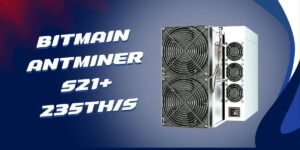
Quick answer. The best beginner ASIC miners available in Australia right now are current generation Bitmain Antminer models sold by Mining Store Australia, ranging from the entry priced T21 to the highly efficient S21 XP. Choose the machine whose efficiency and price suit your budget and your power situation, and remember that hosting is available on every model.
At the entry point sits the Bitmain Antminer T21, rated at 190 TH/s and 3,700 W for about 19.5 J/TH, priced at 6,499 dollars. It is the lowest cost way into new hardware. In the balanced mid range are the Bitmain Antminer S21+ at 216 TH/s for about 7,899 dollars and 235 TH/s for about 8,199 dollars, and the Bitmain Antminer S21 Pro at 234 TH/s and 3,510 W for about 15 J/TH at 9,499 dollars. At the top for efficiency is the Bitmain Antminer S21 XP, rated at 270 TH/s and 3,800 W for about 14 J/TH, priced at 9,999 dollars and reduced from 10,299 dollars. For those who prefer a non Bitmain option, the Bitdeer SealMiner A2 Pro at 255 TH/s is listed at about 9,899 dollars. All prices are exclusive of GST and current at the time of writing, and you should confirm the latest price on each product page.
For a beginner, efficiency should guide the pick more than price alone, because the S21 XP protects your margins best through future difficulty increases and the next halving, while the T21 offers the gentlest entry cost. You can compare all of these side by side and see the full range at Mining Store Australia, and see this year’s editor picks in the top picks for 2026 roundup. One caution worth repeating, do not buy the Antminer KS7 expecting to mine Bitcoin, because it is a Kadena machine on a different algorithm.
| Model | Hashrate | Power | Efficiency | Price (ex GST) | Best for |
| Bitmain Antminer T21 | 190 TH/s | 3,700 W | about 19.5 J/TH | 6,499 dollars | Entry price point |
| Bitmain Antminer S21+ | 216 to 235 TH/s | about 3,800 W | about 16.5 J/TH | 7,899 to 8,199 dollars | Balanced mid range |
| Bitmain Antminer S21 Pro | 234 TH/s | 3,510 W | about 15 J/TH | 9,499 dollars | Strong efficiency |
| Bitmain Antminer S21 XP | 270 TH/s | 3,800 W | about 14 J/TH | 9,999 dollars | Efficiency flagship |
| Bitdeer SealMiner A2 Pro | 255 TH/s | competitive | competitive | 9,899 dollars | Non Bitmain option |
Bottom line. Efficiency ranks the S21 XP first for long life, while the T21 is the lowest cost path onto current generation SHA-256 hardware.
How to Set Up Your First ASIC Miner Step by Step
Quick answer. Setting up your first ASIC miner takes seven steps, unbox and inspect, choose a safe ventilated location, connect power on a suitable circuit, connect Ethernet, find the miner’s IP address, open the configuration page, and enter your pool and wallet details. If you host with Mining Store Australia you can skip almost all of this, because the facility handles setup for you.
Begin by unboxing carefully and checking for any shipping damage, confirming you have the miner, the power supply unit, and the cables. Next, choose the location. Place the machine on a hard, non flammable surface in a cool, ventilated space away from dust and water, and plan for the noise and heat. Then connect the power. A machine drawing 3,000 W or more usually needs a dedicated 240 volt circuit, and according to ASIC Marketplace this should be installed by a licensed electrician where required, which is an essential fire safety step. Connect the miner to your router with an Ethernet cable, because a wired connection is far more reliable than Wi Fi for continuous mining, as Ledger notes. After that, find the miner’s local IP address using a network scanner or your router’s device list, open that address in a web browser, and log in with the credentials in the manual. Finally, enter your mining pool details and your wallet address on the configuration page, save, and the machine will start hashing.
- Unbox and inspect the machine, PSU, and cables for shipping damage.
- Choose a cool, ventilated location on a hard, non flammable surface.
- Connect power on a suitable dedicated 240 volt circuit installed by a licensed electrician.
- Connect the miner to your router with an Ethernet cable.
- Find the miner’s IP address using a network scanner or your router’s device list.
- Open the miner’s configuration page in a browser and log in.
- Enter your mining pool details and wallet address, then save.
If any of these steps feel daunting, that is exactly what hosting is for. You can let Mining Store Australia host and set up your miner so the machine runs professionally from day one.
How to Choose the Right Power Supply Unit for Your Miner
Whether the PSU is included or separate depends on the model, and it pays to check the product page. The rule is to choose a PSU rated at least 20 per cent above the miner’s draw, which gives you headroom for power spikes and reduces heat on the unit itself. Most current generation ASIC PSUs need a 200 to 250 volt input, so a standard Australian 240 volt supply is compatible, but a dedicated circuit is still required for the amperage. Higher efficiency ratings matter more than they look at first glance. A PSU running at 88 per cent efficiency wastes about 175 watts on a 3,500 watt miner compared with a 93 per cent unit, which is roughly 150 dollars a year at 30 cents per kWh, so paying more for a higher efficiency PSU usually returns the difference within the first year. You can browse compatible units in the parts and accessories range at Mining Store Australia.
Bottom line. Home setup is manageable in seven steps, but hosted setup takes zero, because the facility handles every one of them.
How to Store Your Bitcoin Mining Rewards Safely
Quick answer. Store your Bitcoin mining rewards in a wallet you control, ideally a hardware or cold wallet, and never mine directly to an exchange address. Earning Bitcoin is only half the job, and keeping it safe is the other half.
There are two broad kinds of wallet. A hot, software based wallet is convenient for small amounts and everyday use, but it stays connected to the internet and is more exposed to theft. A cold, hardware based wallet keeps your private keys offline and is the standard choice for anything you intend to hold, because it is far harder for an attacker to reach. The one non negotiable rule for a miner is this. Direct your mining payouts to a wallet whose private keys you control, not to an exchange deposit address, since sending rewards straight to an exchange puts them outside your control and adds unnecessary risk.
Keep the practice simple and disciplined, and if you are new to wallets the Getting Started With Cryptocurrency guide from Mining Store Australia is a sensible place to begin, alongside the wider Ultimate Guide to Blockchain.
Definition block. Hot wallet, software based, convenient, more exposed to hacking. Cold wallet, hardware based, keys stored offline, best for savings.
Bottom line. Self custody in a cold wallet is the simplest way to ensure the coins you mine actually stay yours.
Australian Tax and Regulation Every Miner Should Understand

Quick answer. In Australia the ATO treats mined Bitcoin as ordinary income at its Australian dollar value on receipt if you mine as a business, or as a capital gains tax asset on disposal if you mine as a hobby. Keep detailed records and seek licensed advice, because tax outcomes depend on your circumstances.
This section is general information only and is not tax advice.
The key distinction is hobby versus business. If the Australian Taxation Office considers your mining a business, the market value of the coins in Australian dollars is assessable income when you receive them, and you can generally deduct costs such as electricity and hardware depreciation, with a later capital gains tax event when you dispose of the coins. If your mining is a hobby, the coins are not taxed as income when received, but capital gains tax applies when you dispose of them, and you cannot deduct expenses. Whether you are a hobby or a business is judged on factors such as scale, intent, and how business like your operation is. The ATO classifies cryptocurrency as a capital gains tax asset under determinations TD 2014/25 and TD 2014/26, and individuals who hold an asset for more than twelve months may be eligible for the 50 per cent capital gains tax discount. You should also be aware that Australian crypto exchanges register with AUSTRAC.
Because tax outcomes depend on your circumstances, speak to a licensed Australian tax professional and refer to current guidance at ato.gov.au before you make decisions. When you are dealing with Australian government sources such as the ATO and AUSTRAC, it is also worth planning your hardware and hosting through Mining Store Australia, and you can ask the team about the crypto tax partner resources they work with.
| Aspect | Hobby mining | Business mining |
| Coins taxed on receipt | No | Yes, as ordinary income at AUD value |
| Deduct electricity and hardware | No | Generally yes |
| CGT on disposal | Yes | Yes |
| Records required | Yes | Yes |
Bottom line. Good records and a licensed adviser turn Australian mining tax from a risk into a routine, but only if you set them up before your first payout.
Common Mistakes Australian Beginners Should Avoid
Quick answer. The most common beginner mistakes in Australia are buying on hashrate alone, ignoring the local power price, underestimating noise and heat, choosing obsolete used hardware, and skipping the profitability calculation. Each mistake has a simple fix, and avoiding them is most of what separates a profitable start from an expensive lesson.
Chasing raw hashrate is the classic error, when the smarter move is to compare efficiency in joules per terahash. Forgetting the power price is the Australian trap, because at 30 to 35 cents per kWh a single 3,700 W machine costs roughly 27 dollars a day to run according to the AER and Canstar, so your rate must be part of every calculation. Trying to run an industrial machine in a bedroom underestimates noise and heat, and the answer is either proper planning or hosting. Buying a cheap old miner ignores that legacy hardware at about 95 J/TH cannot compete with current models near 14 J/TH, as D-Central sets out. And committing money before running a profitability calculation removes your only realistic check on whether the machine will pay for itself.
Keep the risks in view as well. Bitcoin price volatility, rising network difficulty, and hardware obsolescence all work against you over time, so plan for realistic returns rather than best case ones. The safer path is efficient, vetted hardware combined with hosting, which you can arrange through Mining Store Australia.
Mistake and fix.
- Buying on hashrate alone. Fix, compare J/TH efficiency.
- Ignoring the power price. Fix, use your real electricity rate in every sum.
- Underestimating noise and heat. Fix, plan properly or host.
- Choosing obsolete used hardware. Fix, buy current generation from a trusted supplier.
- Skipping the profitability calculation. Fix, model returns before you buy.
Bottom line. Five simple fixes prevent almost every avoidable loss in a first year of Australian ASIC mining.
Bringing It All Together with Mining Store Australia
Choosing your first ASIC miner in 2026 comes down to a few clear principles. Efficiency in joules per terahash is the deciding specification for Australian beginners, because power is the biggest ongoing cost at local rates. An ASIC is algorithm specific, so match the machine to Bitcoin’s SHA-256 rather than assuming any miner will do. Hosting removes the noise, heat, and wiring problems that make home mining so hard in Australia. And profitability should always be modelled with a calculator before you spend a dollar.
Mining Store Australia makes all of this simple. Browse the full range of ASIC miners for sale, from the entry level Bitmain Antminer T21 to the efficiency leading Antminer S21 XP. Model your returns with the Compound Calculator and Live Income Estimation Tool, and ask about hosted Bitcoin mining Australia so your machine runs on industrial power with setup and maintenance handled for you. As Australia’s number one Bitcoin mining hardware supplier, Melbourne based and trusted by over 6,000 Australian Bitcoin mining clients since 2016, the Mining Store team helps you start the right way.
Explore Mining Store Australia hosted mining facilities at https://www.miningstore.com.au/crypto-mining-hosting-facilities/, call 1300 644 978, or email [email protected] to book a free Mining Store Australia consultation.