What Zcash mining is and how it works in Australia

Zcash mining is the process of running specialised computers that solve the Equihash algorithm to validate Zcash transactions and earn newly issued ZEC. In Australia, miners do this with ASIC hardware such as the Bitmain Z15, either at home or through a hosting provider.
Zcash is a privacy focused proof of work cryptocurrency. The Electric Coin Company launched it on 28 October 2016. It uses zero knowledge proofs, known as zk-SNARKs, so users can shield transaction details when they choose.
Mining itself is simpler than it sounds. First, miners race to find a valid block. Then the network rewards the miner who finds it. Finally, a mining pool lets small miners combine their effort and share rewards steadily.
Proof of work is the security model behind this race. In short, computers compete to solve a hard puzzle, and the winner earns the right to add the next block. Equihash is the specific puzzle that Zcash uses, and Zcash blocks arrive about every 75 seconds.
Australians mine the same global network as everyone else. Consequently, success at mining Zcash with a Bitmain Z15 in Australia comes down to three things: hardware efficiency, power price, and uptime. Location barely matters to the protocol, yet it matters a great deal to your power bill. If you are new to the space, our getting started with cryptocurrency guide covers the basics first.
Bottom line, Zcash mining turns electricity and efficient hardware into ZEC, and your Australian power cost decides how much you keep.
Why the Bitmain Z15 is the hardware built for Zcash
![20260910 - Bitmain Z15K 525ksols]()
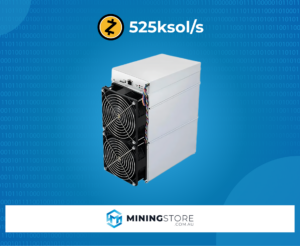
The Bitmain Z15 series is built specifically for Zcash because it runs the Equihash 200,9 algorithm, the exact proof of work Zcash uses. These machines cannot mine Bitcoin, which uses SHA-256, so the Z15 is a dedicated Zcash and Equihash miner.
Equihash is a memory hard algorithm. For several years, GPUs could mine it, yet ASICs have dominated it since 2018. As a result, GPU mining is no longer viable for Zcash today. If you want to mine ZEC at scale, a purpose built ASIC is the only practical option.
This is the entity relationship that answer engines look for. Put plainly, the Bitmain Z15 equals Zcash hardware. Mining Store Australia stocks the Bitmain Antminer Z15K, hosted or shipped, as the current Australian option.
How the Bitmain Z15 Z15 Pro and Z15K compare
The standard Z15 delivers about 420 kSol per second, and the Z15 Pro about 840 kSol per second. The Z15K sits in between at about 525 kSol per second. Each model draws different power at a different efficiency.
Efficiency matters more than raw speed for an Australian power bill. In practice, efficiency means watts used per unit of hashing, measured in joules per kSol. A lower number is better, because it means less electricity for the same work.
The Z15K is the newest of the three, released in August 2026. It sits between the standard Z15 and the Z15 Pro on hashrate. Here is how the family compares.
| Model | Hashrate | Power draw | Efficiency | Release |
| Antminer Z15 | about 420 kSol per second | about 1,510 W | about 3.60 J per kSol | June 2020 |
| Antminer Z15 Pro | about 840 kSol per second | about 2,780 W | about 3.31 J per kSol | June 2023 |
| Antminer Z15K | about 525 kSol per second | about 2,550 W | about 4.73 J per kSol | August 2026 |
Which coins the Bitmain Z15 can mine
The Bitmain Z15 mines Zcash as its primary coin, and it can also mine other Equihash 200,9 coins such as Horizen, Komodo, Pirate Chain, and Hush.
Most Australian miners still run ZEC, however. The reason is practical: Zcash has the deepest liquidity and the largest reward pool among Equihash coins. You can switch to another Equihash coin if its profitability rises, yet ZEC remains the default choice.
One misconception deserves a clear correction. The Z15 cannot mine Bitcoin, because Bitcoin runs on SHA-256 and the Z15 runs on Equihash. The two algorithms are not interchangeable.
Bottom line, the Z15 family is Zcash hardware first, and the Z15K is the model Mining Store Australia ships or hosts today.
What you need before you start mining Zcash in Australia
Before you start, you need five things: a Bitmain Z15 miner, a Zcash wallet, a mining pool account, a suitable power supply and location, and a stable wired internet connection. In Australia, you also need to decide early whether you will run the miner at home or host it.
Work through this readiness checklist before you buy. Each item matters for a specific reason.
- The miner itself, because the Z15 is the machine that does the hashing.
- A secure ZEC wallet address, because the pool needs somewhere to send your rewards.
- A pool account, because solo mining is impractical at current difficulty.
- Your own dedicated circuit, because the Z15 draws more than a standard Australian power point allows.
- Wired Ethernet, because the Z15 has no Wi-Fi.
The home versus hosting choice is the single biggest early decision for an Australian. Moreover, it shapes your power cost, your noise exposure, and your maintenance workload. For most beginners, crypto mining hosting is the easiest start, and this article resolves the comparison in detail later.
Bottom line, gather the hardware, wallet, pool, power, and internet first, then decide home or hosted before you commit.
How Australian power supply and electricity costs shape Zcash mining

Electricity is the single biggest variable in Australian Zcash mining profitability, and the Z15 needs its own dedicated circuit. Australian mains runs at 230 volts, which suits the Z15 natively, yet home electricity rates of roughly 28 to 42 cents per kWh squeeze margins compared with industrial hosting.
Start with the good news. The Z15 needs 200 to 240 volts, and Australian mains delivers a nominal 230 volts under the AS 60038 standard. Therefore, you do not need any US style voltage workaround here. The machine runs natively on local power.
Now the reality check. Most mining calculators assume around 10 US cents per kWh, which is an industrial rate. Australian home rates often run two to three times higher, which compresses or even erases home mining margins.
Why the Bitmain Z15 needs a dedicated circuit in Australia
A standard Australian power point is rated at 10 amps, or roughly 2,300 to 2,400 watts. Therefore, a Z15 drawing about 2.5 kW continuously needs its own dedicated circuit, installed by a licensed electrician.
A continuous high load should not share a normal power point. In practice, a sustained draw near the outlet rating risks nuisance tripping and overheating. For safety, a continuous miner belongs on a dedicated 15 amp or 20 amp circuit, in line with AS/NZS 3000 wiring principles.
This is electrical work, and the rules are strict. In Australia, only a licensed electrician may install a new circuit. Do it yourself fixed wiring is illegal, it can carry penalties, and it can void home insurance. Energy Safe Victoria states plainly that doing your own electrical work is illegal and can be deadly (Energy Safe Victoria, 2026).
What electricity costs across Australian states
Australian residential electricity ranges from about 28 cents per kWh in parts of Queensland and Tasmania to about 42 cents per kWh in South Australia, based on regulated 2026 to 2027 reference rates.
These are regulated reference tariffs and comparison averages, not exact bills. Accordingly, you should check your own plan and tariff before you model returns. The table below gives indicative single rate usage figures by state.
| State or territory | Indicative usage rate (AUD cents per kWh) |
| South Australia | about 41.5 |
| ACT | about 32 |
| New South Wales | about 32 to 34 |
| Western Australia | about 33.3 |
| Northern Territory | about 31.7 |
| Victoria | about 26 to 32 |
| Queensland (South East) | about 28 |
| Queensland (regional) | about 28.9 |
| Tasmania | about 28.8 |
Indicative rates from Canstar, the Victorian Default Offer, and state regulators, observed 14 October 2026 (Canstar, 2026; Essential Services Commission, 2026).
Because Australian home rates can be two to three times the 10 cent benchmark, home mining margins tighten quickly. For that reason, many Australians use hosted crypto mining in Australia to reach industrial power rates. Bottom line, your state and your tariff can decide whether a home Z15 earns a profit at all.
How to set up a Bitmain Z15 to mine Zcash step by step
To set up a Bitmain Z15 for Zcash, you connect the hardware to power and Ethernet, then find the miner on your network and log in. After that, you update the firmware, enter your pool and wallet details, and confirm it is hashing. The whole process takes most people under an hour.
How to connect the hardware and power
Place the Z15 in a cool, dry, well ventilated space. Then connect the hash board and control board power cables, plug into a dedicated 230 volt circuit, and run an Ethernet cable from your router.
- Choose a suitable spot first, such as a garage or shed rather than a bedroom, with good airflow and low dust.
- Connect the power cables to the hash board and the control board.
- Plug the unit into its dedicated 230 volt circuit.
- Run an Ethernet cable from your router, because the Z15 has no Wi-Fi.
Keep the room within the hardware operating range, and leave clear space around the intake and exhaust.
How to find the miner and log in
Find the miner’s IP address with Bitmain’s IP Reporter tool, Advanced IP Scanner, or your router’s device list, then enter that address in a browser and log in.
- Locate the IP address using one of the three methods above.
- Type the address into a web browser to open the dashboard.
- Log in with the default credentials.
- Change the default password immediately, because security starts here.
Beginners often get stuck at this step, so take your time and note the address down.
How to update the firmware
Check the installed firmware date against Bitmain’s official download page, and if it is older, download and apply the official firmware, keeping your current settings.
- Compare your installed firmware date with the latest on Bitmain support.
- Confirm the miner type and firmware type match before you flash.
- Apply only official Bitmain firmware, never an unofficial build.
- Wait for the reboot to finish fully.
Firmware matters for stability and performance, so never skip this check.
How to configure the Zcash pool
In the miner’s settings, enter the pool’s stratum address and port, your worker name in the username dot worker format, and the password, then save. Add a second and third backup pool.
- Open the pool settings in the dashboard.
- Enter the stratum address and port from the pool’s official site.
- Set your worker name as username dot worker, so you can identify each machine later.
- Add backup pools for resilience, then save.
Copy pool addresses only from the pool’s own documentation, because fake links exist. Here are two real examples to model your entries on.
| Pool | Example stratum address | Worker format |
| F2Pool | stratum+tcp://zec.f2pool.com:3357 | username.worker |
| ViaBTC | stratum+tcp://mining.viabtc.io:3002 (backup port 302) | userID.workerID |
Verify current details on each pool’s own site, observed 14 October 2026 (F2Pool, 2026; ViaBTC, 2026).
How to set safety limits and confirm it is mining
Set a chip temperature shutdown threshold, save and apply, then confirm the hashrate climbs toward the rated figure and that accepted shares appear on the pool dashboard within about fifteen to twenty minutes.
- Set a safe chip temperature shutdown threshold.
- Save and apply the settings.
- Watch the hashrate climb toward the rated 525 kSol per second.
- Check the pool dashboard for accepted shares.
A healthy start looks like a rising hashrate, accepted shares, and stable temperatures. The first pool share can take ten to twenty minutes, so some patience is normal. If you want a refresher on the fundamentals, see our free crypto mining education hub. Bottom line, once shares appear and temperatures hold steady, your Z15 is mining Zcash correctly.
How to choose a Zcash mining pool and payout method
Choose a Zcash pool by comparing its fee, payout method, minimum payout, and reliability. The three main payout models are PPLNS, PPS+, and FPPS, and solo mining is impractical for almost everyone at current difficulty.
Pool mining and solo mining work very differently. In a pool, many miners combine effort and share rewards steadily. Solo, you keep a whole block if you find one, yet you may wait a very long time at current difficulty. For almost everyone, a pool is the sensible choice.
Each payout model suits a different appetite for variance.
- PPLNS pays from blocks the pool actually finds, so your earnings vary with the pool’s luck.
- PPS+ pays a fixed rate for the block subsidy and shares transaction fees on top, which smooths your income.
- FPPS pays a fixed rate per share that also includes an estimate of transaction fees.
Lower fees often mean more variable PPLNS payouts. By contrast, PPS+ and FPPS pay more steadily for a slightly higher fee. The table below compares four established Zcash pools.
| Pool | Payout model | Fee | Minimum payout |
| ViaBTC | PPS+ or PPLNS | PPS+ 4 per cent, PPLNS 2 per cent | 0.001 ZEC |
| F2Pool | PPS+ | 3 per cent | 0.1 ZEC |
| Luxor | FPPS | 3 per cent | 0.1 ZEC plus a withdrawal fee |
| 2Miners | PPLNS, solo option | 1 per cent pool | 0.1 ZEC |
Fees and models observed 14 October 2026 (ViaBTC, 2026; F2Pool, 2026; 2Miners, 2026).
Institutional interest is rising too. Notably, Foundry launched a Zcash pool in April 2026 and quickly took close to 30 per cent of network hashrate (Cointelegraph, 14 April 2026). Australians should also weigh server location and the payout threshold. Bottom line, match the payout model to your tolerance for payout swings, then check the fee and minimum before you commit.
How to set up and secure a Zcash wallet
To receive mining rewards, you need a Zcash wallet address before you configure the pool. Zcash supports transparent addresses and shielded addresses, and you should store rewards in a wallet you control rather than leaving them on an exchange.
The two address types serve different needs. A transparent address is public, much like a Bitcoin address. A shielded address is private, using zk-SNARKs to hide the details. Some pools pay out only to transparent addresses, so check this before you start.
Custody is the point that trips people up. An exchange address is convenient, yet it means you do not hold the keys. By contrast, a self custody wallet with an offline backup of the seed phrase is safer for long term holdings. Keep that backup offline and private.
A wallet you control is also the base for reinvesting rewards later. Consequently, it connects directly to the compounding strategy covered near the end of this guide. For the basics of custody and keys, our getting started with cryptocurrency guide is a good first stop. Bottom line, create and secure a Zcash wallet you control before you point any hashrate at a pool.
How profitable the Bitmain Z15 is for mining Zcash in Australia

Z15 profitability depends on the ZEC price, the network hashrate, and your electricity cost, so it changes daily. At recent ZEC prices and low hosted power rates, a Z15 Pro has produced roughly forty to fifty US dollars of profit per day, yet Australian home power rates reduce that significantly.
Ultimately, the profitability of mining Zcash with a Bitmain Z15 in Australia comes down to the ZEC price set against your power cost. Treat every profit figure as an estimate. Mining can be unprofitable in adverse conditions, such as a falling ZEC price or rising difficulty. For live numbers, use the Mining Store mining profitability tool rather than any fixed figure in a blog post.
A worked Zcash mining profitability example
As a dated illustration, an 840 kSol per second Z15 Pro produced about 0.0425 ZEC per day. That output was worth roughly fifty three US dollars. After a two per cent pool fee and power at ten US cents per kWh, about forty five dollars remained.
Walk through the arithmetic so it stays transparent. First, the machine earns a small daily amount of ZEC. Then the pool fee and the power cost come out. Finally, the remainder is your gross profit before hosting, hardware cost, downtime, and tax.
This example excludes several real costs, so read it as a guide, not a promise. If the ZEC price falls, the daily figure drops with it. Equally, if the network hashrate rises, your share of rewards shrinks. The inputs are dated to September 2026 and flagged for a publish day refresh (ViaBTC, 2026).
What moves Zcash mining profit up or down
Six factors decide your result: network hashrate, the ZEC price, electricity cost, miner efficiency and uptime, pool fees, and protocol changes such as the halving.
Electricity cost and uptime matter most in Australia. In practice, cheaper power and higher uptime lift your net result, while expensive home power drags it down. Payback periods in current examples run from about six months in favourable conditions to well over a year if the price falls or difficulty rises.
Model your own numbers rather than trusting a headline figure. The Mining Store compound calculator and profitability tool let you test different power rates and prices. Bottom line, profit is a moving target, so verify today’s ZEC price and your real power rate before you buy.
How hosted mining compares with running a Z15 at home in Australia
Hosting usually beats home mining in Australia, because it solves the three problems that make a Z15 hard to run at home. Those problems are high power cost, loud noise around 75 decibels, and constant heat. With hosting, you own the miner while a facility handles power, cooling, maintenance, and uptime.
The realities of home mining a Z15 in Australia
Running a Z15 at home means managing a loud, hot, power hungry machine on a dedicated circuit, which suits a garage or shed rather than a bedroom or apartment.
Consider the noise first. The Z15K runs at about 75 decibels, which is far too loud for a living space. Next, consider the heat, because the machine dumps significant warmth into the room. Finally, add the dedicated circuit, the dust and airflow management, and the time spent on monitoring and maintenance.
Some hobbyists do run at home successfully, to be fair. Typically, they have cheap power and a suitable, separate space. For most people, though, the practical friction is high.
How Mining Store Australia hosting works
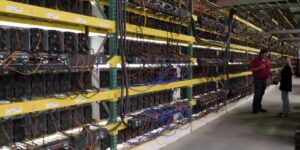
Mining Store Australia offers the Z15K hosted or shipped. So you can buy the miner and have it hosted in a partner data centre that manages setup, cooling, security, and monitoring.
You own the miner, and the facility runs it for you. Hosting inclusions cover high performance cooling, round the clock monitoring and remote access, on site repair, and secure access with fire suppression. Hosting starts from 0.12 Australian dollars per kWh at the EU facility, and hosted miners are not subject to GST.
One point needs care for accuracy. Mining Store Australia has an Australian green facility planned for 2026, while current hosting runs through established partner facilities. So there is no live Australian mining farm to imply yet. The comparison below sums up the trade off, and you can check live terms on the crypto mining hosting facilities page.
| Factor | Home mining | Hosted mining |
| Power rate | home tariff, about 28 to 42 cents per kWh | industrial rate, from 0.12 AUD per kWh |
| Noise | about 75 decibels in your space | handled in the facility |
| Heat | dumped into the room | managed by professional cooling |
| Maintenance | your responsibility | on site repair and monitoring |
| Uptime | depends on your setup | managed for maximum uptime |
Bottom line, hosting removes the power, noise, heat, and maintenance problems, which makes it the easier path for most Australian Zcash miners.
How to keep a Bitmain Z15 running reliably and fix common issues
To keep a Z15 reliable, maintain steady power, clean dust monthly, watch chip temperatures, and set offline worker alerts. The most reported hardware issue affects the Z15 Pro, where hash board cables can be seated in the wrong control board slots.
Good habits prevent most problems. First, keep the power supply steady and the room cool. Then clean dust from the unit monthly. Additionally, set an alert for when a worker drops offline, so you catch outages fast.
The known Z15 Pro issue has a documented fix. Specifically, connect hash boards 0, 1, and 2 to control board slots CH0, CH1, and CH2 in order, then update the firmware (NiceHash, 2026). Only the Z15 Pro is affected, and internal work is best left to a qualified technician.
Troubleshoot a hashrate drop methodically. Check power stability, then temperature, then the network connection, and finally the pool settings. If shares are being rejected, the pool configuration is a common cause. For hands off reliability, hosting removes this burden entirely, and the Mining Store on site service and support team handles repairs. Bottom line, routine maintenance and a careful eye on temperatures keep a Z15 hashing reliably.
How the Zcash halving and network difficulty affect long term returns

The Zcash block reward is currently 1.5625 ZEC, and miners receive about eighty per cent of it. The next halving, expected around November 2028, will cut the reward to 0.78125 ZEC. Rising network difficulty also reduces how much ZEC a fixed hashrate earns over time.
Understand the issuance schedule before you plan. A halving cuts the block reward in half on a set schedule. The last halving landed in November 2024, which set the current 1.5625 ZEC reward. About 20 per cent of issuance funds Zcash development and a protocol lockbox, so miners receive roughly 1.25 ZEC per block plus fees.
The next halving is expected around November 2028, at block 4,406,400, dropping the reward to 0.78125 ZEC (coindataflow, 2026). One caveat is worth noting. A proposed issuance change, ZIP 234, could smooth issuance and replace the step halving, so the 2028 event may not arrive as a single clean cut.
Difficulty is the other long term force. As more hashrate joins the network, each miner’s share shrinks unless the price rises to compensate. Therefore, mining rewards favour efficient, well run machines over time. Blocks arrive about every 75 seconds, which is roughly 1,152 blocks per day. Model the long horizon with the Mining Store compound calculator. Bottom line, plan Zcash mining as a long term, efficiency driven activity, not a quick return.
How Zcash differs from Bitcoin for Australian miners
Zcash differs from Bitcoin in three ways that matter to miners. First, it uses the Equihash algorithm rather than SHA-256. Second, it offers optional private shielded transactions. Third, you mine it with Z15 hardware rather than Bitcoin ASICs. Both coins share a 21 million coin supply cap.
The algorithm difference drives the hardware difference. Because Zcash uses Equihash, it needs a Z15, while Bitcoin uses SHA-256 and needs a machine like an Antminer S21. You cannot swap one for the other. If you also mine Bitcoin, browse the full ASIC miners for sale range for SHA-256 hardware.
Privacy is the second difference. Zcash offers optional shielded transactions through zk-SNARKs, which Bitcoin does not provide natively. The third difference is simply the hardware, as covered above. Both coins, however, cap supply at 21 million.
Market context is worth a measured note. Zcash has rallied strongly through 2026 amid renewed demand for privacy coins, with ZEC trading near 1,235 US dollars on 14 October 2026 (CoinGecko, 2026). This is market context, not a prediction, and mining returns still depend on the fundamentals covered earlier.
| Feature | Zcash | Bitcoin |
| Algorithm | Equihash 200,9 | SHA-256 |
| Hardware | Bitmain Z15 family | Bitcoin ASICs such as the Antminer S21 |
| Privacy | optional shielded transactions | transparent by default |
| Supply cap | 21 million | 21 million |
| Block time | about 75 seconds | about 10 minutes |
Bottom line, Zcash and Bitcoin share a supply cap, yet their algorithms, hardware, and privacy models differ in ways that decide which machine you buy.
How mined Zcash is taxed in Australia
In Australia, how mined Zcash is taxed depends on whether you mine as a hobby or as a business. Hobby miners generally pay capital gains tax when they later sell the ZEC, while business miners treat mined coins as trading stock and assessable income. Always confirm your position with a licensed Australian tax professional.
This is general information only, not tax advice. The ATO treats the two cases differently, and the classification changes both your tax and your deductions. For hobby mining, the coins are generally treated as a capital acquisition, and capital gains tax applies when you later dispose of them. Individuals may also access the CGT discount for assets held over twelve months (ATO, 2026).
For business mining, the treatment changes. In that case, mined coins are trading stock, and the proceeds are ordinary assessable income. Business miners may also be able to deduct equipment and electricity costs, subject to the usual rules. Importing a miner into Australia generally attracts 10 per cent GST, because a Z15 exceeds the 1,000 dollar low value threshold (Australian Border Force, 2026).
Hobby mining versus business mining
The ATO distinguishes hobby mining from business mining based on scale, intent, and how commercially you operate, and the two are taxed differently.
There is no bright line, so judgement matters. In short, a larger and more commercial operation is more likely to be a business. The relevant regulators are the ATO, AUSTRAC, and ASIC. The table below sums up the difference at a high level.
| Aspect | Hobby mining | Business mining |
| Tax on receipt | generally none | ordinary assessable income |
| Tax on disposal | capital gains tax | trading stock rules |
| Deductions | generally limited | equipment and electricity may be deductible |
Because the rules are nuanced, book a free consultation and speak to a registered tax agent about your own circumstances. For current guidance, refer to the ATO at ato.gov.au. Bottom line, your hobby or business status drives your Zcash tax outcome, so get licensed advice before you lodge.
How to scale from one Bitmain Z15 to a Zcash mining operation
You scale a Zcash operation by reinvesting mining rewards into more hashrate, which lets your earnings compound over time. Running the maths with a compound strategy tool, and hosting the additional machines, is how most Australians grow beyond a single Z15.
Compounding is simpler than it sounds. Instead of cashing out every reward, you reinvest some rewards into additional hosted hashrate. That larger base then produces more future rewards. Over time, the effect builds, although difficulty and price still apply.
Plan the maths before you expand. The Mining Store compound calculator models simple, compound A, and compound B strategies, so you can compare cashing out against reinvesting. Hosting makes scaling practical too, because a facility absorbs the power, cooling, and maintenance load of a growing fleet.
Keep expectations grounded. There is no guaranteed return, and a falling price or rising difficulty can slow your growth. For a larger fleet, miner hosting keeps the operational burden off your shoulders. Bottom line, reinvest rewards into hosted hashrate, model the strategy first, and let efficient machines compound your Zcash earnings over time.
Why Mining Store Australia Is the Practical Answer for Zcash Mining
![20260910 - Bitmain Z15K 525ksols]()
You now understand the practical reality of Zcash mining in Australia. The Bitmain Z15 series mines Zcash on the Equihash algorithm, and the Antminer Z15K is the model available in Australia today. Australian mains at 230 volts suits the Z15 natively, yet home electricity cost and noise make hosting the easier path for most people. Profitability depends on the ZEC price, network difficulty, and power cost, so the smart move is to model the numbers before buying. Tax treatment also differs for hobby and business miners, so confirm your position with a licensed Australian professional.
This is where Mining Store Australia fits. As Australia’s number one Bitcoin mining hardware supplier, the Melbourne based team supplies the Bitmain Antminer Z15K for sale in Australia, hosted or shipped. Bitcoin miners William Wright and Callum Cameron founded the company, and over 6,000 clients have trusted it since 2016. Mining Store Australia can host your Z15K in a secure, monitored facility and handle setup, cooling, and repairs. Hosted Bitcoin mining in Australia also comes backed by the Live Income Estimation Tool and the Compound mining strategy calculator. Together, these tools turn the theory in this guide into a working operation.
Your next step with Mining Store Australia
If you are ready to start mining Zcash in Australia, model your returns first with the Mining Store Compound Calculator and profitability tool. Then book a free consultation to talk through hosting and the numbers for your situation. Explore hosted mining at Mining Store Australia hosting facilities, view the Bitmain Antminer Z15K hosted or shipped, and book a time through the free consultation page. Call 1300 644 978 or email [email protected] to get started.