Zcash mining pool hosting explained

Zcash mining pool hosting in Australia is the arrangement where an Australian miner buys an Equihash 200,9 ASIC such as the Antminer Z15 Pro and ships it to a professional colocation facility. The miner then points it at a Zcash mining pool and receives ZEC payouts to their own wallet. Mining Store Australia coordinates this hosting model for Australian operators.
Key takeaways
- Zcash uses the Equihash 200,9 proof of work algorithm. Modern mining therefore requires an ASIC from the Antminer Z15 family rather than a GPU rig.
- Zcash mining pool hosting combines a dedicated Equihash ASIC, a professional colocation site, and a chosen pool endpoint. As a result, payouts flow directly to the miner’s wallet.
- Mining Store Australia helps Australian operators source Z15 hardware, arrange hosting, and set up pool connections. Importantly, this happens without running a facility at home.
- Pool payout schemes such as PPS, PPS+, FPPS, PPLNS, and SOLO have different fee and variance profiles. In practice, the right pick depends on cash flow needs and risk appetite.
- Australia friendly pools with low latency and reasonable minimum payouts matter more than headline hashrate share, especially when hosting inside Australian facilities.
What is Zcash mining pool hosting?
Zcash mining pool hosting is a three-part arrangement. An Australian miner owns an Equihash 200,9 ASIC, a professional colocation site runs it under managed power and cooling, and a Zcash mining pool aggregates the miner’s shares into predictable ZEC payouts. Those payouts land in the miner’s own wallet.
In practice, this is the model that most serious ZEC operators adopt once they graduate beyond hobby setups. Home Equihash mining hit its practical limit years ago on both power draw and acoustic footprint. Consequently, almost every intermediate Australian miner who wants meaningful ZEC exposure ends up at some form of crypto mining hosting facilities in Australia. Hosting removes the three headaches that stop people mining at home: a suitable circuit, a way to reject 3 kW of heat, and someone to press the reset switch when a miner faults at 2 am.
However, hosting alone does not produce ZEC on its own. The miner still needs a pool endpoint to receive shares and issue payouts. Moreover, the miner still owns and configures the wallet that receives those payouts. That combination, hardware plus site plus pool, is what people mean when they talk about Zcash mining pool hosting.
The three parts of a hosted Zcash mining setup
Every hosted Zcash setup has the same three moving parts: the ASIC, the facility, and the pool. First, the ASIC is a dedicated Equihash 200,9 unit such as an Antminer Z15 Pro pulling roughly 3,192 watts at the wall. Second, the facility supplies rack space, three phase power, filtered air or immersion cooling, network uplinks, and 24/7 remote hands. Third, the pool aggregates thousands of small hashes into full blocks. It then pays the miner for the work contributed, in ZEC, on a schedule the miner picks.
Importantly, each part is a separate contract with a separate counterparty, and each part has a different failure mode. The miner is a capex line. By contrast, the hosting is an operating expense billed against power drawn. The pool is a percentage of gross revenue taken as a fee. Getting this stack right is the entire game, and it is where hosted operators outperform ad hoc setups.
Where Mining Store Australia fits
Mining Store Australia coordinates the first two of those three parts and helps Australian miners get the third one live. On the hardware side, MSA runs the local ASIC miner catalogue that includes the Z15 family alongside the Bitcoin and Kaspa ranges. On the hosting side, hosted mining with Mining Store Australia matches Australian owners to vetted colocation partners. These partners offer commercial power tariffs and PUE profiles that suit ASIC workloads.
New miners typically begin with the how to start mining Bitcoin guide before layering Zcash on top. Equally, long-standing customers can read our story to understand the team behind the service. The pool itself, as documented on the Zcash network page, remains the miner’s choice, and that is exactly how it should be.
Overall, hosted Zcash mining is a three-legged stool, and Mining Store Australia’s job is to make sure two of those legs never wobble.
What Zcash is and why privacy coins matter to Australian investors

Zcash is a proof of work cryptocurrency launched in October 2016 by the Electric Coin Company. Notably, it adds optional transaction privacy through zero knowledge proofs. It matters to Australian investors in 2026 because two developments have brought fresh institutional and technical attention to the asset. Specifically, these are the launch of the Grayscale Zcash ETF on 25 August 2026 and the NU6.1 network upgrade on 24 November 2025.
For Australian miners with existing Bitcoin exposure, that combination of a listed vehicle and an active technical roadmap matters. Indeed, it is exactly the pattern that historically precedes rising hashrate and rising interest in coordinated hosted mining. This is not a recommendation to buy the coin. Rather, it is an information update on where the network sits in late September 2026.
Transparent versus shielded addresses
Zcash offers two kinds of addresses on the same chain. Transparent addresses, prefixed with a “t”, behave much like Bitcoin addresses and appear openly on block explorers. By contrast, shielded addresses, prefixed with a “z” or, more commonly today, a Unified Address, use zero knowledge proofs. Specifically, they keep sender, receiver, and amount off the public ledger while still allowing the network to check that no coins were created out of thin air.
The mining process itself is transparent. Pool payouts are received to a transparent address by default, and miners then choose whether to shield those coins after payout. Notably, Ledger added native shielded Zcash support on 23 September 2026. For context, this is the first time a mainstream hardware wallet has offered a first-class shielded experience.
The Zcash Foundation and Electric Coin Company
Zcash is governed loosely by two entities. The Electric Coin Company, founded by Zooko Wilcox, ships the flagship zcashd node and coordinates most technical development. Meanwhile, the Zcash Foundation is an independent non-profit that funds ecosystem work and supports alternative clients. Both bodies now receive their operating budgets through the community grants programme that ZIP 1016 codified after the November 2024 halving. The arrangement is summarised by the Electric Coin Company itself.
For miners, the practical takeaway is that development funding no longer comes out of the block reward as a “founders reward”. Instead, a portion of each block flows to grants and to a lockbox. The miner share is what it is, subject to future ZIPs.
Why Australian investors talk about Zcash
Two things happened in 2026 that pulled ZEC back into Australian investor conversations. First, Grayscale’s Zcash ETF began trading on NYSE Arca under ticker ZCSH on 25 August 2026, giving US brokers a spot vehicle for the coin. Second, the NU6.1 upgrade activated on 24 November 2025, wrapping up the transitional dev fund arrangement laid out on the z.cash NU6.1 upgrade page.
Price followed. ZEC traded in the mid $40s through late 2024 and much of 2025. However, as of mid September 2026, DailyCoin reported ZEC surging past $1,500 after the NU7 announcement and Paradigm-linked commentary. Rising coin price is the direct input to mining revenue. Consequently, every Australian miner running a Bitcoin fleet at Australian mining hosting sites has been asked whether Zcash deserves rack space in the same building. The follow-on question is whether the current hashrate math still favours hosted Equihash ASICs at the miner’s landed power price. Our Zcash mining in Australia guide covers that question in more detail. Investors watching the broader privacy coin narrative can also read our solo mining and the rise of privacy coins piece for context.
In short, Zcash matters to Australian investors in 2026 because the price, the product wrappers, and the network roadmap have all moved at once.
How Zcash mining actually works
Zcash mining works by having Equihash 200,9 ASICs race to find a valid block header hash every 75 seconds. Each solved block currently pays out 1.5625 ZEC in total. That reward splits between miners, community grants, and a network lockbox under the NU6 rules that took effect at the November 2024 halving. Specifically, miners receive 1.25 ZEC per block, 0.125 ZEC flows to community grants, and 0.1875 ZEC goes into the deferred dev fund lockbox.
That base mechanic has not changed in a decade. Moreover, it is not going to change with the NU7 upgrade either. Zcash remains proof of work.
The Equihash algorithm in a paragraph
Equihash is a memory hard proof of work algorithm designed by Alex Biryukov and Dmitry Khovratovich in 2016 and parameterised for Zcash as Equihash 200,9. As documented on the Equihash Wikipedia entry, the algorithm requires solving a variant of the generalised birthday problem. Consequently, this forces miners to hold a large table of intermediate values in memory rather than simply running SHA-256 as fast as possible.
The original design goal was ASIC resistance. However, that goal did not survive first contact with the ASIC industry. By 2018 Bitmain shipped the Antminer Z9, and every generation since has widened the gap between ASICs and general purpose hardware. As of 2026, competitive Equihash mining requires a dedicated ASIC such as the Bitmain Antminer Z15 Pro Zcash ASIC. Furthermore, GPU mining of Zcash is no longer economic at Australian power prices.
Block time reward and NU7
A Zcash block confirms every 75 seconds on average, which is eight times faster than a Bitcoin block. The current block subsidy, following the November 2024 halving and the NU6 dev fund split codified in ZIP 1016, is 1.5625 ZEC. Of that, 1.25 ZEC goes to the miner, 0.125 ZEC to community grants, and 0.1875 ZEC to the deferred dev fund lockbox. Pools distribute the miner share proportionally to shares contributed.
The next scheduled upgrade, NU7, targets activation on 5 November 2026 according to CoinDesk’s 18 September 2026 report. Notably, NU7 focuses on making shielded payments up to three times faster and does not alter the block reward or the mining algorithm. For miners, NU7 is therefore neutral to revenue.
Is Zcash still proof of work
Yes. Despite persistent speculation, Zcash has not moved to proof of stake, and there is no active ZIP proposing that shift. The Electric Coin Company has consistently confirmed proof of work as the consensus mechanism. Moreover, NU6 and NU6.1 both reaffirmed that position by refining the reward split rather than the algorithm.
For anyone new to purpose-built rigs, the ASIC miners introduction guide covers the basics of buying and running one. Separately, the full ASIC miner catalogue shows what Australian miners are ordering today across Bitcoin, Zcash, Kaspa, and Scrypt. Bitmain’s own Z15 series specifications remain the reference for hashrate, power draw, and firmware behaviour.
Overall, Zcash in 2026 is still a proof of work chain, still Equihash 200,9, and still mined almost exclusively by dedicated ASICs.
How Zcash mining compares with Bitcoin mining
Zcash mining and Bitcoin mining share the proof of work model but differ on algorithm, hardware, block time, and unit economics. For example, Grayscale Research reported in September 2026 that a Zcash rig generated roughly twice the daily revenue of a comparable Bitcoin rig. Furthermore, it produced roughly four times the revenue per megawatt hour of energy consumed. That is gross revenue, not profit, and it does not account for hardware capex or hosting fees.
Zcash versus Bitcoin at a glance table
| Attribute | Zcash | Bitcoin |
| Algorithm | Equihash 200,9 | SHA-256 |
| Block time | 75 seconds | 10 minutes |
| Current block subsidy | 1.5625 ZEC (1.25 to miner) | 3.125 BTC |
| Next halving | Late 2028 | April 2028 |
| Typical modern ASIC | Antminer Z15 Pro (840 ksol per second) | Antminer S21 (235 TH per second) |
| Rated power draw | Approximately 3,192 W | Approximately 3,525 W |
| Daily network revenue | Approximately $2 million USD | Approximately $35 million USD |
| Top pool concentration | Approximately 41 percent (ViaBTC) | Approximately 25 percent (Foundry) |
Sources: Bitmain Z15 series specifications, the Wikipedia Zcash entry, and Grayscale Research figures republished by crypto.news on 4 September 2026. Snapshot taken 26 September 2026.
Where the mining economics actually differ
The most important economic difference between the two networks in September 2026 is revenue per unit of power. Grayscale Research reported that Zcash generated roughly four times more mining revenue per megawatt hour than Bitcoin over the measurement window. Specifically, this was driven by the ZEC price rally against a network hashrate that has grown more slowly than Bitcoin’s. On a per rig basis, that translated to approximately double the daily gross revenue for a Z15 Pro against a comparable Antminer S21 running on the same shelf.
However, gross revenue is not profit. A Z15 Pro costs approximately $14,999 plus GST at Mining Store Australia, against $4,899 for an S21. Payback periods therefore depend heavily on how long the current revenue premium persists. Furthermore, Zcash revenue is more volatile than Bitcoin revenue because the network is smaller and the price is more reflexive.
Moreover, resale value differs. Bitcoin ASICs have deep secondary markets globally. By contrast, Equihash ASICs have thinner secondary markets and a shorter list of profitable coins to fall back on if Zcash economics turn. Anyone modelling the numbers should read the ASIC mining Australia maximum profitability piece before committing capex. Equally, every Zcash rig should sit inside a broader hosted portfolio at professional crypto mining hosting facilities in Australia rather than on its own.
In sum, Zcash beats Bitcoin on revenue per megawatt hour in September 2026, but the durability of that lead is the question that matters, not the snapshot itself.
What a mining pool is and why pool mining beats solo mining

A mining pool is a coordinated group of miners that combine hashrate through a shared stratum server. As a result, individual miners receive smaller, more frequent payouts proportional to the work they contributed. Consider a solo Zcash miner running a single Antminer Z15 Pro at 840 ksol per second against a network of roughly 28 to 30 GSol per second in September 2026. In practice, pool mining is the only practical way for that miner to receive predictable ZEC income.
The pool absorbs the statistical randomness that would otherwise leave a small miner waiting years between blocks. In exchange, the pool takes a fee, typically 1 to 4 percent of gross revenue. Moreover, it takes on the operational load of running block templates, distributing work, and handling payouts. This trade is why Australian miners join a pool rather than pointing their rigs directly at zcashd.
Shares stratum and the miner to pool handshake
Pool mining runs on a protocol called Stratum, and Zcash pools use a Zcash specific extension of it. When an ASIC boots and connects to a pool endpoint, it authenticates with a username (usually the wallet address or a worker name). It then receives a stream of block templates and difficulty targets. The miner produces hashes constantly. Whenever a hash meets the pool’s share difficulty (much easier than the network’s block difficulty), the miner submits a “share”.
Shares are the accounting unit inside a pool. They are proof that the miner is doing work but do not themselves confirm anything on chain. When any pool participant lucky enough to find a hash below the network target submits it, the pool broadcasts that block. Subsequently, it credits every participant according to the pool’s payout scheme, which we cover in the next section. The Bitcoin mining pool Australia guide walks through the same mechanic on the Bitcoin side. Notably, the Zcash version differs only in algorithm and block time.
Solo mining versus pool mining probability
The math is unforgiving at 840 ksol per second. Against a network hashrate of approximately 28 GSol per second in early September 2026, per the MiningPoolStats Zcash dashboard, a single Z15 Pro contributes roughly 0.003 percent of total hashrate. Expected time to find a block solo, at 75 second average block intervals, works out to roughly seven to eight weeks per block on average. However, the variance around that average is enormous. Real miners can go several months without a solo block, then find two in a week.
For a hosted operator paying power monthly at Australian mining hosting sites, that variance is unusable. Bills arrive on a fixed cadence, and cash flow needs to match. Pool mining converts that lumpy variance into a smooth daily payout stream. Consequently, every serious Australian miner runs pooled unless they have a specific privacy reason not to.
Ultimately, pool mining beats solo mining for any hosted Australian operator running less than a few percent of network hashrate, which today means everyone.
The main mining pool payout schemes for Australian miners
The four main pool payout schemes used by Zcash and Bitcoin pools in 2026 are PPS, PPS+, FPPS, and PPLNS. Each trades off fee level against reward variance and the treatment of transaction fees. Moreover, a fifth option, SOLO mining through a pool, lets a large miner keep 100 percent of any block they find while still using the pool’s infrastructure.
Australian miners should pick a scheme based on their cash flow needs and their tolerance for variance, not on which scheme has the lowest headline fee. In practice, the payout schemes for Australian Bitcoin miners guide covers the mechanics in more depth. The same schemes appear on the Zcash side with only cosmetic differences.
| Scheme | Typical fee | Variance | Transaction fee treatment | Best fit |
| PPS | 2 to 4 percent | Very low | Not paid to miner | Cash flow focused hosted miners |
| PPS+ | 2 to 3 percent | Low | Paid separately on PPLNS basis | Hosted miners who want tx fee upside |
| FPPS | 2 to 4 percent | Low | Averaged into flat rate | Simplicity focused hosted miners |
| PPLNS | 0 to 2 percent | High | Paid on found blocks | Long horizon low cost operators |
| SOLO | 0.5 to 2 percent | Extreme | 100 percent to finder | Very large operators, lottery seekers |
Sources: the F2Pool payout schemes explainer, the ViaBTC mining pool fee explainer, and the Luxor revenue payments docs. Snapshot 26 September 2026.
PPS explained
Pay Per Share, or PPS, is the simplest scheme. Specifically, the pool pays the miner a fixed rate for every accepted share, calculated from the current network difficulty and the expected block subsidy. The miner receives income smoothly regardless of whether the pool has found any blocks that day. In exchange, the pool operator absorbs all variance. Consequently, the pool keeps 100 percent of transaction fees and charges a slightly higher pool fee, usually 2 to 4 percent.
PPS is the natural fit for hosted Australian miners who need to cover a monthly power bill and want the least surprise in their income line.
PPS plus explained
PPS+ (Pay Per Share Plus) is PPS for the block subsidy component and PPLNS for the transaction fee component. The miner receives a fixed rate per share for the base subsidy. Then, any transaction fees the pool collects are distributed on a PPLNS basis over a rolling window of recent shares.
For Zcash, transaction fees are historically small because most transfers are transparent and cheap. Consequently, PPS+ behaves close to plain PPS in practice. On Bitcoin, by contrast, PPS+ can produce noticeable transaction fee upside during high mempool periods.
FPPS explained
Full Pay Per Share, or FPPS, averages the pool’s transaction fee income over the block subsidy and pays it out at a smoothed per share rate. The miner sees a slightly higher headline PPS number that already includes an estimate of transaction fees. Fees are typically 2 to 4 percent, similar to PPS.
FPPS is popular with large hosted operators because it produces the flattest possible revenue line. In particular, this is easy to model against fixed hosting costs.
PPLNS explained
Pay Per Last N Shares, or PPLNS, pays miners only when the pool finds a block. Furthermore, it pays only for the shares submitted inside the last N (usually a large rolling window). Fees are lower, sometimes zero, but variance is high. A small miner can go many hours between payouts if the pool goes on an unlucky streak.
PPLNS suits long horizon miners with low hosting costs and enough working capital to ride out variance. However, it does not suit anyone stretching to cover monthly power bills.
SOLO mining through a pool
SOLO mode is essentially a hosted lottery. The pool provides stratum and block template infrastructure. However, any block a miner finds pays 100 percent to that miner (minus a small pool fee, usually 0.5 to 2 percent). For a single Z15 Pro against Zcash’s 28 to 30 GSol per second network, SOLO is not a realistic income strategy. As a result, most Australian miners use it only for specific privacy reasons.
Australian miners who read the Bitcoin mining payouts guide alongside the mining pool payout methods overview will see a clear pattern. Specifically, hosted operators at crypto mining hosting facilities in Australia almost always land on PPS or FPPS. These are the schemes that match the way hosting bills are structured.
Overall, PPS and FPPS are the default choices for hosted Australian Zcash miners because they smooth cash flow to match monthly power invoices.
The Zcash mining pool landscape in 2026
The Zcash mining pool landscape in September 2026 is heavily concentrated at the top. Specifically, ViaBTC holds approximately 41 percent of network hashrate, and the top three pools together hold approximately 78 percent. Moreover, network hashrate itself climbed from about 25 GSol per second on 24 August 2026 to over 30 GSol per second by 4 September 2026 per the MiningPoolStats Zcash page.
For a hosted Australian miner, that concentration is the single most important operational fact about Zcash mining in 2026. Pool choice materially affects both the reliability of payouts and the health of the network.
Zcash pool snapshot table
| Pool | Scheme | Fee | Min payout | Hashrate share | Notes |
| ViaBTC | PPS+ / PPLNS / SOLO | 2 to 4 percent | 0.001 ZEC | Approximately 41 percent | Operational since November 2017 |
| F2Pool | PPS | 3 percent | 0.01 ZEC | Approximately 20 percent | Established operator, deep liquidity |
| Luxor | FPPS | 0.7 to 2 percent | 0.001 ZEC | Approximately 17 percent | North American, strong tooling |
| 2Miners | PPLNS / SOLO | 1 to 1.5 percent | 0.01 ZEC | Approximately 6 percent | Runs an Australia friendly EU stack |
| AntPool | PPS+ / PPLNS | 2 to 4 percent | 0.1 ZEC | Approximately 3 percent | Bitmain affiliated |
Sources: MiningPoolStats Zcash dashboard, ViaBTC’s own Zcash pool announcement, and the Nanopool pool information page. Snapshot 26 September 2026, and share moves week to week.
The ViaBTC concentration story
ViaBTC has operated a Zcash mining pool since November 2017. Its share of Zcash hashrate has grown steadily through 2026 as smaller pools consolidated. According to the MiningPoolStats snapshot taken on 26 September 2026, ViaBTC sits at approximately 41 percent of network hashrate, with the top three pools combined at approximately 78 percent. Share moves week to week, and readers should check the live figure before making a routing decision.
Concentration matters for two reasons. First, when one pool holds close to a majority of hashrate, the network becomes theoretically more exposed to short range reorganisations and censorship-based selection. Second, if that pool suffers a stratum outage, a materially large slice of global Zcash hashrate goes idle at once. Importantly, Australian miners can help decentralise the network by pointing their ASICs at a smaller pool with a proven payout history. Indeed, there is a good case for doing exactly that even when the fee is slightly higher. Our Bitcoin hashrate indicators for Australia piece walks through how to read the equivalent Bitcoin dashboard, and the same reading habits apply on Zcash.
Australian endpoint availability
Not every Zcash pool operates an Asia-Pacific stratum endpoint, and latency to a distant endpoint hurts share submission rates. For example, Nanopool publishes an Australian oriented endpoint on its pool information page at zec-au1.nanopool.org on port 10200, or port 10243 for SSL. Likewise, 2Miners and ViaBTC operate Asian and European endpoints that behave acceptably from Australian facilities, generally landing under 130 ms round trip.
For miners hosted at Australian mining hosting sites, endpoint latency should be part of the pool selection decision. For miners considering their first pool connection, the why join a mining pool in Australia guide covers the practical setup steps.
In short, the Zcash pool landscape in September 2026 is concentrated, and Australian miners can push back on that concentration without giving up meaningful revenue.
How to choose a Zcash mining pool from Australia
Australian miners should choose a Zcash mining pool by working through five checks. First, match the payout scheme to cash flow needs. Second, calculate the effective fee rather than the headline fee. Third, check the minimum payout and cadence. Fourth, test stratum latency from the hosting facility. Finally, review operator reputation and payout history over at least the last twelve months. In practice, these five questions decide the pool for almost every hosted Australian operator.
Match the payout scheme to your risk appetite
The first decision is scheme. A hosted Australian miner paying a fixed hosting invoice every month typically wants PPS or FPPS for their smooth income profile, as covered in the payout methods for Australian Bitcoin miners guide. By contrast, a well capitalised operator with a low blended power price and a longer time horizon can capture better economics through PPLNS. Specifically, this works by accepting variance in exchange for a lower pool fee.
Do not chase a low PPLNS fee if your monthly bill is tight. Two weeks of unlucky variance can create a real cash flow problem, and the fee saving does not offset it.
Read the effective fee not the headline fee
Pool fees are rarely as simple as the number on the marketing page. For instance, FPPS pools bundle transaction fees into the pay rate but keep the fee percentage advertised. Meanwhile, PPS+ pools split the calculation across two windows. Some pools apply an additional orphan reserve. In practice, Australian miners should look at the pool’s own payout history over the last several weeks and calculate ZEC received per terahash equivalent. They should then compare that figure between pools rather than trusting the fee percentage in isolation.
Effective fee is what you actually pay after every quirk of the pool’s accounting. By contrast, headline fee is what the pool wants you to see.
Check minimum payout and payout cadence
Minimum payouts vary widely. For example, ViaBTC and Luxor pay out from 0.001 ZEC, F2Pool and 2Miners from 0.01 ZEC, and AntPool requires 0.1 ZEC. A high minimum locks capital in the pool balance and increases counterparty risk on that unpaid balance. For a hosted operator running a single Z15 Pro, a lower minimum is worth paying a fractionally higher fee for.
Payout cadence also matters. Daily payouts are standard on Zcash pools. However, weekly cadences appear on smaller pools and should be treated as a reason to check the operator’s reputation carefully before pointing hashrate at them.
Test endpoint latency from your Australian facility
Every hosted miner should ping the stratum endpoint before committing. For an Australian facility, expect roughly 90 to 130 ms round trip to an APAC endpoint (Japan, Hong Kong, Singapore). By contrast, expect roughly 180 to 220 ms to a US East endpoint. Higher latency increases the stale share rate, which directly reduces revenue.
A healthy stale share rate should sit under 1 percent over 24 hours. Anything above 2 percent points at either a bad endpoint choice, a saturated uplink, or a firmware issue. In that case, the Australian mining hosting operator should address it.
Check operator reputation and payout history
Finally, check the pool’s payment history using an on chain explorer or the pool’s own dashboard. Then, cross reference the pool against the MiningPoolStats Zcash rankings over at least the last twelve months. Pools with stable share, published fee schedules, and long running Zcash endpoints are safer than new entrants regardless of the fee saving on offer.
Australian miners who want a second opinion can book a free mining consultation with the Mining Store Australia team and step through the decision live.
Ultimately, the right Zcash pool for a hosted Australian miner is almost always the boring one with a proven twelve month track record and a low latency endpoint.
Cryptocurrency mining hosting explained for Australian miners
Cryptocurrency mining hosting is a colocation arrangement in which an Australian miner owns the ASIC and the wallet. However, the miner pays a professional facility for rack space, three phase power, cooling, network, remote hands, and 24/7 monitoring. Hosting is typically billed as a flat power rate per kilowatt hour or a bundled per ASIC monthly fee.
For a Zcash operator running Antminer Z15 Pro units at approximately 3.2 kW each, hosting removes the two constraints that stop residential mining in Australia. First, single phase circuits cannot deliver enough current. Second, residential zoning cannot handle the acoustic and thermal footprint. The how crypto mining hosting works in Australia explainer walks through the mechanics in more depth. Equally, the Bitcoin miner hosting Australia 2026 guide covers pricing conventions.
What the hosting facility provides
A professional hosting facility delivers five things the miner cannot economically build at home. First, three phase power at 3.5 to 5 kW per rack unit routed through redundant switchgear. Second, mechanical cooling engineered for continuous 30 to 40 kW rack densities, either air or immersion. Third, network uplinks with sub second failover between carriers. Fourth, 24/7 physical security and monitored access. Fifth, on site technicians who can power cycle a fault or swap a hash board without a service ticket dragging on for days.
Australian and near Australian facilities that cater to hosted mining typically target a Power Usage Effectiveness (PUE) between 1.05 and 1.20. In practice, lower PUE means more of the miner’s paid electricity actually reaches the ASIC. Consequently, it directly affects the effective landed power price.
Hosting fee structures in Australia
Hosting fees usually appear as one of two structures. Some facilities quote a flat AUD or USD figure per kilowatt hour of electricity used. Others quote a bundled monthly per ASIC price that already includes power, cooling, and remote hands. As an illustrative reference point, crypto mining hosting facilities in Australia coordinated by Mining Store Australia have advertised international hosting rates as low as $0.12 AUD equivalent per kilowatt hour at partner sites in Europe for high volume clients. Meanwhile, Australian hosting is priced against local wholesale energy conditions.
Grid context matters. As reported by AEMO in its July 2026 Quarterly Energy Dynamics release, Q2 2026 wholesale prices in the National Electricity Market were shaped by strong renewables output and coal availability. Consequently, this supports competitive commercial power tariffs at large industrial sites. The AER’s final Default Market Offer for 2026-27 sets residential and small business reference prices, and commercial hosting sites contract well below those levels through wholesale exposure.
What the miner still owns and controls
Even under hosting, the miner keeps ownership and control of the important things. The physical ASIC is the miner’s asset, and it can be shipped out at contract end. The mining wallet is the miner’s, and payouts go directly from the pool to that wallet, never through the facility. Moreover, pool choice, scheme selection, and worker configuration are the miner’s decisions.
The facility runs the box, but it does not touch the money. That separation is the entire point of hosting. Consequently, it is the reason serious Australian miners prefer hosted mining with Mining Store Australia to unregulated custodial alternatives. Operators considering the model for the first time can book a Mining Store Australia consultation to walk through a specific site’s terms before committing capex.
In sum, hosting outsources the facility, not the wallet, and that is why serious Australian Zcash miners use it.
How mining hosting differs from cloud mining
Mining hosting differs from cloud mining in one key respect. Specifically, a hosting customer owns a physical ASIC and controls the wallet that receives payouts. By contrast, a cloud mining customer owns only a contract that entitles them to a share of pooled hashrate on hardware they never see. The counterparty and contract risks between the two models are materially different. Moreover, the practical experience for the miner is different as well.
Hosting versus cloud mining comparison table
| Attribute | Hosted mining | Cloud mining |
| Ownership of hardware | Miner owns the ASIC | Provider owns the ASIC |
| Control of wallet | Miner controls wallet, direct pool payouts | Provider controls, credits an account |
| Contract risk | Site level operational risk | Provider solvency and contract enforcement risk |
| Counterparty risk | Limited to facility operator | Full exposure to cloud provider |
| Ability to exit | Ship ASIC to a new site or sell | Sell contract or wait for expiry |
| Transparency | Miner sees own worker stats | Provider reported hashrate only |
Sources: comparison drawn from the cloud mining Australia guide and the Bitcoin cloud mining Australia landscape review. Snapshot 26 September 2026.
Why Mining Store Australia focuses on hosting
Mining Store Australia’s hosted mining model exists because cloud mining, as historically offered in Australia, has an unhappy track record. Specifically, cloud mining contracts have repeatedly been marketed at retail investors on returns that assume static difficulty, static coin price, and provider solvency. However, none of those assumptions have held up in practice. ASIC Moneysmart has warned Australian consumers about crypto investment schemes generally, and cloud mining contracts sit squarely inside that risk category.
Hosting, by contrast, keeps ownership with the miner. The miner buys a physical ASIC once, ships it to a vetted facility, and pays a transparent power bill each month. If the facility fails commercially, the ASIC comes home or moves to another site. Likewise, if the miner wants to stop mining, they sell the hardware into a real secondary market. Neither of those exits is available to a cloud mining contract holder.
The hosting versus home mining Australia piece explains why hosting also beats home mining in most Australian residential contexts. Separately, the crypto mining hosting facilities in Australia page lists what a hosted arrangement covers in practice. Australian miners who want a plain reading of both structures should compare them side by side before signing anything.
Overall, mining hosting keeps ownership and control with the miner, and that is why it is the model Mining Store Australia recommends over cloud mining for every Australian operator.
Why home Zcash mining rarely works in Australia
Home Zcash mining rarely works in Australia. Residential electricity tariffs, single-phase power limits, ASIC noise and heat, and strata by-laws combine to make sustained operation of an Antminer Z15 Pro uneconomic and impractical in a typical Australian home. The economics collapse first. However, even where a household could absorb the running cost, physical realities usually finish the job. These include a 75 decibel industrial fan running around the clock, thermal throttling above 40 degrees Celsius and 240 volt single-phase circuits. Importantly, understanding why matters, because it explains why professional crypto mining hosting facilities exist in the first place.
Household electricity is the first blocker
Household electricity is the first blocker. Australian residential retail rates sit roughly between 26 and 40 cents per kilowatt-hour depending on state and retailer. In practice, that is two to four times the rate a hosted rig pays. On the Canstar residential comparison for Sydney on 26 September 2026, average usage rates ran between about 26.4 and 33.1 cents per kilowatt-hour. Moreover, northern and regional networks typically run higher. The Australian Energy Regulator’s Default Market Offer for 2026-27 came into force from 1 July 2026. It sets reference annual bills on the order of A$1,899 on Ausgrid in New South Wales, A$2,328 on Endeavour and A$2,604 on Essential. Additionally, SA Power Networks sits around A$2,334 and Energex in southeast Queensland around A$1,988. Notably, those numbers already assume typical residential use, before you plug in a 2.78 kilowatt ASIC.
Do the arithmetic on an Antminer Z15 Pro. At 2,780 watts running continuously, that rig consumes about 66.7 kilowatt-hours per day. At a mid-range residential rate of 33 cents per kilowatt-hour, daily electricity alone lands near A$22. By contrast, move the same rig into a professional hosting environment at roughly A$0.12 per kilowatt-hour and the daily bill falls to about A$8. Over a year, that gap is more than A$5,000. Consequently, it is the single largest lever separating a break-even home setup from a genuinely productive hosted deployment. For that reason, hosting versus home mining is the first calculation any Australian Zcash miner should do.
Even before you consider noise or cooling, the energy price and mining profitability trade-off often ends the debate. In short, if you cannot secure electricity at commercial rates, hosting is almost always the shorter path to viable ZEC production.
Noise heat and single phase limits
Noise, heat and single-phase power limits are the physical constraints that stop a Z15 Pro from ever settling into a suburban Australian home. Even where the electricity bill can be absorbed, these constraints hold. Bitmain publishes a nameplate operating noise around 75 decibels for the Z15 family. In practice, that is comparable to a domestic vacuum cleaner running continuously. Moreover, per the Z15 series specifications the recommended ambient operating temperature sits around 25 degrees Celsius. Sustained ambient temperatures above roughly 40 degrees Celsius push the hardware into thermal throttling. As a result, both hashrate and hardware lifespan suffer.
Australian summers routinely put a laundry, garage or spare bedroom well above that envelope, especially in Queensland, Western Australia and inland New South Wales. Cooling the room enough to hold 25 degrees Celsius with a 2.78 kilowatt heat source inside it means running domestic air conditioning against a continuous industrial load. Consequently, that quietly adds another kilowatt or more of consumption on top of the miner itself. Australian homes are also almost universally wired for single-phase 240 volt supply. By contrast, serious mining shelves and immersion tanks assume three-phase 415 volt circuits with commercial breakers, dedicated feeders and appropriate earthing.
Consequently, the practical ceiling in a domestic setting is usually one Z15 Pro on a spare 15 amp circuit, in a purpose-built shed, with an acoustic enclosure and split-system cooling. That works, occasionally, for a hobbyist willing to invest in the build. However, it does not scale, and it does not reproduce the density or resilience of a proper Australian miner hosting operation.
Strata by laws and insurance exclusions
Strata by-laws and home insurance exclusions are the legal constraints many Australian miners only discover after they have bought the hardware. Apartments, townhouses and villa complexes governed by an owners corporation almost universally include by-laws of their own. Typically, these limit noise, vibration, heat and additional loads on common electrical infrastructure. Running a 75 decibel ASIC on a shared wall, or drawing sustained loads through a common switchboard, is likely to breach those by-laws. In turn, that exposes the owner to enforcement action.
Home and contents insurance policies bring the second layer of risk. Most standard Australian residential policies exclude business use of the premises. Likewise, they exclude damage arising from unapproved electrical modifications and losses linked to operating industrial equipment inside a dwelling. A fire can start at an under-specified power board with an ASIC connected to it. In practice, that is exactly the kind of loss an insurer is likely to decline. Landlords also typically prohibit commercial or industrial use under a standard residential lease. Consequently, that adds a tenancy risk on top of the insurance and by-law issues.
Once you stack the household tariff, the physical constraints and the legal exposure, the economics of hosting look very different. Australian miners who want to run Z15 Pro hardware at scale typically book a free 30 minute mining consultation instead. In short, they do not persist with a home build.
The bottom line is simple. Hosting an Antminer Z15 Pro at a commercial site beats running it in a spare room. In fact, that holds in almost every Australian home, on every measure that matters.
Australian electricity prices and the National Electricity Market
Australian electricity prices sit inside the National Electricity Market. Wholesale prices averaged around A$74 per megawatt-hour in the June 2026 quarter. Hosted mining rates typically land between A$0.08 and A$0.20 per kilowatt-hour at retail. Alternatively, they fall to A$0.04 to A$0.08 per kilowatt-hour behind the meter or under a dedicated power purchase agreement. Understanding how those three layers, wholesale, retail and hosting, connect is essential for any Australian Zcash miner sizing a rig. Importantly, the choice of power source drives daily net margin far more than pool fees or hardware capital.
The NEM in one paragraph
The NEM in one paragraph is the interconnected wholesale electricity market. It links Queensland, New South Wales, Victoria, South Australia and Tasmania through a single spot market. Specifically, that market is run by the Australian Energy Market Operator. AEMO clears bids and offers every five minutes. In turn, the resulting spot price sets the wholesale cost that retailers and large industrial users pay. According to the AEMO Quarterly Energy Dynamics Q2 2026 media release, the NEM average wholesale price for the June quarter was A$74 per megawatt-hour. Notably, that was its lowest Q2 result in six years. By state, Victoria sat at A$56, Queensland at A$67, New South Wales at A$75 and South Australia at A$86 per megawatt-hour.
That reduction was driven in large part by renewable generation. Solar, wind and hydro provided a record 42.1 percent share of NEM generation in Q2 2026, per PV Tech’s analysis of the AEMO release. As a result, coal-fired output fell below 55 percent for the first time. For Australian miners this trend matters. A lower wholesale reference cost eventually feeds into commercial hosting agreements. However, retail residential tariffs move on a slower cycle.
Wholesale versus retail versus hosting rate
Wholesale versus retail versus hosting rate is the distinction that most first-time Australian miners get wrong. Wholesale sits around A$0.074 per kilowatt-hour at the current NEM average. However, residential retail runs roughly A$0.26 to A$0.40 per kilowatt-hour depending on network. Likewise, small business retail is not much cheaper. Professional hosting facilities sit between the two. Typically, they land at A$0.08 to A$0.20 per kilowatt-hour. The exact rate depends on site, contract length and whether the site is grid-connected retail, behind the meter or on a power purchase agreement.
The distance between residential retail and hosting rates matters most. In practice, energy prices and mining profitability is the single most important variable in the Australian equation. A Z15 Pro that loses money at 33 cents per kilowatt-hour becomes profitable at 12 cents. Moreover, the AER’s 2026-27 Default Market Offer numbers, quoted earlier, are the yardstick you should hold every hosting quote against.
Behind the meter and dedicated PPA hosting
Behind the meter and dedicated PPA hosting are the two structures that let commercial mining operators reach the lower end of the Australian cost curve. A behind-the-meter arrangement co-locates the miners with a generation asset. Typically, that is a solar farm, wind project, hydro station or gas peaker. Consequently, electrons flow directly from the generator to the ASIC without incurring transmission, distribution and retail margins. Prices in this structure often sit in the A$0.04 to A$0.08 per kilowatt-hour range for well-sized deals.
A power purchase agreement, or PPA, is the contractual equivalent for miners who cannot physically co-locate. Under a PPA, the miner or the hosting provider commits to buying a defined block of energy from a generator. Pricing can be fixed, indexed or hybrid over multiple years. In practice, that predictability is valuable in mining, where the revenue side is already volatile. These structures are commercial and generally sit above the scale of a single retail Australian miner. Nonetheless, they are the reason properly designed hosting arrangements can quote power prices that a household will never see.
The bottom line is clear. On balance, the Australian miner who understands the difference between wholesale, retail and hosted power prices makes better decisions than one who focuses on hashrate alone.
Australian climate cooling and grid realities for ASIC miners
Australian climate, cooling and grid realities together shape how a hosted Zcash rig is actually deployed. First, Bitmain’s 25 degrees Celsius operating envelope sets the baseline. Additionally, sustained ambient above 40 degrees Celsius risks thermal throttling. Then there is the choice between air, immersion and hydro cooling, plus the requirement for three-phase 415 volt power. Together, these factors decide whether a Z15 Pro delivers its full 840 kilosolutions per second in an Australian summer. In short, these are the operational fundamentals that separate a professionally engineered ASIC miner hosting site from a shed with an air conditioner.
Bitmain thermal envelope
Bitmain’s thermal envelope for the Z15 family sits around 25 degrees Celsius ambient at nameplate performance. Above approximately 40 degrees Celsius, sustained ambient triggers thermal throttling. Consequently, effective hashrate falls. The published Z15 series specifications list operating temperature ranges and airflow requirements. Specifically, these assume a controlled data-hall environment, not an uninsulated Australian shed.
Australian summers make this a live problem. Inland temperatures across northern New South Wales, Queensland and Western Australia routinely exceed 40 degrees Celsius. Moreover, even coastal metropolitan sites see prolonged heatwaves that push server-room ambients above spec. When a Z15 Pro throttles, it loses both hashrate and dollar-denominated revenue. Additionally, the thermal stress shortens the practical service life of the boards and fans. For that reason, every serious operator engineers cooling architecture to maintain a stable intake temperature year round.
Air immersion and hydro cooling
Air, immersion and hydro cooling are the three cooling architectures that Australian hosting sites use to hold Z15-class hardware inside its thermal envelope. Traditional air cooling arranges racks with a cold aisle intake and a hot aisle exhaust. Specifically, it uses ducted airflow and evaporative pre-cooling to hold intake temperatures at target. This is the most common configuration for Z15-class rigs. In practice, it works well at scale in the Australian climate, provided the site is properly engineered.
Single-phase and two-phase immersion cooling submerge the miners in a dielectric fluid, which absorbs heat far more efficiently than air. Immersion enables higher rack density, quieter operation and better power usage effectiveness figures. Consequently, it is increasingly common at newer Australian sites hosting later-generation ASIC miners. Direct-to-chip hydro cooling is more common on hydro variants of Bitmain’s Bitcoin fleet. It pumps coolant directly across the hashboard cold plates. Notably, it is the highest-density option available today.
Well-designed sites aim for a power usage effectiveness ratio in the range of 1.05 to 1.20. In practice, that means for every kilowatt going to the ASIC, only a modest additional 50 to 200 watts is drawn by cooling and ancillary infrastructure. Reaching that number consistently in an Australian summer requires purpose-built engineering. Precisely that is what a professional Australian miner hosting operation is set up to deliver.
Three phase power and the grid connection
Three-phase power and the grid connection are the electrical foundations that make dense ASIC deployment possible. Commercial hosting sites are built on three-phase 415 volt supply with dedicated feeders, high-capacity switchboards, appropriate breakers and industrial earthing. By contrast, the single-phase 240 volt supply serves a typical Australian home. Three-phase supply lets a site distribute large continuous loads across balanced phases. Additionally, it drops the current draw on any single conductor. Thus, it can connect industrial equipment that expects to see three-phase power at the wall.
The connection to the grid itself is the other half of the equation. Serious hosting sites either buy retail electricity on a commercial tariff. Alternatively, they sit behind the meter of a nearby generator. Finally, some operate under a power purchase agreement with defined firmness and price terms. That access, combined with the transformer and switchgear capacity to carry a large mining load, is what a home connection simply cannot provide.
In short, the bottom line is that professional hosting turns Bitmain’s nameplate figures into consistent Australian production. Overall, the cooling, power and grid engineering are already done.
The Antminer Z15 range in detail
The Antminer Z15 range is the dominant Equihash 200,9 ASIC family for Zcash mining in 2026. Specifically, the Antminer Z15 Pro at 840 kilosolutions per second and 2,780 watts is the current workhorse for Australian miners running hosted Z15 hardware. Understanding what actually sits inside the range, and equally what does not, is essential when quoting power, negotiating hosting and planning realistic payback windows.
Antminer Z15 range at a glance
The Antminer Z15 range at a glance covers five main SKUs released between 2020 and 2023. All are built to run the Equihash 200,9 algorithm that secures Zcash. The comparison table below summarises the headline figures.
| SKU | Hashrate | Power | Efficiency | Released |
| Antminer Z15 | 420 ksol/s | 1,510 W | 3.60 J/ksol | June 2020 |
| Antminer Z15e | 200 ksol/s | 1,000 W | 5.00 J/ksol | 2021 |
| Antminer Z15j | 285 ksol/s | 1,300 W | 4.56 J/ksol | 2021 |
| Antminer Z15K | 525 ksol/s | 2,610 W | 4.97 J/ksol | 2022 |
| Antminer Z15 Pro | 840 ksol/s | 2,780 W | 3.31 J/ksol | June 2023 |
Figures reflect Bitmain and third-party specifications for the Z15 series as compiled by Kryptex and ASIC Miner Value, retrieved September 2026. For detailed breakdowns, see the Kryptex Bitmain Z15 series overview and the ASIC Miner Value Antminer Z15 Pro profile.
The Z15 launched the Equihash generation of the Antminer line. Subsequently, the Z15K and Z15 Pro pushed hashrate up. Moreover, the Z15 Pro cut joules per kilosolution back below the original Z15. Consequently, this makes the Pro the most efficient unit in the family. In a rising ZEC price environment, it is the SKU that typically drives Australian hosting decisions.
The Antminer Z15 Pro as the 2026 workhorse
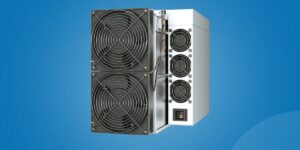
The Antminer Z15 Pro is the 2026 workhorse for Australian Zcash mining. Specifically, it combines the family’s highest hashrate at 840 kilosolutions per second and its best efficiency at 3.31 joules per kilosolution. Additionally, it continues to receive Bitmain firmware support. At Mining Store Australia, the Antminer Z15 Pro is currently listed at A$14,999 plus GST. In practice, that sits in the same capital band as a serious Antminer S21 class Bitcoin rig.
At 2,780 watts continuous, a single Z15 Pro consumes around 66.7 kilowatt-hours per day. That is a serious load. Consequently, the machine only pencils out inside a properly engineered hosting site rather than on a domestic circuit. Older SKUs in the range still function on the network. For instance, the Antminer Z15K at 525 kilosolutions per second remains a viable secondhand option for miners with lower capital. However, the higher efficiency of the Pro typically pays for itself over a long-enough hosting term. Likewise, the original Antminer Z15 sits at the entry-point of the same lineage.
Do not confuse iPollo Grin miners with Zcash miners
Do not confuse iPollo Grin miners with Zcash miners. Notably, it is one of the most common mistakes Australian buyers make when browsing the secondary market. The iPollo G1, iPollo G1 Mini and iPollo G1+ are Cuckatoo32 ASICs built for the Grin cryptocurrency, not Zcash’s Equihash 200,9 algorithm. Consequently, buying one expecting it to mine ZEC will simply result in incompatible hardware.
Zcash mining in 2026 effectively means running the Antminer Z15 family on hosted power. When you shortlist hardware for a Zcash deployment, verify the algorithm on the product page and cross-check against the Bitmain specifications before committing. The full ASIC miner catalogue at Mining Store Australia separates Bitcoin, Zcash, Kaspa and Litecoin capable units. Consequently, that makes the algorithm question easy to check upfront.
Ultimately, the bottom line is this. In 2026 the Antminer Z15 Pro is the practical choice for an Australian miner committing capital to a Zcash rig on hosted power.
How Zcash mining profitability is calculated step by step
Zcash mining profitability is calculated in six steps. Together, those steps convert your rig’s hashrate, the network hashrate, the ZEC price, the block reward, your power cost and your pool fee into a daily net figure in Australian dollars. The Bitcoin profitability calculator shows the same logic for BTC. Similarly, the compound calculator extends it to model reinvestment. However, understanding the six-step formula manually is what lets you sanity-check any online tool.
Six step Zcash profitability formula
The six-step Zcash profitability formula moves cleanly from network share to daily net, and each step maps to a single input.
- Compute your share of the network by dividing your rig’s hashrate in kilosolutions per second by the total Zcash network hashrate in kilosolutions per second.
- Multiply that share by the number of ZEC issued to miners per day, based on the current block reward and block interval, to get your gross daily ZEC production before pool fees.
- Multiply the daily ZEC production by the current ZEC market price to get gross daily revenue in United States dollars.
- Convert that United States dollar figure to Australian dollars at the current exchange rate.
- Subtract the pool fee, typically 1 to 2 percent of gross revenue, to get your net revenue after pool costs.
- Subtract the daily electricity cost, which is rig power in kilowatts multiplied by 24 hours multiplied by your all-in hosting rate in Australian dollars per kilowatt-hour, to get daily net operating margin.
The output is a snapshot of what today’s inputs would produce over 24 hours at those exact values. However, it is not a forecast, and it does not project future ZEC prices or future network hashrate. Reference figures for the network side are freely available. For instance, CoinWarz Zcash hashrate showed Zcash network hashrate climbing from roughly 25 gigasolutions per second on 24 August 2026 to more than 30 gigasolutions per second by 4 September 2026.
Which inputs move most
Which inputs move most is the question that separates a useful profitability number from a misleading one. In practice, three inputs dominate. These are the ZEC market price in United States dollars, the network hashrate in gigasolutions per second, and your electricity rate in Australian dollars per kilowatt-hour. ZEC has moved dramatically over 2025 and 2026. Notably, mid-September 2026 saw prices around US$1,477 per coin. In fact, that is more than an order of magnitude above late-2024 levels. Moreover, network hashrate can move by 20 percent in a fortnight as new hardware or additional deployments come online.
The electricity rate is the input you actually control. In short, it is the difference between a hosted Australian miner paying 12 cents per kilowatt-hour and a residential miner paying 33 cents. Consequently, maximising ASIC mining profitability in Australia is largely a story about power procurement. By contrast, the other two inputs, price and hashrate, must be observed and reasoned about, not assumed.
Everything else, pool fee, rig capital, exchange rate, matters at the margin but rarely flips the sign of the answer. For example, a 100 basis point change in pool fee moves daily net by about 1 percent of gross revenue. Conversely, a 10 percent move in ZEC price moves it by roughly 10 percent.
What the calculation deliberately excludes
What the calculation deliberately excludes is as important as what it includes. The six-step snapshot does not attempt to forecast the price of ZEC or the future Zcash network hashrate. Likewise, it ignores upcoming difficulty adjustments, protocol upgrades or macro conditions in the Australian dollar. Additionally, it does not include hardware depreciation, insurance, replacement fans, downtime allowances, monitoring costs or the time you spend administering the setup. It also does not include tax; the tax layer is covered separately in a later section.
If you want to model reinvestment or compare a hosted Zcash deployment against a hosted Bitcoin deployment, the compound calculator is a better tool. In short, it beats a one-off calculation. Likewise, the energy prices and Bitcoin mining profitability article walks through the same logic for BTC and is a useful complementary read.
Overall, the bottom line is that the six-step formula is a snapshot of today, not a promise about tomorrow. Accordingly, every Australian miner should run it themselves before committing capital.
A worked Zcash mining profitability example on hosted Australian power
A worked Zcash mining profitability example on hosted Australian power sets the maths against real figures. At 18 September 2026 reference inputs, a single Antminer Z15 Pro running on A$0.12 per kilowatt-hour hosted power generates roughly A$85 in daily net operating margin. Consequently, it pays back its A$14,999 plus GST capital cost in about 176 days. By contrast, the same rig on 33 cents per kilowatt-hour residential power collapses to roughly A$60 per day. In turn, that extends payback and erodes the margin buffer against ZEC price drops.
Inputs used in the worked example
The inputs used in the worked example anchor every number that follows and set the scope of what the calculation covers. Specifically, each input reflects a public reference point in September 2026, so the same maths can be reproduced against updated figures at any time.
| Input | Value | Source and date |
| Rig hashrate | 840 ksol/s | Bitmain Antminer Z15 Pro nameplate |
| Rig power | 2,780 W | Bitmain Antminer Z15 Pro nameplate |
| Efficiency | 3.31 J/ksol | Bitmain Antminer Z15 Pro nameplate |
| ZEC price | US$1,476.90 | 18 September 2026 reference |
| Network hashrate | 29 GSol/s | MiningPoolStats mid-September 2026 |
| Hosted power | A$0.12 per kWh | Typical Australian hosted rate 2026 |
| Blended pool fee | 1.5 percent | PPS+ or FPPS market range |
| Rig capital | A$14,999 plus GST | Mining Store Australia listing |
| AUD to USD | 0.65 | Assumed for the example |
Sources: rig specifications from the Bitmain Z15 series specifications and the ASIC Miner Value Antminer Z15 Pro profile; network hashrate reference from MiningPoolStats Zcash; rig capital from the Antminer Z15 Pro product page.
The daily and payback numbers
The daily and payback numbers fall out of the six-step formula covered above. On these inputs, the Z15 Pro delivers roughly A$85 per day in net operating margin on hosted power. In turn, that gives a payback horizon of about 176 days on rig capital.
| Line item | Value |
| Daily gross revenue | ~US$61.60 or ~A$94.80 |
| Daily hosted power cost | ~A$8.01 |
| Daily pool fee at 1.5 percent | ~US$0.92 or ~A$1.42 |
| Daily net operating margin | ~A$85.30 |
| Rig capital | A$14,999 plus GST |
| Payback on rig capital | ~176 days |
Working: at 840 kilosolutions per second on a 29 gigasolution per second network, the rig captures roughly 0.0029 percent of daily issuance. At the September 2026 block reward and ZEC price, that yields about US$61.60 per day. Converted at 0.65, that is roughly A$94.80. Then, power at 2.78 kilowatts running 24 hours a day at A$0.12 per kilowatt-hour costs about A$8.01. Additionally, pool fees at 1.5 percent of gross trim another A$1.42. Net operating margin lands at roughly A$85 per day. Subsequently, dividing A$14,999 by A$85 gives a payback of about 176 days. This is illustrative only. Notably, the Bitcoin profitability calculator can be applied to Zcash inputs to reproduce the same logic dynamically.
Home versus hosted at Australian retail power
Home versus hosted at Australian retail power is where the case for professional colocation becomes obvious. For instance, move the same Z15 Pro onto residential power at 33 cents per kilowatt-hour and daily power cost rises from A$8 to about A$22. Consequently, daily net operating margin drops from roughly A$85 to roughly A$60. Payback stretches from about 176 days to roughly 250 days. Moreover, the rig sits much closer to break-even if ZEC gives back a portion of its 2026 gains.
Hosting the rig at commercial rates is what preserves the margin buffer. Importantly, that buffer is what lets an Australian miner absorb a 20 percent ZEC drawdown without seeing daily operating margin turn negative. This is exactly the trade-off the crypto hosting versus home mining breakdown covers in more detail.
Reality check
The reality check on any worked example is that every input can move. For instance, the ZEC price used here was a mid-September 2026 reference and the network hashrate was a snapshot. Both have been volatile through 2026. Likewise, the energy price and mining profitability analysis makes the same point for Bitcoin: profitability at any given moment is a snapshot, not a forecast.
If ZEC halves from these levels, daily gross revenue halves and hosted margin falls from roughly A$85 to about A$40. Similarly, if network hashrate doubles, gross revenue also roughly halves. Consequently, Australian miners considering a Z15 Pro deployment should model at least three scenarios and treat the outputs as ranges, not point estimates. To discuss the specific numbers behind a proposed hosted Zcash deployment, book a free 30 minute mining consultation. In practice, that is the fastest way to run through the maths with someone who does it every day.
Ultimately, the bottom line is that hosted Australian power is the deciding factor in whether an Antminer Z15 Pro pays itself back in six months or drags into a year.
How a hosted Zcash miner connects to a mining pool
A hosted Zcash miner connects to a mining pool through six defined steps. These steps take an operator from wallet creation to a working, monitored rig producing ZEC shares. Moreover, the process is standardised across major pools. In practice, the same six-step procedure applies whether the rig is a Z15 Pro at a Melbourne hosting facility or a Z15K at a regional site.
Six step connection procedure
The six-step connection procedure below is the standard playbook. In practice, it brings a Zcash rig online at a professional ASIC hosting facility.
- Provision a Zcash wallet. Use a transparent t-address for payouts unless your pool and hardware wallet both support native shielded addresses.
- Choose a Zcash pool. Compare fee, payout scheme, minimum payout, uptime and stratum region against your rig. Specifically, F2Pool, ViaBTC, Luxor and Nanopool are the current mainstream options.
- Ship the rig to the hosting facility. Coordinate delivery so power, network and rack space are ready. Also, confirm the site accepts the specific Antminer SKU.
- Configure the ASIC dashboard with the stratum URL, worker string and password. Point primary and backup stratum entries at the chosen pool. Where available, pick a nearby region.
- Verify hashrate at the pool. Compare the pool-reported hashrate to the nameplate 840 kilosolutions per second within the first 24 hours. Also, check the stale share rate.
- Set monitoring alerts. Configure email or push notifications for offline events, hashrate drops beyond a defined threshold and payout confirmations. Consequently, problems surface before they burn a week of production.
This procedure matches the one covered in the general Australian mining pool joining guide. However, it swaps the pool and wallet layer for Zcash-specific choices.
Standard worker string format
Across major Zcash pools, the standard worker string format is ZEC-payout-address.rig-name, with the pool password set to x. The ZEC-payout-address element is your transparent Zcash wallet address. Specifically, the pool uses it both to route payouts and to identify your account. Meanwhile, the rig-name element is a short label you choose, such as zpro01 or melb-rack3. In practice, it lets you distinguish between multiple rigs on the same account.
Backup stratum settings should always be configured alongside the primary. If the primary endpoint drops, the rig automatically switches to the backup and keeps hashing. Pool documentation from F2Pool, ViaBTC and Luxor publishes their current stratum hosts and ports. For regional latency, Nanopool operates an Australian Zcash stratum endpoint at host zec-au1.nanopool.org. Specifically, use port 10200 for standard connections and port 10243 for SSL connections. Using a nearby stratum reduces network round-trip time and helps keep stale share rates low. Notably, this is exactly the kind of setup detail the Antminer Z15 Pro product page assumes when the rig ships.
Verifying the connection and dashboard monitoring
Verifying the connection and dashboard monitoring means confirming two things. First, the pool should see the rig at its expected hashrate within a defined tolerance. Second, stale shares should stay low. A reasonable target is pool-reported hashrate within 5 percent of the 840 kilosolutions per second nameplate over the first 24 hours. In addition, the stale share rate should sit under 1 percent. If either metric drifts, the usual culprits are stratum latency or a saturated network uplink. Alternatively, thermal throttling or a firmware issue on the rig may be to blame.
Monitoring alerts should cover three events at a minimum. First, the rig going offline. Second, hashrate falling below a defined percentage of nameplate for more than a short window. Finally, payout confirmations. Most pool dashboards expose email and webhook alerts. In practice, it is worth wiring these into whatever operational channel you actually monitor. This is a normal part of the workflow described in how crypto mining hosting works in Australia. Moreover, hosting providers will usually configure basic alerting on your behalf if asked. For a personalised walk-through, a free 30 minute mining consultation can help. Specifically, it covers the pool selection, stratum setup and monitoring stack in one session.
Ultimately, the six-step connection procedure and standard worker string format matter here. Together, they make bringing a Z15 Pro online at a hosted Australian site a repeatable, well-understood operation.
Wallets payouts and security for Australian hosted Zcash miners

Wallets, payouts and security for Australian hosted Zcash miners in 2026 centre on four priorities. First, running a transparent t-address for daily pool payouts. Second, moving accumulated ZEC into a shielded z-address for privacy where required. Third, using a hardware wallet with native shielded support such as Ledger’s September 2026 update. Finally, understanding that 73 exchanges have delisted at least one privacy coin as of 2025 according to SQ Magazine. Getting the wallet layer right protects both the mined coin and the operator’s ability to move it later.
Transparent first shielded second
Transparent first, shielded second is the standard pattern for a working Zcash miner. Mining pools pay out to a Zcash transparent address, which starts with t1 or t3. In short, transparent transactions are cheaper, faster and universally supported by pools and exchanges. Setting up a transparent wallet for payouts is straightforward and matches the workflow a Bitcoin miner already understands.
Shielded z-addresses, which start with zs1, are Zcash’s flagship privacy feature. Specifically, they use zero-knowledge proofs to hide sender, receiver and amount. Moving accumulated ZEC from the transparent payout address into a shielded address is the workflow most privacy-focused miners follow. Coin Bureau’s best Zcash wallets review walks through the current options in detail. Additionally, it is a useful reference for choosing between mobile wallets, desktop clients and hardware.
For most Australian operators, the sensible pattern involves three layers. First, a transparent payout address on the mining rig. Next, an intermediate desktop or mobile wallet that supports shielded transactions. Finally, long-term storage on a hardware wallet, which is covered below.
Exchange support and delisting risk
Exchange support and delisting risk is the practical constraint here. In particular, it affects how easily an Australian miner can move mined ZEC into fiat. Privacy coins have faced growing exchange pressure over the last several years. For example, the SQ Magazine 2026 review of privacy coin regulation reports that 73 exchanges had delisted at least one privacy coin as of 2025, up from 51 in 2023.
For Zcash specifically, delisting risk is asymmetric between transparent and shielded balances. Many exchanges continue to support ZEC deposits from transparent addresses while restricting or refusing shielded transactions. Before onboarding to any exchange, confirm that ZEC is currently listed. Also, check that the address types the exchange accepts match how you plan to send your coin. Consider the trade-off between privacy and off-ramp liquidity when choosing whether to hold in transparent or shielded form. The Australian solo mining and privacy coin analysis covers this landscape from an Australian perspective.
Two factor authentication and hardware wallets
Two-factor authentication and hardware wallets are the two non-negotiable security controls for any Australian Zcash miner. Two-factor authentication, or 2FA, on every exchange account should be app-based rather than SMS-based wherever possible. Importantly, SIM-swap attacks remain an active threat and are targeted specifically at crypto holders. Any exchange that limits customers to SMS 2FA should be viewed with caution.
Hardware wallet support for Zcash reached a milestone on 23 September 2026. Specifically, Ledger announced native shielded Zcash support across its device range. Trezor continues to support Zcash transparent addresses only as of the latest publicly confirmed reviews. For an Australian miner accumulating meaningful ZEC balances, the sensible default is keeping long-term holdings on a hardware wallet rather than on an exchange. Custodial exchange balances face insolvency, hack and regulatory risk that a self-custodied hardware wallet does not. Anyone planning to run Zcash mining through a hosted Antminer Z15 Pro should set the wallet and security stack up early. In practice, do this before the rig arrives, not after the first payout. Moreover, operators can pressure-test their approach in a free 30 minute mining consultation.
Ultimately, four elements form the minimum security baseline. Specifically, these are transparent addresses for payouts, shielded transfers where privacy matters, hardware wallet storage for long-term holdings, and app-based 2FA on every exchange account.
Australian tax and regulatory considerations for Zcash miners
Australian tax and regulatory considerations for Zcash miners in 2026 rest on four pillars. First, the ATO’s crypto mining framework distinguishes business from hobby mining. Second, the GST treatment of digital currency applies. Third, AUSTRAC regulates digital currency exchanges and virtual asset service providers. Finally, ASIC provides general investor guidance. Mining Store Australia is an ASIC supplier and hosting coordinator, not a financial adviser or tax agent. Accordingly, every miner should speak with a registered tax agent and a licensed Australian financial adviser about their own circumstances. In short, do this before acting on any of the general information below.
Business mining under the ATO framework
Business mining under the ATO framework treats mined coins as trading stock at the time of receipt. In practice, their market value on the day they hit the wallet counts as assessable income for the mining business. That is the core of the ATO’s crypto mining guidance for business operators. Whether an activity is a business depends on the usual factors. Specifically, these include scale, commercial intent, business plan, record-keeping and expected profit.
For a business miner, several deductions are typically available. These include hosting fees, electricity, pool fees, hardware repairs, monitoring subscriptions and depreciation of the ASIC over its effective life. Capital allowance rules apply to the hardware itself. Moreover, the specific treatment of any single item depends on cost, effective life and the applicable simplified rules for small business. The interaction with the end of the Australian financial year is covered in more detail in the Bitcoin mining end of financial year 2026 article. Notably, it walks through the practical bookkeeping.
Hobby mining under the ATO framework
Hobby mining under the ATO framework is treated differently. Where the activity is a genuine hobby rather than a business, the rules shift. In particular, the ATO does not tax the mined coins as ordinary income on receipt. Instead, capital gains tax applies when the coins are later disposed of, sold, exchanged, spent or gifted. In practice, the cost base is calculated from acquisition, minus any allowable expenses. The personal use asset exemption does not generally apply to crypto held for investment rather than immediate personal spending.
Establishing whether your setup is a business or a hobby is fact-specific. Notably, it is one of the most common areas where miners get themselves into trouble with the ATO by making the wrong assumption. Where the classification is ambiguous, a conversation with a registered tax agent before the first payout is time well spent. Miners looking at longer-term structures may also want to read the self managed super fund overview. Alternatively, they can arrange a crypto SMSF consultation. Importantly, this sits alongside standard tax planning rather than replacing it.
GST for miners registered above the threshold
GST for miners registered above the threshold turns on two things. First, the ATO’s treatment of digital currency. Second, the A$75,000 turnover threshold for GST registration. Since 1 July 2017, the ATO has treated digital currencies as equivalent to money for GST purposes. Consequently, supplying digital currency is generally an input-taxed financial supply rather than a taxable supply. In practice, miners generally do not charge GST on the ZEC they sell. Also, there are limitations on claiming input tax credits for expenses used in the mining activity.
The A$75,000 threshold from the ATO’s GST registration guidance matters here. Specifically, it sets the point at which an enterprise must register for GST based on projected annual turnover. Once turnover crosses that threshold, GST registration is mandatory. Moreover, the treatment of digital currency supplies flows through into how the business activity statement is prepared. The specifics for any given operator depend on structure, activity and revenue mix. Clearly, this is another area where professional advice from a registered tax agent is essential rather than optional.
AUSTRAC and ASIC scope
AUSTRAC and ASIC scope covers the anti-money-laundering and general investor guidance layers on top of ATO tax treatment. AUSTRAC regulates digital currency exchanges through the DCE register. Moreover, it has expanded its remit to cover virtual asset designated services under the virtual asset designated services framework. Miners who simply mine coin and then sell that coin through a registered exchange are generally not themselves operating as a DCE. However, any operator running arrangements that touch third-party crypto conversion should confirm their position with a specialist adviser.
ASIC’s general investor guidance sits at Moneysmart. In practice, it is the appropriate starting point for the investment side of a mining decision. Mining Store Australia does not hold an Australian financial services licence and does not provide financial product advice. It supplies ASIC hardware, coordinates hosting and provides education. Importantly, it always recommends engaging a licensed Australian financial adviser and a registered tax agent before making mining or investment decisions. A free 30 minute mining consultation covers the operational side; the financial and tax sides sit with regulated professionals.
Ultimately, Australian miners should treat ATO business or hobby classification, GST registration status, AUSTRAC scope and ASIC investor guidance as four separate questions. In each case, the question is best answered by a professional in that field.
Risks and volatility every Australian Zcash miner should understand
Risks and volatility every Australian Zcash miner should understand span several categories. First, ZEC price swings from the mid US$40s in late 2024 to above US$1,500 in September 2026. Second, Zcash network hashrate moves from around 25 gigasolutions per second on 24 August 2026 to over 30 gigasolutions per second by 4 September 2026. Third, hardware failure and obsolescence on ASICs. Also, counterparty risk at pools and hosting sites. Finally, regulatory risk on privacy coins. For context, SQ Magazine reports 73 exchanges have delisted at least one privacy coin as of 2025. These are the risks that any calm assessment of a Zcash deployment has to cover before capital is committed.
Price and market risk
Price and market risk is the largest single variable in a Zcash mining profit and loss. ZEC has moved from the mid US$40s in late 2024 to above US$1,500 in September 2026. Notably, this scale of appreciation is genuinely unusual even by crypto standards. Price at any given moment is what makes a Z15 Pro at Australian hosted power economic. However, a drawdown of similar magnitude in the other direction would materially compress operating margin. In extreme cases, it could push the rig below break-even.
Australian miners who ran the same maths at late-2024 prices would not have built a viable outcome. In short, the framing is symmetric. The Australian crypto market cycle guide is the right complementary read for context on how these cycles typically unfold. Every profitability number in this article is a dated snapshot, not a forecast. For general investor guidance on volatile assets, ASIC Moneysmart is the appropriate starting point.
Network hashrate and difficulty risk
Network hashrate and difficulty risk is the mining-side counterpart to price risk. Zcash network hashrate rose from around 25 gigasolutions per second on 24 August 2026 to over 30 gigasolutions per second by 4 September 2026. These figures come from CoinWarz. When network hashrate rises, difficulty follows, and each individual rig’s share of daily issuance falls proportionally. That means the same Z15 Pro producing X ZEC per day today may produce noticeably less in six months. Importantly, this holds true even if the ZEC price is unchanged.
The reverse also happens. When ZEC prices fall, marginal miners power down, hashrate contracts and difficulty eventually adjusts to restore per-rig production. The takeaway for Australian miners is that both revenue and difficulty are moving targets. Consequently, any single-scenario spreadsheet flatters the outlook. A hosted deployment on competitive Australian power gives more room to absorb difficulty rises. By contrast, the same rig at residential tariffs offers much less headroom.
Hardware failure and obsolescence
Hardware failure and obsolescence are the physical risks on a Zcash deployment. ASICs are industrial equipment run continuously at high temperatures, and individual hashboards, fans, PSUs and control boards fail over time. A professional hosting site handles diagnostics and swaps. However, the underlying replacement cost is still borne by the owner unless covered by a warranty or maintenance term.
Obsolescence is the slower risk. A more efficient successor to the Z15 Pro, if released, would erode the joules-per-kilosolution advantage the Pro currently holds. The Antminer S23 Bitcoin generation illustrates how each successive Bitmain generation on the Bitcoin side has compressed efficiency. Similarly, a step-change in the Equihash line would change Zcash economics quickly. Owning current-generation ASIC miners on competitive hosted power is the practical hedge against both risks.
Pool and hosting counterparty risk
Pool and hosting counterparty risk is the layer many miners underestimate. Pool concentration on the Zcash network sits with ViaBTC at roughly 41 percent as of 26 September 2026 per MiningPoolStats. Notably, this is a real concentration point to think about when choosing a pool. Hosting sites carry their own set of counterparty considerations. Specifically, these include operational track record, transparency around uptime, financial stability of the operator and clarity of the hosting contract.
A professional Australian hosting arrangement mitigates counterparty risk through documented service levels, transparent billing and clear escalation paths. Even so, miners should hold hosting relationships to the same governance standards they would apply to any other significant supplier. In particular, this includes diligence on the provider before signing.
Regulatory and delisting risk

Regulatory and delisting risk sits with the exchange landscape. Specifically, this is the risk that exchange policy moves against privacy coins over the life of your rig. The SQ Magazine 2026 review reports 73 exchanges have delisted at least one privacy coin as of 2025. For context, that figure is up from 51 in 2023. Zcash’s design allows both transparent and shielded transactions. In practice, many exchanges accept the former while restricting the latter. However, that policy landscape has continued to evolve.
Australian miners should account for the possibility that specific exchanges may restrict or delist ZEC over time. Accordingly, they should maintain more than one off-ramp. A 30 minute mining consultation can walk through the current Australian off-ramp options as part of the operational planning.
Ultimately, Zcash mining in Australia has meaningful price, network, hardware, counterparty and regulatory risks. Consequently, every serious operator should model at least a downside scenario before committing capital.
Zcash mining pool hosting in Australia the bottom line
Zcash remains a proof-of-work coin in 2026. In practice, its economics are dominated by the Antminer Z15 family, and specifically by the Antminer Z15 Pro at 840 kilosolutions per second and 2,780 watts. Nothing else on the current ASIC catalogue matches its joules-per-kilosolution figure for Zcash. Moreover, its capital cost sits in the same band as a serious Bitcoin rig.
A mining pool is the practical way for an Australian retail miner to receive predictable ZEC payouts. In particular, PPS+, PPLNS and FPPS are the three schemes to know. Each shifts variance between the miner and the pool operator in different ways. Specifically, choosing between them is largely a question of how much luck-driven variability you are willing to accept in return for lower operating cost.
Hosting an Antminer Z15 Pro in a professional colocation facility is what makes Zcash mining operationally practical in Australia. Specifically, several factors drive this. These include household electricity prices around 26 to 40 cents per kilowatt-hour, summer ambient temperatures that push the Bitmain thermal envelope, single-phase 240 volt domestic wiring and strata and insurance constraints. A properly engineered hosting facility turns Bitmain’s nameplate figures into consistent Australian production.
Every profitability number in this article is a dated snapshot. Moreover, Australian tax treatment, AUSTRAC scope and ASIC investor guidance sit outside the mining provider’s remit. Those questions belong with a registered tax agent and a licensed Australian financial adviser. For the operational side, a free 30 minute mining consultation is the right starting point.
Your next step with Mining Store Australia
Mining Store Australia operates end-to-end coordination for Australian miners who want to run Antminer Z15 hardware on hosted power inside professional colocation. To discuss Zcash mining pool hosting in Australia, enquire about Zcash rig hosting through Mining Store Australia, book a free 30-minute mining consultation, call 1300 644 978, or email [email protected]. Mining Store Australia provides ASIC supply, hosting coordination and education, and always recommends speaking with a licensed Australian financial adviser and a registered tax agent before making any mining or investment decision.
General advice warning
The information in this article is general information and education only. It has been prepared by Mining Store Australia without taking into account your objectives, financial situation or needs. It is not personal financial advice, investment advice, tax advice or legal advice. Before acting on any information in this article you should consider its appropriateness having regard to your own objectives, financial situation and needs, and should consider obtaining advice from a licensed Australian financial adviser and a registered tax agent.
Crypto risk warning
Cryptocurrency mining and cryptocurrency itself are highly volatile and high risk. The value of Zcash and other cryptocurrencies can fall as well as rise, and an operator can lose the entire amount invested in mining hardware, hosting fees and connected costs. Cryptocurrency is largely unregulated in Australia and past performance is not a reliable indicator of future performance. Before mining or holding cryptocurrency, consider general investor guidance from ASIC Moneysmart and speak with a registered tax agent or the Australian Taxation Office about the tax treatment of your specific circumstances.