
What is Bitcoin?
Bitcoin is a form of electronic cash that can be sent directly from one user to another without an intermediary. It was invented by an unknown person or group using the name Satoshi Nakamoto and released as open-source software in 2009, as set out in the Bitcoin whitepaper at bitcoin.org.
Bitcoin uses a decentralised peer-to-peer protocol to store value as information on a publicly verifiable ledger. For everyone to agree on the shared ledger, Nakamoto implemented a proof-of-work consensus algorithm built on SHA-256. Bitcoin mining uses this proof of work to keep the network secure and decentralised, and Bitcoin was the first decentralised money to achieve global success.
What is Proof-Of-Work (POW)?
A valid proof of work is hard to discover but trivial to check. The difficulty must be high enough that producing each block requires meaningful computational effort, which is what makes the chain expensive to rewrite and, in practice, secure.
Proof of work was the first workable solution to the double-spend problem at scale. Earlier digital monies were centralised, which gave their creators excessive power and created a single target to attack or shut down. Proof of work removes that single point of control.
CPU vs GPU vs ASIC Mining
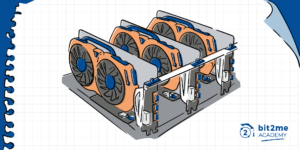
A few years ago, many miners ran GPUs to mine undervalued altcoins, then traded those coins for Bitcoin. That strategy depended heavily on Ethereum, and it changed permanently when Ethereum completed The Merge on 15 September 2022, moving to proof-of-stake and reducing its energy use by about 99.95%. With its largest coin gone, GPU mining declined sharply and second-hand cards flooded the market.
GPU mining of proof-of-work altcoins such as Ethereum Classic, Ravencoin or Monero still exists, but it is a niche pursuit rather than a reliable path to accumulating Bitcoin. For Bitcoin specifically, modern ASICs are vastly more efficient. The Bitmain Antminer S21 XP delivers 270 TH/s at 13.5 J/TH, roughly 37% more efficient than the older S19 XP at 21.5 J/TH. You can see current models and pricing on the Antminer range at Mining Store Australia
For those new to Bitcoin & Cryptocurrency Mining, here’s a few very important things you must know….
- You can mine Bitcoin indirectly, without actually mining Bitcoin! There are now hundreds of alternative Cryptocurrencies that can be mined profitably on current generation GPUs and CPUs, and those coins can be regularly traded for Bitcoin. Over the past few years this has become a very popular and often far more profitable way of mining Bitcoin. In 2017 & 2018, the technique of mining undervalued alt coins (eg. Ethereum, Monero, Zcash, LOKI, etc) and trading them for Bitcoin once their values rise has been one of the most profitable mining strategies since the birth of Bitcoin. Put simply this technique is: Mining the most profitable coin for your mining equipment – either (1) using Nicehash miner which automatically mines profitable coins and pays out in Bitcoin OR (2) for maximum profit doing this manually yourself by utilising a mining calculator like WhatToMine.com or CoinCalculators.io and then trading those mined coins for Bitcoin on an exchange.
- It is generally considered that ASIC mining equipment investments are much riskier than setting up a GPU mining rig or farm. Firstly, one of the largest and most popular ASIC mining manufacturers on the planet, Bitmain, has a less than stellar record when it comes to the interest of their customers. It is strongly believed (with much evidence to back the claims) that the largest ASIC manufacturer Bitmain, mines using the machines that their customers have pre-ordered and pre-paid for, to mine coins for themselves for often many months before actually shipping these units to their eagerly awaiting customers. By the time their customers receive the miners, the network difficulty has increased so profit numbers aren’t anywhere near the levels that they were when the customer paid for their ASIC miner pre-order.
- As ASIC miners are designed to do one thing only – mine Cryptocurrency – they become antique useless pieces of junk hardware once they’ve become unprofitable to mine with, effectively killing any resale value once this happens. Whereas GPU Graphic Cards have a large market of PC gamers, video editors and CAD designers that buy used graphic cards for a healthy price 1-2 years after they’ve been used to mine coins profitably. In the past, a new graphics card bought for about $400 can often be sold for about $200 or more even after used for 2 years.
Block rewards (Coin Emission)

The total amount of Bitcoin is capped at a maximum supply of 21million. The block reward that occurs approximately every 10 minutes started in 2009 at 50 BTC per block and halves every 210,000 blocks or roughly every 4 years. Currently, the block reward is 12.5 BTC and is expected to halve again in 2021 to 6.25 and in 2025 the Bitcoin block reward will reduce to 3.125 BTC.
The below chart shows Bitcoin’s emission schedule, illustrating the changes to the block reward over time, starting at 50BTC per block in 2009 that halves about every four years (every 210,000 blocks).
Other Cryptocurrencies use a range of various coin emission schedules, with some following Bitcoin’s emission very closely or matching it exactly. The problem with Bitcoin’s emission schedule is that the early miners benefit massively more from having the largest block rewards from Day 1 and the initial very low POW difficulty, assisting them to accumulate a highly disproportionate share of the total supply.
Some cryptocurrencies have attempted to create a more decentralised emission structure than Bitcoin. RYO Currency for example uses a “camel emission” structure that aims to lessen the centralised effect of giving such a massive reward benefit to the earliest miners.
Bitcoin mining has become more than just mining Bitcoin. There are many other promising mineable Cryptocurrency projects that offer potential for outstanding long-term mining ROIs.
What is a 51% Attack?
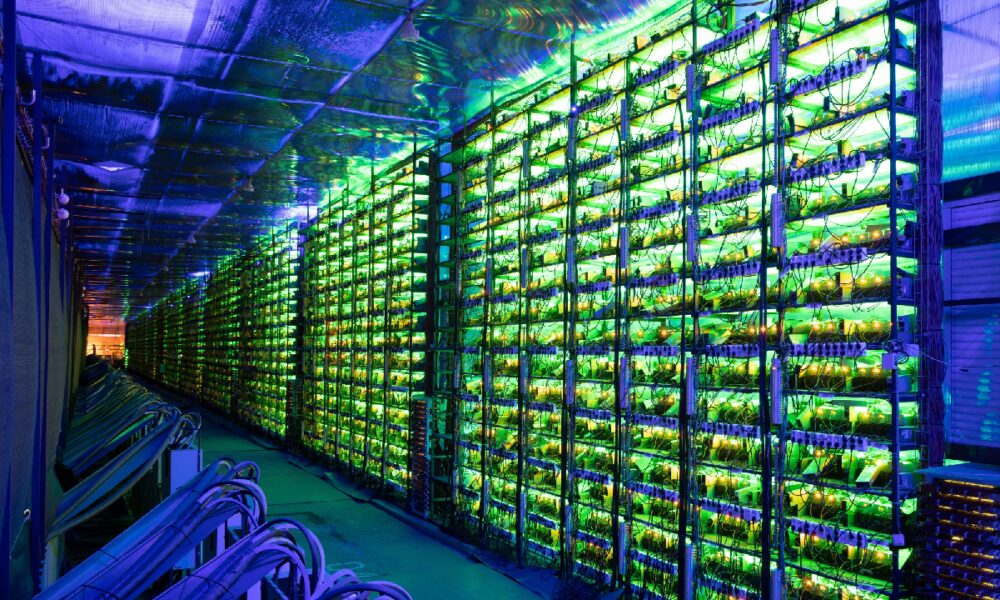
A 51% attack is a situation where a single miner or group of miners working together gain more than 50% of the total network mining power. If this happens and can be sustained for an amount of time over many blocks, it can allow a potential “double spend” attack. Bitcoin has never had a successful 51% attack double spend. However, some other Cryptocurrencies such as Bitcoin Gold (BTG) and Zencash / Horizen (ZEN) have had successful 51% attack double spends occur on their networks in the past. These networks have a far lower total network hashrate that enabled attackers to hire enough hashing power to implement the attack.
The attack works like this…. We’ll use Zencash as the example… The attacker obtains more than 50% of a networks total hashrate (through renting a very large amount of mining power on NiceHash or MiningRigRentals). The attacker would then ‘secretly’ mine more blocks than the rest of the network but not broadcast the blocks they find, then they would send a large amount (say $20 million) of that network’s coins (eg. Zencash) to an exchange and once confirmed trade those coins for another coin, say Bitcoin or Monero, then they would withdrawal all those coins from the exchange. While they are waiting for the withdrawal coins to confirm into their wallet, they would continue secretly mining blocks faster than the public Zencash blockchain. Once their withdrawal is fully confirmed and they’ve received the $20million in say Bitcoin or Monero. They then erase their original deposit transaction from their secret mined blocks and broadcast all these blocks to the public Zencash blockchain. The nodes on the Zencash blockchain see the new blocks and because they now see more mined blocks in the attackers version of the blockchain, this longer chain now becomes the real blockchain. This is due to the widely-used consensus rule of “the longest chain with the most Proof-of-Work is the real blockchain”. This longer chain then starts to propagate through the network to gaining consensus to become the real blockchain. However the first $20million Zencash deposit transaction to the exchange is now erased from the ledger, which is basically like it never happened at all and causes those coins to disappear from the exchange’s wallet and appear again in the attackers wallet, along with the new coins the attacker withdrew, thereby successfully completing the 51% double spend attack.
Currently the chance of a 51% attack (that could enable a double spend) on the Bitcoin network seems extremely unlikely due to the decentralisation of mining power spread across many different ASIC manufacturers, mining farm facilities, individual miners and mining pools. Decentralisation is about removing control and censorship power from centralised forces, and when it comes to Bitcoin this means it should aim to at all costs avoid a potential 51% attack by continuing to decentralise mining power. As the Bitcoin network has been maturing, more mining manufacturers have emerged offering healthy decentralised competition to the once majority player in Bitcoin mining, Bitmain.
Many alternative cryptocurrencies (such as RYO Currency) are building 51% attack resistance into their POW code, to make such an attack almost impossible to pull off in the future, even after obtaining more than 50% of the network’s total mining power.
Conclusion
You now understand the essentials: Bitcoin mining secures the network through proof of work, the block reward has halved to 3.125 BTC, profitable Bitcoin mining is an ASIC-only activity in 2026, and electricity cost is the single biggest factor in whether mining pays. For Australians, the maths almost always points towards hosting rather than running noisy, power-hungry machines at home.
That is exactly the gap Mining Store Australia fills. As Australia’s number-one Bitcoin mining hardware supplier and largest cryptocurrency mining hosting provider, the Melbourne-based team founded by Bitcoin miners William Wright and Callum Cameron has helped over 6,000 Australian clients since 2016. You can buy the latest Bitmain Antminer hardware, use the Live Income Estimation Tool and Compound Calculator to model a compound mining strategy, or host your miner at the crypto mining hosting facilities at 12 cents AUD per kilowatt-hour, with on-site repairs and uptime managed for you.
Ready to take the next step in Bitcoin mining Australia? Explore hosted Bitcoin mining at book a free consultation, or call the Mining Store team on 1300 644 978.
Written by Stephen from Dapp.tech. Sources [1] Wikipedia: Bitcoin – https://en.wikipedia.org/wiki/Bitcoin