
Crypto Miner Hosting 2026: Key Takeaways

Crypto miner hosting in Australia is a service where you own the ASIC miner and a professional facility supplies the power, cooling, security and maintenance for a fee per kilowatt-hour. You keep the Bitcoin it mines. For Australians facing 30 to 35 cents per kilowatt-hour at home, hosting provides industrial rates near 12 cents that make mining viable.
- You own the hardware, the provider runs it. Hosting is different from cloud mining, where you own no asset, and from home mining, where you manage everything yourself
- Power decides profit. Australian households pay roughly 30 to 35 cents AUD per kilowatt-hour, while hosted facilities reach industrial rates such as 12 cents AUD per kilowatt-hour.
- The network is enormous. Bitcoin hash rate reached around one zettahash per second in early 2026, so machine efficiency and cheap electricity matter more than ever.
- The block subsidy is 3.125 BTC. After the April 2024 halving, every cent per kilowatt-hour and every joule per terahash affects whether a miner stays profitable.
- Hosting is the practical path for most Australians. It removes the heat, noise, wiring limits and insurance issues that make residential ASIC mining difficult or impossible.
Crypto Miner Hosting at a Glance
Cryptocurrency mining in Australia has changed beyond recognition. What was once a hobby run from spare bedrooms, sheds and garages has become a global industry dominated by industrial-scale data centres, professional operators and high-efficiency ASIC miners. For Australians who want exposure to Bitcoin mining today, the barriers to entry have never been higher, and the margin for error has never been thinner.
| Metric | Figure (2026) |
| Bitcoin network hash rate | Around one zettahash per second |
| Block subsidy per block | 3.125 BTC since the April 2024 halving |
| Mining Store EU hosting rate | 12 cents AUD per kilowatt-hour |
| Average Australian home electricity | Around 33 cents AUD per kilowatt-hour |
| Reported cost to produce one Bitcoin | Approximately US$137,000 |
| Mining Store Australia clients | More than 6,000 since 2016 |
By 2026 the Bitcoin network has operated around the symbolic level of one zettahash per second, with difficulty close to record highs after peaking near 148 trillion in late 2025. Industry reporting puts the fully loaded cost to produce a single Bitcoin near US$137,000 once electricity, depreciation and overheads are counted. Mining profitably now takes far more than buying a machine and plugging it into a wall socket.
The single biggest challenge for Australian miners is power. Many households pay around 30 to 35 cents AUD per kilowatt-hour, with some time-of-use peak tariffs higher still. That is well above the breakeven electricity rate for most profitable mining strategies. This is exactly where crypto miner hosting in Australia becomes essential, and it is the core service offered by Mining Store Australia hosted mining.
This guide explains what ASIC miner hosting in Australia means, how it works step by step, what it costs, how it compares with home mining and cloud mining, which hardware matters, how tax applies, and how to choose a provider you can trust with valuable equipment for months or years at a time.
What Crypto Miner Hosting Means
It helps to be precise about what hosting is not. Cloud mining lets you rent hash rate from a third party while owning no hardware. Home mining means buying a machine and managing the power, heat, noise, networking and repairs yourself. Hosting sits between the two: full ownership of the asset, none of the operational burden.
Core Definition of Crypto Miner Hosting
Crypto miner hosting: a custodial arrangement in which you own the ASIC miner and a professional facility provides the electricity, rack space, internet, cooling, security and technical support, billed per kilowatt-hour.
You own the physical machine, which is almost always an ASIC miner. The hosting provider supplies the infrastructure around it, and you receive the cryptocurrency it produces, sent to a wallet and pool address that you control. The arrangement separates ownership of the asset from operation of the asset, which is the key idea that makes hosting work for people who do not want to run an industrial site.
Hosting sits between the two: full ownership of the asset, none of the operational burden.
What a Hosting Arrangement Includes
A reputable cryptocurrency mining hosting arrangement usually bundles the following into a single per kilowatt-hour rate:
- Industrial electricity. Bulk power secured at rates a household could never access, which is the foundation of profitable mining
- Secure rack space. Physical shelving and power distribution built for continuous high-wattage loads.
- High-volume cooling. Air, hydro or immersion cooling that keeps machines within their safe operating temperature range.
- Stable network connectivity. Redundant internet so your miner keeps submitting shares to the pool.
- Physical security. Restricted access, surveillance and often fire suppression to protect the hardware.
- Monitoring and support. Round-the-clock oversight plus a technical team to diagnose and fix faults.
Many providers add a web dashboard or mobile app so you can track hash rate, uptime, temperature and estimated earnings remotely. For Australian miners the value is simple: access to infrastructure that would be expensive, noisy and hot to recreate at home, delivered as a managed service.
The Property Manager Analogy
A hosted mining rig works a lot like an investment property run by a property manager. You own the asset, a professional handles the daily operations, and you collect the returns. You would never hand the keys of a rental to a manager without checking their track record, fees and contract, and the same discipline applies here. Before sending a provider your miner, review their uptime history, fee structure, security, repair process and contract terms with the same care you would apply to any other investment that someone else operates on your behalf.
Hosting in the Australian Market
Providers such as Mining Store Australia offer crypto mining hosting facilities with competitive power rates, remote monitoring and on-site repairs. Mining Store positions itself as Australia’s number-one crypto mining supplier and states that it serves more than 6,000 clients. Its hosting options span facilities in Europe, the USA, Asia and Ethiopia, with an Australian renewable-powered facility planned. For Australians facing high residential rates, this is a practical pathway to mine without running industrial equipment in a suburban home.
Hosting Contract Terms and Models
Most hosted mining services use fixed terms, often six to twelve months or longer. Because the miner remains your property, you can usually request its return at the end of the term, although early withdrawal may trigger penalties, shipping costs or handling fees. Read the exit terms as carefully as the entry terms.
| Model | You own the hardware | Provider role | Typical fee |
| Custodial hosting | Yes | Operates your miner end to end | Per kilowatt-hour, all-inclusive |
| Colocation | Yes | Provides higher-grade data-centre space | Per kilowatt-hour or per rack |
| Profit-share | Yes | Operates and shares the output | A percentage of mined coins |
Bottom line: hosting lets you own the asset and earn the coins while a specialist absorbs the operational burden of power, cooling, security and uptime.
How Cryptocurrency Mining Works
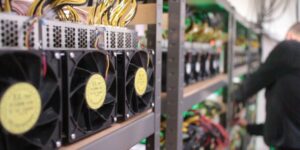
Bitcoin mining secures the network through proof of work. Specialised computers race to find a valid hash for the next block. The first miner or pool to solve it adds the block to the blockchain and earns the block subsidy, currently 3.125 BTC, plus the transaction fees in that block.
Proof of Work Explained
Proof of work: a consensus method where miners spend real computing power and electricity to solve a cryptographic puzzle, making it costly to attack the network and cheap for everyone else to verify.
Miners test enormous numbers of possible answers to a cryptographic puzzle based on the SHA-256 hashing algorithm. The first to find a valid solution earns the right to add the next block of transactions and collect the reward. The work is deliberately hard to perform but trivial to check, which is what lets thousands of independent nodes agree on the same ledger without trusting any single party.
After the April 2024 halving the block subsidy is 3.125 BTC per block. The next halving is expected around April 2028, when the subsidy will fall to 1.5625 BTC. Roughly every ten minutes a new block is found, so this reward is the heartbeat of the entire mining economy.
The Mining Process Step by Step
- Transactions are broadcast. New transactions are sent out across the Bitcoin network and wait in the mempool.
- Miners build a candidate block. Each miner or pool gathers pending transactions into a block they would like to add.
- Machines search for a valid hash. ASICs test billions or trillions of nonce values per second, looking for a hash below the network target.
- A winner broadcasts the block. The first to find a valid hash sends the completed block to the rest of the network.
- Nodes verify and append. Other nodes confirm the block is valid and add it permanently to the blockchain, and the reward is paid.
Mining is therefore not only about earning Bitcoin. Miners validate transactions, prevent double-spending and provide the computational security that keeps Bitcoin decentralised. The reward is the incentive that pays for that security.
Why Mining Needs ASIC Hardware
In Bitcoin’s early years people mined with ordinary CPUs, then graphics cards, then field-programmable gate arrays. Rising competition ended each of those eras in turn. Profitable Bitcoin mining now requires ASIC miners, or Application-Specific Integrated Circuits, designed to do nothing except compute SHA-256 hashes as fast and efficiently as possible.
The air-cooled Bitmain Antminer S21 Pro is a good reference point: it produces around 234 TH/s while drawing roughly 3,510 watts, and it is built to run continuously in a professional environment. A general-purpose computer cannot come close to that efficiency, which is why hobby hardware disappeared from Bitcoin mining years ago.
Why Hosting Becomes Essential
ASICs are loud, hot and power-hungry. Many units produce 60 to 75 dB of noise, similar to a vacuum cleaner or lawn mower running all day, and a 3,000-watt-plus miner behaves like a permanent industrial heater. For most Australian homes that creates real problems with heat, noise, electrical wiring, insurance and electricity cost. Hosting solves every one of these operational problems at once by moving the machine into a facility built for exactly this purpose.
Bottom line: proof of work makes ASIC efficiency and cheap power the two levers that decide whether a miner earns or loses money.
Why Australian Miners Need Hosting
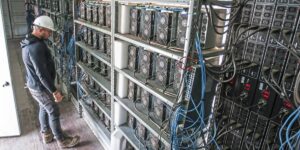
Australian miners need hosting because residential electricity, summer heat, noise, wiring limits and insurance gaps make home ASIC mining impractical. Hosting facilities secure industrial power rates, professional cooling and the scale that residential setups simply cannot reach.
Australia Electricity Cost Challenge
Electricity is the single biggest factor in Bitcoin mining profitability in Australia. A miner drawing 3.5 kW continuously uses around 84 kilowatt-hours per day. At 33 cents AUD per kilowatt-hour that is more than AUD $27 per day in power alone. At 12 cents per kilowatt-hour the same machine costs closer to AUD $10 per day. Over a year, that gap is the difference between a profitable operation and a loss-making one.
Stat: Australian residential electricity averaged around 33 cents AUD per kilowatt-hour in early 2026, with South Australia the highest and Victoria and Tasmania the lowest, according to Canstar and Australian Energy Regulator reference data.
Hosting facilities use bulk power agreements, strategic locations and renewable energy access to secure rates residential miners cannot usually obtain. You can model the difference for any machine and any rate with the Mining Store Live Income Estimation Tool.
Heat Noise and Residential Limits
Australia’s climate makes cooling harder than in colder mining regions. Summer temperatures above 40°C can cut machine efficiency and shorten hardware lifespan if cooling is poor, so professional facilities use high-volume airflow, filtration, temperature control and sometimes hydro or immersion cooling to hold a safe operating temperature year round.
Noise is a second hard limit. ASIC miners are unsuitable for most suburban homes and apartments, and continuous fan noise can trigger neighbour complaints or council issues. A garage or shed rarely solves it because the sound and heat still have to go somewhere. Hosting removes the problem entirely by placing the machine in an industrial setting.
Renewable Energy and Scalability
Australia has strong solar, wind and hydro resources. Well-located facilities can use renewable or surplus energy, lowering costs and supporting more sustainable crypto mining. Hosting also solves scalability. Instead of upgrading home wiring or building a shed full of fans every time you add a machine, you simply add miners to a professional facility as your strategy grows, with no new infrastructure of your own.
Insurance and Liability
Running industrial mining equipment at home may create insurance gaps. Electrical fires, heat damage and commercial equipment use may not be covered by ordinary home and contents policies, and a claim could even be refused if undisclosed commercial activity contributed to the loss. A professional hosting facility is designed, wired and insured for mining operations, which removes that personal liability.
Bottom line: for most Australians the maths and the practicalities both point firmly towards hosted mining rather than home mining.
How Crypto Miner Hosting Works in Practice
Quick answer. Hosted mining follows six clear steps: choose a provider, select hardware, ship or buy the miner, configure it and choose a pool, start mining and monitoring, then rely on the provider for maintenance and reporting.
- Choose a hosting provider. Compare the all-inclusive electricity rate, facility location, uptime record, contract length, security, repair capability and quality of communication. The cheapest rate is not always the best deal.
- Select your mining hardware. Compare SHA-256 options such as the Bitmain Antminer S21, S21 Pro, S21 XP Hydro and newer S23 Hydro, plus WhatsMiner and Avalon alternatives, on hash rate, efficiency, warranty and hosting compatibility.
- Ship or purchase the equipment. If you buy through the provider, the miner can be sent straight to the facility. If you already own hardware, you can usually ship it under a bring-your-own-miner arrangement, after which the provider receives, inspects and prepares it.
- Configure and choose a pool. The team installs the miner, connects power and internet, updates firmware if needed, and points it at your chosen mining pool using your wallet address. You keep control of where the coins go.
- Mine and monitor. Once online the miner begins hashing, and you track hash rate, uptime, temperature and estimated revenue through a dashboard. Pool payouts may arrive daily, weekly or once a threshold is reached.
- Maintenance and reporting. The provider manages cooling, power, troubleshooting and repairs. Some offer co-management or autopilot services, where they deduct operating costs and send the net proceeds to you.
Bottom line: once configured, hosted mining runs largely hands-off, which is why roughly 95% of Mining Store clients choose hosting over a home setup.
How Much Crypto Miner Hosting Costs in Australia

Australian crypto miner hosting commonly runs from about 7 to 20 cents AUD per kilowatt-hour as an all-inclusive rate covering electricity, cooling, security and maintenance. Setup fees, repairs, shipping and early termination may be charged separately, and the ASIC itself can cost from a few thousand to tens of thousands of dollars.
Hosting Fee Structure
Most hosted mining services charge per kilowatt-hour, and that single rate usually bundles electricity, rack space, cooling, monitoring, security and basic maintenance. The benefit of an all-inclusive rate is predictability: you can model your running cost from one number. The risk is that some providers quote a low base electricity rate and then add management or cooling fees on top, so always ask for the total all-in cost before comparing.
What Drives the Per Kilowatt Hour Rate
Hosting rates vary because the underlying costs vary. The main drivers are the provider’s bulk power agreement, the location and local energy market, the cooling technology used, the scale of the facility, and the level of service and monitoring included. A facility on cheap surplus renewable energy with large-scale hydro cooling can offer a lower rate than a small air-cooled site on retail power, even before service quality is considered.
Current Market Rates
As one example, Mining Store Australia currently advertises hosting at 12 cents AUD per kilowatt-hour at its EU facility, with other regions quoted separately. Approximately 95% of its clients use the hosting service rather than running machines at home. Because providers structure fees differently, a single all-inclusive figure remains the fairest way to compare one facility against another.
Stat: 12 cents AUD per kilowatt-hour is the Mining Store EU hosting rate confirmed on miningstore.com.au in 2026, well below the average Australian residential rate of around 33 cents.
Profitability Example
An Antminer S21 Pro drawing 3.51 kW consumes about 84.24 kilowatt-hours per day. The table below shows the daily power cost alone, before cooling, hardware depreciation and other costs.
| Electricity rate (AUD per kWh) | Where this applies | Daily power cost (AUD) |
| 0.12 | Mining Store EU hosted rate | $10.11 |
| 0.20 | Higher end of Australian hosted rates | $16.85 |
| 0.33 | Average Australian home rate | $27.80 |
This is why Bitcoin mining is difficult at residential rates but can be viable at hosted industrial rates. Final profit still depends on the Bitcoin price, network difficulty, pool fees, uptime and your hardware cost, which you can stress-test with the Mining Store Compound Calculator across bull, base and bear scenarios.
Hidden Costs to Budget For
Beyond the headline per kilowatt-hour rate, budget for one-time setup or onboarding fees, repair parts and labour outside warranty, inbound or return shipping, any early termination penalty, and the cost of the ASIC itself. A clear provider will list these up front rather than leaving them to surface later.
Bottom line: the per kilowatt-hour rate is the number that compounds over thousands of operating hours, so a few cents either way decides the outcome.
Hosted Mining Versus Home Mining Versus Cloud Mining
Home mining gives the most control but the highest cost in Australia. Hosted mining offers the best balance for serious miners, because you own the ASIC and earn the coins while a facility runs it. Cloud mining has the lowest barrier to entry but the highest trust risk, because you own no hardware at all.
| Factor | Home mining | Hosted mining | Cloud mining |
| Own the hardware | Yes | Yes | No |
| Electricity rate | Residential, around 33c | Industrial, from around 12c | Built into the contract |
| Operational burden | High | Low | None |
| Physical control | Full | Limited | None |
| Main risk | Cost, heat, noise | Counterparty risk | Scams, no asset |
Home mining gives maximum control: you own and operate the hardware, choose the pool, keep direct custody of the machine and avoid third-party risk. In Australia, however, it is usually expensive, noisy, hot and difficult to scale.
Hosted mining offers the best balance for most serious Australian miners. You own the ASIC, receive the mined cryptocurrency and avoid the operational burden, in exchange for counterparty risk, identity checks and hosting fees.
Cloud mining has the lowest barrier to entry but the highest trust risk. You usually own no hardware, have limited transparency and rely entirely on contract promises. Because the sector has a long history of scams, owning hardware through a reputable hosting provider is generally the stronger option.
Bottom line: hosted mining keeps the ownership benefits of home mining while removing most of its operational pain.
Understanding ASIC Miners and Hardware Choices
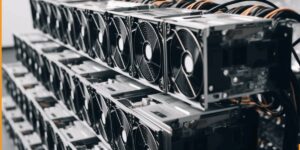
Quick answer. An ASIC miner is a computer built for one algorithm. Bitcoin uses SHA-256, so a Bitcoin ASIC cannot be repurposed for gaming or AI. The most important specification is efficiency in joules per terahash, because lower J/TH means lower electricity cost per unit of mining work.
What an ASIC Miner Is
ASIC miner: an Application-Specific Integrated Circuit built to mine one algorithm. Its value depends on hash rate, efficiency in joules per terahash, and resale demand.
Because a Bitcoin ASIC does only one job, it cannot be reused for general computing if mining stops being profitable. That makes the purchase decision important: you are buying a single-purpose machine whose value is tied to its efficiency and to the Bitcoin network’s economics.
Bitmain WhatsMiner and Other Manufacturers
Bitmain’s Antminer series remains one of the most recognised names in Bitcoin mining hardware, available through the Bitmain Antminer range at Mining Store Australia. The S21 Pro is a common air-cooled model, while hydro-cooled models such as the S21 XP Hydro and S23 Hydro are built for industrial facilities. Other major manufacturers include MicroBT, which makes WhatsMiner machines, and Canaan, known for the Avalon series.
| Model | Hash rate | Efficiency | Cooling |
| Antminer S21 Pro | 234 TH/s | 15 J/TH | Air |
| Antminer S21 XP | 270 TH/s | 13.5 J/TH | Air |
| Antminer S21 XP Hydro | 473 TH/s | 12 J/TH | Hydro |
| Antminer S23 Hydro | 580 TH/s | 9.5 J/TH | Hydro |
The S23 Hydro is the most efficient SHA-256 ASIC in Bitmain’s current lineup, and its 3U variant reaches up to 1,160 TH/s in a single chassis for facilities with the electrical headroom. When comparing any machine, focus on hash rate, efficiency in J/TH, power draw, warranty, cooling type and hosting support. You can compare available stock in the Mining Store ASIC miner range.
Air Cooling Versus Hydro Cooling Versus Immersion
Air-cooled miners are the simplest to deploy and the easiest to host, using fans to move heat across heatsinks. Hydro-cooled miners circulate liquid through the machine, which removes heat far more effectively, lowers noise and allows higher hash rates in a smaller chassis, but they require a facility with the right plumbing and a coolant distribution unit. Immersion cooling submerges hardware in a non-conductive fluid and can extend lifespan and efficiency further. For most Australian hosting clients the practical choice is between air-cooled and hydro-cooled models, decided by which facility you use.
New Versus Used ASIC Miners
Used ASICs can reduce the upfront cost, but they may carry hidden risks: worn fans, degraded hashboards, expired warranty and unknown operating history. New machines from authorised suppliers cost more but offer better reliability, full warranty and clearer support, which matters when a machine is meant to run continuously for years.
Alternative Mining Algorithms
Not all hosting is Bitcoin-only. Scrypt miners such as the Antminer L9 can mine Litecoin and Dogecoin together through merged mining, which can diversify income. Monero uses the RandomX algorithm and has traditionally favoured CPUs, making it more accessible to hobbyists, though returns are modest compared with industrial Bitcoin mining.
Bottom line: efficiency in joules per terahash is the specification that protects your margin as difficulty rises, which is why hydro-cooled models now dominate new industrial deployments.
Hash Rate Difficulty and Mining Pools
Quick answer. Hash rate measures the computing power securing the network, and your share of it sets your share of rewards. Difficulty adjusts every 2,016 blocks to keep blocks near ten minutes. Because a single ASIC is a tiny fraction of a near one zettahash network, miners join pools to earn steady payouts.
What Hash Rate Is
Hash rate: the total computing power mining a network, measured in hashes per second. A higher network hash rate means more security and a smaller share for any single machine.
Stat: Bitcoin’s network hash rate first crossed one zettahash per second in late 2025 and has fluctuated around 960 to 1,020 exahashes per second through early 2026, according to Hashrate Index and Bitcoin.com News.
What Mining Difficulty Is
Mining difficulty: a self-adjusting measure of how hard it is to find a valid block. It recalibrates roughly every two weeks, every 2,016 blocks, to keep the average block time near ten minutes.
When more hash rate joins the network, difficulty rises and each terahash earns less Bitcoin, which raises the importance of efficient hardware and cheap power. Difficulty sat near record highs through 2026 after peaking around 148 trillion in late 2025, then adjusting downward several times as some miners reduced operations.
Why Mining Pools Matter
Solo mining is effectively a lottery for ordinary miners, because a single machine has a vanishingly small chance of finding any given block. A mining pool combines hash rate from many miners and shares the rewards according to contribution, turning rare large wins into steady smaller payouts. Large pools such as Foundry USA, AntPool, F2Pool and ViaBTC regularly account for significant shares of block production.
| Payout model | How it pays | Reward variance |
| PPS | A fixed payment for each valid share | Lowest |
| FPPS | Per share plus a share of transaction fees | Low |
| PPLNS | Based on the last N shares submitted | Higher |
How Payouts and Wallets Work
In hosting, you provide your own pool account and wallet address, so the coins you earn are sent to a destination you control rather than to the provider. Pools typically charge a 1 to 2.5% fee and pay out daily or once your balance passes a minimum threshold. Keeping custody of your wallet keys is an important part of the security picture, separate from who operates the hardware.
Bottom line: with the network near one zettahash, pools and efficient hardware are what turn mining into a steady income rather than a gamble.
Bitcoin Halving and Hosting Decisions
Quick answer. The Bitcoin halving cuts the block subsidy by 50% roughly every four years. The April 2024 halving dropped the reward to 3.125 BTC, and the next, expected around April 2028, will cut it to 1.5625 BTC. Halvings make low power costs and efficient ASICs decisive.
What Bitcoin Halving Is
Bitcoin halving: a programmed event roughly every four years that cuts the block subsidy in half, gradually reducing new Bitcoin issuance over time.
The reward fell from 6.25 BTC to 3.125 BTC in April 2024 and is expected to drop to 1.5625 BTC around April 2028. This schedule is fixed in the protocol and is what gives Bitcoin its predictable, decreasing supply.
Why Halving Matters for Hosted Miners
A halving reduces miner revenue overnight, unless the Bitcoin price or transaction fees rise enough to compensate. That makes the electricity rate, uptime and ASIC efficiency more important than ever. Older, less efficient machines often turn unprofitable after a halving, while efficient hosted miners on cheap power are far better placed to survive the squeeze.
Strategic Implications for Australians
Model multiple scenarios before buying hardware, because a machine that is profitable at one price or difficulty level can become marginal later. Run bull, base and bear cases with a profitability tool and the Mining Store Compound Calculator before committing capital, and favour efficiency and the lowest credible power cost you can secure.
Bottom line: in a post-halving market, the miners with the lowest power cost and the most efficient hardware are the ones most likely to stay profitable.
Bitcoin Versus Monero Litecoin and Dogecoin Mining
Quick answer. Bitcoin offers the deepest liquidity and the largest network but the most competition. Monero uses RandomX and can be mined on CPUs with modest returns. Litecoin and Dogecoin can be mined together through Scrypt merged mining, though altcoin profitability is more volatile.
| Coin | Algorithm | Typical hardware | Notes |
| Bitcoin | SHA-256 | ASIC | Largest network, deepest liquidity, highest difficulty |
| Monero | RandomX | CPU | Privacy focused, ASIC resistant, modest returns |
| Litecoin and Dogecoin | Scrypt | Scrypt ASIC | Mined together via merged mining, more volatile |
Bitcoin mining offers the deepest liquidity, the largest network and the strongest institutional market, alongside the most competition and the greatest reliance on ASIC efficiency. Monero is designed around privacy and ASIC resistance, while Litecoin and Dogecoin can share Scrypt hardware through merged mining to diversify income at higher volatility.
Bottom line: Bitcoin remains the core of industrial hosting, while altcoins can diversify income at the cost of higher volatility.
Crypto Mining Tax and Regulation in Australia
Quick answer. Cryptocurrency mining is legal in Australia, and the ATO treats crypto as property rather than currency. Hobby miners generally face capital gains tax on disposal, while business miners treat mined coins as assessable income at their AUD value on receipt and may deduct related costs. Always seek licensed tax advice.
Is Mining Legal in Australia
Cryptocurrency mining in Australia is legal. Crypto is generally treated as property rather than legal tender, and Australian tax rules apply depending on whether your mining is a hobby or a business. The distinction is decided case by case, based on factors such as scale, regularity, commercial intent and how business-like the operation is.
Hobby Versus Business Mining
| Aspect | Hobby miner | Business miner |
| Coins when received | Not income, treated as a capital acquisition | Assessable income at AUD market value on receipt |
| Expense deductions | Generally not deductible | Hosting, hardware depreciation and pool fees may be deductible |
| On disposal | Capital gains tax applies | Capital gains or trading stock rules apply |
Individuals who hold mined crypto for more than 12 months may qualify for the 50% capital gains tax discount on disposal. Anyone using hosting at scale is more likely to be viewed as carrying on a business, which changes how the coins are taxed when received.
Records GST and AUSTRAC
Keep detailed records for at least five years, including reward dates, AUD values, expenses, wallet addresses and disposals. Larger operations may need GST advice. Digital currency exchanges and virtual asset service providers are regulated through AUSTRAC, and Australia is moving to implement the OECD Crypto Asset Reporting Framework, which will increase data sharing on crypto income. For mining-specific tax structuring, Mining Store works with its partner Crypto Tax Australia.
Keeping Good Records
Good record keeping is the cheapest insurance a miner can buy. Record the date and AUD value of every reward when received, every hosting invoice, every hardware purchase and its depreciation, every pool fee, and every disposal. Clean records make the hobby-versus-business question, and any future audit, far easier to handle.
Bottom line: this is general information only, and every miner should confirm hobby or business treatment with a licensed Australian tax professional and the ATO at ato.gov.au.
How to Choose the Right Hosting Provider in Australia
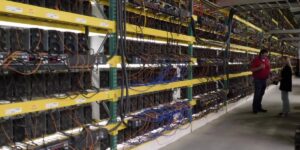
Quick answer. The best provider is not always the cheapest. Compare the all-inclusive rate per kilowatt-hour, the minimum term, uptime guarantee, repair process, security and fee escalation clauses. A one cent per kilowatt-hour difference compounds significantly over thousands of operating hours.
Electricity Rate and Uptime
Compare the all-inclusive crypto mining electricity cost in Australia alongside the minimum term, uptime guarantee, repair turnaround and any fee escalation clauses. Uptime matters as much as the rate: a machine that is offline earns nothing no matter how cheap the power, so a strong uptime guarantee can be worth more than a marginally lower rate.
Repairs Security and Transparency
Look for on-site repair capability, spare parts availability, 24/7 monitoring, fire suppression, restricted access and real-time reporting. A strong provider communicates clearly and shows hash rate, uptime, temperature and billing data, so you are never guessing about the state of your hardware.
Domestic Versus International Hosting
| Factor | Australian hosting | International hosting |
| Jurisdiction | Simpler, local law | Foreign jurisdiction risk |
| Electricity rate | Higher on average | Often lower |
| Logistics | Easier hardware access | Shipping, customs and currency risk |
Questions to Ask Before You Sign
- What is the total all-in rate per kilowatt-hour, with every fee included?
- What uptime do you guarantee, and what happens if you miss it?
- How are repairs handled, and who pays for parts and labour?
- What is the minimum term, and what are the early termination penalties?
- How and when can I withdraw or return my miner?
- What monitoring and reporting will I have access to?
Bottom line: weigh the lowest rate against uptime, repairs and jurisdiction, because downtime and poor support quickly erase a cheap headline price.
Using a Bitcoin Mining Profitability Calculator
Quick answer. A profitability calculator is essential before buying hardware, because mining revenue changes with the Bitcoin price, difficulty, fees, hash rate, power draw and hosting rate. Enter your real numbers and run bull, base and bear scenarios rather than a single optimistic forecast.
Why Calculators Matter
Mining revenue moves with the Bitcoin price, network difficulty, transaction fees, the block reward, the pool payout model, your hash rate, your power draw and your hosting rate. A calculator turns all of those moving parts into a clear estimate, so a purchase becomes a decision rather than a guess.
Inputs to Check
Enter your miner’s hash rate, power consumption, hosting cost per kilowatt-hour, pool fee, expected uptime, hardware price and Bitcoin price assumptions, then test a range of outcomes with the Mining Store Live Income Estimation Tool. Small changes in difficulty or price can move the result substantially, so always test more than one scenario.
ROI Expectations
Stat: the reported fully loaded cost to produce one Bitcoin sat near US$137,000 in early 2026, and with difficulty near record highs, ROI timelines for new hardware have stretched well beyond 1,000 days at current prices.
Treat hosted mining as a medium to long-term strategy, not a guaranteed quick return. Profitability is achievable, but only when power cost, uptime and hardware efficiency are managed carefully. ROI can shorten meaningfully during bull markets as higher prices lift mining revenue.
Bottom line: if a machine only works in your most optimistic scenario, it is not yet a sound purchase.
Benefits of Crypto Miner Hosting for Australians

Quick answer. Hosting gives Australians cheaper power, professional infrastructure, passive and scalable operation, and freedom from heat, noise and maintenance, with the option of renewable-powered facilities.
Lower Costs and Better Infrastructure
The biggest advantage of crypto miner hosting in Australia is access to cheaper electricity and professional infrastructure. Hosting removes the need to build cooling, power distribution, security and monitoring systems yourself, all of which are expensive and difficult to do well at home.
Passive and Scalable Mining
Hosting turns mining into a more passive investment. You choose the hardware and strategy while the provider manages operations, and scaling from one miner to several is far easier in a facility than at home, where every new machine means more heat, noise and wiring.
Reduced Heat Noise and Maintenance
Hosting eliminates the heat, noise and maintenance burden of running ASICs at home, which is especially valuable in Australian suburbs, apartments and warm climates where a single machine can disrupt an entire household.
Renewable Energy Potential
With Australia’s strong solar and wind resources, renewable-powered facilities can reduce environmental impact while accessing lower-cost energy, making sustainable crypto mining increasingly relevant.
Bottom line: hosting converts mining from a noisy technical project into a managed, scalable investment.
Drawbacks and Risks of Crypto Miner Hosting
Quick answer. The main risks are counterparty risk if the provider fails, reduced privacy from identity checks, less physical control over your machine, and fees or contract clauses that can reduce returns. Choosing an established, transparent provider mitigates most of these.
Counterparty Risk
You are trusting a provider with valuable hardware. If they fail, become insolvent, suffer a prolonged outage or handle repairs poorly, your returns may suffer, so choose established providers with transparent contracts and a track record through bear markets.
KYC and Privacy
Most reputable providers require identity verification, so hosted mining is less private than home mining and may create records linking you to the coins you mine. For most miners this is an acceptable trade for lower cost and lower effort.
Less Physical Control
You cannot immediately access or inspect your machine and must rely on the provider for maintenance, troubleshooting and withdrawal logistics. Clear reporting and a responsive support team reduce how much this matters in practice.
Fees and Contract Constraints
Setup fees, hosting fees, repair charges and early termination penalties can all reduce returns, so read every clause before signing and model the total cost rather than just the headline rate.
How to Reduce These Risks
Choose a provider with a long operating history and transparent reporting, keep custody of your own wallet keys, read the contract in full, start with a single machine before scaling, and keep your own records of hash rate, uptime and payouts so you can verify what the dashboard shows.
Bottom line: hosting trades some control and privacy for far lower cost and effort, a trade most serious Australian miners are happy to accept.
Common Mistakes Australian Miners Make
A few avoidable mistakes account for most disappointing results in hosted mining. Watch for these before you commit capital:
- Chasing the lowest rate alone. A cheap rate with poor uptime or slow repairs can earn less than a slightly higher rate with reliable operation.
- Ignoring efficiency. An older machine with high joules per terahash can become unprofitable quickly as difficulty rises, even on cheap power.
- Modelling only one scenario. Planning around a single optimistic Bitcoin price hides the risk if price or difficulty moves against you.
- Forgetting tax and records. Failing to track AUD values at receipt makes tax reporting harder and can cost money later.
- Skipping the contract detail. Setup, repair and early termination clauses can change the real cost significantly.
Glossary of Key Bitcoin Mining Terms
| Term | Definition |
| ASIC | An Application-Specific Integrated Circuit built to mine one algorithm, such as SHA-256 for Bitcoin. |
| Hash rate | The total computing power mining a network, measured in hashes per second. |
| Hash | A fixed-length output produced by running data through a cryptographic function such as SHA-256. |
| Difficulty | A self-adjusting measure of how hard it is to find a block, recalibrated about every two weeks. |
| Proof of work | A consensus method where miners spend computing power and electricity to secure the network. |
| Block subsidy | The new Bitcoin paid to the miner of each block, currently 3.125 BTC. |
| Halving | A programmed event roughly every four years that cuts the block subsidy in half. |
| Nonce | The changing value miners adjust as they search for a valid block hash. |
| J/TH | Joules per terahash, the standard efficiency measure for ASIC miners. Lower is better. |
| Mining pool | A group of miners that combine hash rate and share rewards by contribution. |
| FPPS | Full Pay Per Share, a payout model that pays for valid shares plus a share of fees. |
| Colocation | Housing your hardware in a third-party data centre that provides power, cooling and security. |
| Custodial hosting | A model where you own the miner and the provider operates it for a per kilowatt-hour fee. |
| Hydro cooling | Liquid cooling that circulates coolant through a miner for higher efficiency and lower noise. |
| KYC | Know Your Customer identity verification required by most reputable providers. |
Your Next Step With Mining Store Australia
Crypto miner hosting in Australia is the most practical path into serious mining for most people. High residential electricity, extreme summer heat, ASIC noise, insurance concerns and limited home electrical capacity make home mining difficult, while hosting delivers industrial power rates, professional cooling, remote monitoring, repair support and scalable infrastructure. With the block subsidy at 3.125 BTC and the network near one zettahash per second, every cent per kilowatt-hour and every joule per terahash now decides whether a miner stays profitable.
This is exactly the problem Mining Store Australia was built to solve. As Australia’s number-one Bitcoin mining hardware supplier and a leading crypto mining hosting provider, the Melbourne-based team founded by Bitcoin miners William Wright and Callum Cameron offers ASIC miners for sale Australia wide, Bitcoin miner hosting at 12 cents per kilowatt-hour at its EU facility, an on-site service centre, and tools including the Live Income Estimation Tool and the Mining Strategy Calculator. More than 6,000 Australian clients already rely on its hosted mining facilities, and beginners can start with the free education hub.
To explore your options, model your returns and choose the right machine for your budget, visit the Mining Store Australia crypto mining hosting facilities page at https://www.miningstore.com.au/crypto-mining-hosting-facilities/ or book a free consultation. Call 1300 644 978 or email [email protected] to discuss your mining strategy.