
Introduction to Bitcoin Mining with Hosting in Australia

Bitcoin mining has undergone a remarkable transformation over the past decade. Once a hobbyist activity conducted in residential garages, it has now evolved into a highly competitive, industrial-scale operation. In Australia, this shift is particularly evident due to rising electricity costs, stringent zoning regulations, and a growing institutional interest in cryptocurrencies.
For Australians looking to enter the world of Bitcoin mining, hosting services offer a streamlined and efficient solution. By outsourcing the technical, logistical, and infrastructural challenges of mining, individuals and businesses can focus on maximising profitability with professional support. This guide will walk you through the benefits of hosted mining, explain how it works, compare different hosting models (cloud vs. ASIC hosting), and provide a step-by-step approach to starting a mining operation.
Bitcoin vs Monero: Why Bitcoin Mining is Better Suited to Hosting

The Mining Differences: Bitcoin vs Monero
Understanding the key differences between Bitcoin and Monero is crucial when selecting your mining focus. Both are highly sought-after cryptocurrencies, but they require different approaches to mining:
- Bitcoin Mining: Utilises the SHA-256 algorithm and demands ASIC (Application-Specific Integrated Circuit) miners to remain competitive. This makes Bitcoin mining ideal for industrial-scale hosting, as it requires high power consumption, robust cooling systems, and 24/7 operation.
- Monero Mining: Uses the RandomX algorithm, optimised for CPU and GPU mining, making it better suited to small-scale or home mining. Monero’s resistance to ASIC centralisation allows for more accessible mining for the average individual.
Given that Bitcoin requires ASICs, high hashrates, and constant uptime, it aligns naturally with hosted mining, where professional infrastructure guarantees optimal performance.
Understanding Cryptocurrency Mining and the Role of Hashrate
What is Cryptocurrency Mining?
Cryptocurrency mining involves solving complex mathematical problems that validate transactions and add them to the blockchain. For Bitcoin, this requires immense computational power and a system that runs continuously. Miners who successfully solve these problems are rewarded with Bitcoin and transaction fees.
What is Hashrate?
Hashrate measures the computational power used in cryptocurrency mining and is typically measured in terahashes per second (TH/s). The higher the hashrate, the more likely a miner is to earn rewards. Hashrate also directly impacts mining difficulty and profitability.
ASIC Miners: The Backbone of Bitcoin Mining
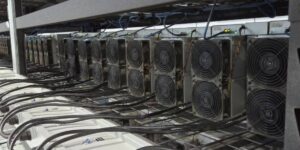
ASIC miners are purpose-built machines designed for efficient Bitcoin mining. Some of the advantages include:
- High Efficiency: ASIC miners are significantly more energy-efficient than CPU or GPU miners.
- Durability: Designed for 24/7 operation, ASICs are built to endure the demanding conditions of continuous mining.
- Examples: Popular ASIC miners like the Bitmain Antminer S19 Pro, Antminer KA3, and the upcoming Antminer S23 models deliver impressive performance.
Choosing the right ASIC is paramount for success in hosted Bitcoin mining. Key considerations include power consumption, hashrate, and initial costs.
Power Considerations: The Role of Electricity in Mining Profitability
Electricity as a Mining Cost Factor in Australia
The cost of electricity is the largest ongoing expense for Bitcoin miners, and Australia presents a unique challenge with its electricity pricing:
- Residential electricity rates in Australia often exceed A$0.25/kWh, which is unsustainable for large-scale mining operations.
- Industrial and hosted rates, however, can be as low as A$0.12/kWh. Colocation facilities, which offer miner hosting, often secure bulk electricity contracts and may source power from renewable energy sources such as solar, hydroelectric, or wind power.
Leveraging hosted mining allows miners to benefit from lower operational costs, while also contributing to a more sustainable approach to cryptocurrency mining.
What is Hosted Mining? A Comprehensive Breakdown

What is Hosted Mining?
Hosted mining, also referred to as custodial mining, allows miners to rent space, electricity, and maintenance services from a third-party provider while maintaining ownership of the ASIC hardware. This model includes several key features:
- Ownership: You retain ownership of your mining hardware.
- Infrastructure: The hosting provider offers all necessary services, including cooling, power, security, internet, and maintenance.
- Uptime Guarantees: Providers offer uptime guarantees (typically around 95%), ensuring consistent returns.
- Real-Time Monitoring: Many providers offer dashboards to track the performance of your mining equipment in real time.
Hosted mining is distinct from cloud mining, where users rent hashrate but do not own the hardware, often resulting in lower returns and higher risks of fraud.
The Importance of Joining a Bitcoin Mining Pool
Why Mining Pools are Essential
Mining pools are groups of miners who combine their computational power to increase the chances of successfully mining a block. This is especially critical in Bitcoin mining, where solo mining has become nearly obsolete due to the high difficulty level.
Mining Pool Payout Models
- PPS (Pay Per Share): Provides a fixed payout for each share submitted.
- FPPS (Full Pay Per Share): Includes both block rewards and transaction fees.
- PPLNS (Pay Per Last N Shares): Rewards miners based on the number of shares they submit over a defined period.
Many hosted mining providers offer seamless integration with mining pools, which helps Australian miners benefit from consistent and stable payouts.
Top Bitcoin Mining Pools for Australians
Proximity to mining pool servers can reduce latency and improve mining efficiency. Notable mining pools for Australian miners include Mining Store, F2Pool, Slush Pool, and AntPool.
Containerised vs Traditional Data Centre Hosting
What is Containerised Mining?
Containerised mining refers to using self-contained mining units that can be easily transported and deployed in various locations. This is in contrast to traditional fixed-location colocation hosting. Key advantages include:
- Mobility: Relocate mining units based on power cost or regulatory changes.
- Flexibility: Deploy quickly in underutilised energy zones.
- Resilience: Modular setups allow for easy scaling and redundancy.
Transitioning from Home to Hosted Mining

Evaluating Your Home Setup
Before transitioning to hosted mining, evaluate the performance and profitability of your existing home setup. Consider:
- Power limitations: Residential electricity can be prohibitively expensive for large-scale mining.
- Space and cooling constraints: Home setups often suffer from inadequate cooling solutions.
The logistics of transitioning include shipping your ASIC miners to the hosting provider and assisting with the setup process. Hosting providers typically offer guidance during the transition to ensure your mining equipment is properly installed and connected to a mining pool.
Step-by-Step: How to Start Bitcoin Mining with Hosting
Step 1: Selecting Your Hardware
Choose ASIC miners based on your budget, efficiency needs, and long-term profitability. Popular models include Bitmain’s Antminer S19 Pro and WhatsMiner M30S.
Step 2: Choosing a Hosting Provider
When selecting a hosting provider, consider factors such as:
- Energy rates and uptime guarantees.
- Support responsiveness and service agreements.
- Provider reputation and transparency.
Leading providers like Mining Store, Himari Miners, and IFS Team offer a variety of hosting options.
Step 3: Shipping and Installation
You can either ship your ASIC miners to the hosting provider or purchase miners directly through them. The hosting provider will handle installation and ensure your equipment is properly connected to a mining pool.
Step 4: Monitor Performance
Use the monitoring platform provided by the hosting provider to track your hashrate, power usage, and earnings. Stay in contact with support for troubleshooting.
Step 5: Collect Earnings and Manage Finances
Set up a BTC wallet to receive your mining rewards and manage your finances. Keep detailed records for tax compliance with the Australian Taxation Office (ATO).
Mining Profitability: Calculators, ROI and Market Variables

Using Profitability Calculators
Online tools like Mining Store’s Profitability Calculator and CoinWarz allow you to estimate:
- Daily and monthly earnings.
- Break-even points for your setup.
- The impact of electricity rates and hardware efficiency.
Factors Affecting Profitability
- Bitcoin price volatility.
- Mining difficulty adjustments.
- Upcoming halving events that reduce block rewards.
Benefits of Hosted Bitcoin Mining in Australia
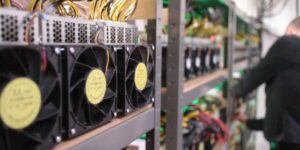
Energy Cost Savings
By using hosted mining, miners benefit from industrial electricity rates, which are often significantly lower than residential rates.
Scalability
Hosting services allow miners to easily scale their operations without investing in costly infrastructure.
Expert Support and Uptime Maximisation
With 24/7 technical support and uptime guarantees, hosted mining maximises profitability by reducing downtime.
Risks and How to Mitigate Them
Risks in Hosted Mining
- Hosting partner insolvency: Choose reputable providers with strong financial backing
- Centralisation risk: Distribute miners across different locations to reduce risks of centralisation.
- KYC and privacy concerns: Understand the implications of providing identification for hosting services.
Legal and Tax Implications in Australia
ATO Guidelines and GST
In Australia, mining income is taxable, and miners must keep detailed records of all transactions. GST may apply to mining services depending on the nature of the transactions. Additionally, ASIC hardware can be depreciated for tax purposes.
Scaling Strategies and Reinvestment Planning
As your Bitcoin mining operation grows, it’s crucial to consider scaling strategies to maximise profitability. Here are key indicators for when and how to scale your mining operation:
- When to Scale: If your mining rig is consistently operating at full capacity, it might be time to add more machines. Monitor mining performance and uptime to determine when additional ASICs or GPU rigs will be beneficial.
- Diversification: Explore diversification by considering the addition of GPU rigs for altcoin mining or exploring AI hosting opportunities for a more balanced portfolio.
- Capital Planning: Carefully plan your budget for reinvestment into new hardware versus taking payouts. Reinvesting into more efficient machines and infrastructure will often provide better long-term returns.
- ROI Monitoring: Continuously monitor ROI to track the success of your scaling efforts. Use profitability calculators and real-time dashboards to measure the impact of new machines and improvements.
Why Choose Mining Store’s Bitcoin Hosting Facilities
Mining Store stands out as one of Australia’s leading hosting providers. With access to renewable energy-powered data centres, industrial electricity rates, and turnkey deployment solutions, they offer miners a range of benefits including:
- State-of-the-art colocation facilities
- Procurement and shipping support
- Real-time performance dashboards
- Transparent contracts with no hidden fees
Visit their hosting services page to explore how Mining Store can help you launch and grow your Bitcoin mining operation with confidence.
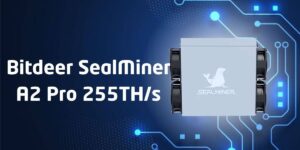
Product Highlight: Bitdeer SealMiner A2 Pro 255TH/s | Hosted or Shipped
Overview
The Bitdeer SealMiner A2 Pro offers one of the highest hashrates available in the market—255 TH/s ± 10% at a power draw of 3790W. It’s engineered for serious miners seeking high ROI and long-term deployment viability. This ASIC miner is ideal for hosted environments due to its power density and cooling needs.
Key Specifications
- Model: SealMiner A2 Pro (SHA-256)
- Hashrate: 255 TH/s ± 10%
- Power Consumption: 3790W
- Form Factor: Data centre optimised
- Price: $9,699.00 AUD inc. GST
Shipping Options
- Hosted: Deployed in EU, Asia, or USA facilities within 3–4 weeks of payment.
- Direct Shipping: Delivered via FedEx, DHL, or UPS within 5–7 business days.
Best Use Cases
- Hosted setups requiring maximum efficiency per rack unit
- Institutional miners scaling up with fixed electricity budgets
- Australian miners leveraging offshore energy pricing
Key Benefits
- Exceptional TH/s per watt performance for long-term ROI
- Perfect for use in Mining Store’s hosting facilities
- Combines seamlessly with Mining Store’s turnkey setup and performance monitoring services
Whether you’re scaling up or starting out, the Bitdeer SealMiner A2 Pro delivers unmatched performance in hosted environments. Secure yours today through Mining Store and enjoy high-efficiency mining with the support of Australia’s leading hosting provider.
Conclusion
Bitcoin mining in Australia has become more accessible than ever, thanks to hosted mining services. By leveraging professional hosting providers, miners can maximise profitability, reduce operational costs, and ensure a scalable and sustainable operation. Whether you’re a beginner or an experienced miner, hosted mining offers the infrastructure and support needed to succeed.
If you’re looking for a trusted hosting provider in Australia, Mining Store stands out as one of the leading companies, offering cutting-edge solutions for Bitcoin mining. With access to renewable energy-powered data centres, low electricity rates, and industry-leading support, Mining Store provides everything you need to launch and scale your mining operation.
Start smart. Mine efficiently. Host with confidence in Australia. Visit Mining Store today and discover how they can help you optimise your Bitcoin mining journey with state-of-the-art colocation facilities and expert support.