
Why Mining Pools Matter in Australia

A Bitcoin mining pool lets Australian miners combine their hashrate so they find blocks more often and share the rewards in proportion to the work each contributes. Instead of the rare, unpredictable payout of solo mining, pool members earn smaller but far more regular income, usually through a hosted ASIC connected to a global pool such as Foundry USA or AntPool.
For Australians, however, Bitcoin mining comes with a unique set of challenges. Electricity prices are often higher than in major global mining hubs, access to ultra-cheap power can be limited, and running loud, heat-producing ASIC miners at home is rarely practical. At the same time, interest in crypto mining in Australia remains strong, particularly among investors who want exposure to Bitcoin infrastructure rather than simply buying and holding BTC.
This is where Bitcoin mining pools become essential. Solo mining is no longer viable for most individuals because the Bitcoin network has become extremely competitive. Mining difficulty is high, modern ASIC hardware is expensive, and global mining farms operate at an industrial scale. A single miner at home has only a tiny chance of finding a block independently.
A mining pool solves this problem by allowing miners to combine their computational power, known as hashrate, and share rewards according to contribution. Instead of waiting months or years for a possible solo block, Australian miners can earn smaller but more regular payouts. For many local miners, participation through a professional provider such as Mining Store Australia can make mining more practical by combining pool access, hosting facilities, technical support, and energy solutions designed for Australian conditions.
Historical Context of Bitcoin Mining and Pools
The early days of Bitcoin mining
In the early years of Bitcoin, from 2009 to around 2012, mining was possible with ordinary personal computers. Early miners used CPUs and then GPUs to contribute hashrate to the network. During this period, solo Bitcoin mining was still realistic because there were fewer miners competing and network difficulty was much lower.
The rise of ASIC miners
The mining landscape changed dramatically in 2013 with the rise of ASIC miners. ASIC stands for application-specific integrated circuit. Unlike CPUs or GPUs, ASICs are purpose-built machines designed to perform one task extremely efficiently. In Bitcoin’s case, that task is SHA-256 hashing.
Once ASICs entered the market, older hardware quickly became uncompetitive. Miners who continued using CPUs or GPUs for Bitcoin could no longer compete with specialised machines producing vastly more hashrate per watt.
The emergence of mining pools
As mining difficulty increased, miners began joining forces through Bitcoin mining pools. One of the earliest well-known pools was Slush Pool, launched in 2010. The concept was simple but powerful: combine hashrate, increase the chance of finding blocks, and distribute rewards fairly among participants.
Today, mining pools dominate Bitcoin mining. Most blocks are found by large pools rather than individual solo miners. The industry has become professionalised, with industrial facilities, high-efficiency ASIC fleets, advanced cooling systems and sophisticated pool infrastructure.
For Australians, this history matters because it explains why mining has shifted from a home hobby to a serious infrastructure activity. Many local miners now participate in global pools through ASIC hosting services instead of trying to mine independently from home.
What Is Bitcoin Mining?

Bitcoin mining explained
Bitcoin mining is the process of verifying transactions and adding new blocks to the Bitcoin blockchain. It uses a consensus mechanism called Proof of Work, where miners compete to solve a cryptographic puzzle.
Miners use hardware to perform trillions of calculations, or hashes, every second. The goal is to find a valid block hash that meets the Bitcoin network’s difficulty target. When a miner or mining pool finds a valid block, that block is added to the blockchain and the miner earns a reward.
The role of miners
Miners perform several important functions. Miners secure the Bitcoin blockchain by making it costly to attack. They confirm transactions by including them in blocks. Bitcoin miners help prevent double spending by ensuring that the same bitcoin cannot be spent twice. They also earn rewards in the form of the block subsidy and transaction fees.
This reward system gives miners an economic incentive to protect the network. The stronger the combined global hashrate, the harder it becomes for an attacker to rewrite transaction history.
Mining hardware evolution
Bitcoin mining hardware has evolved rapidly. In the beginning, CPUs were enough. Then, GPUs became the preferred option because they could perform more parallel calculations. Later, FPGA devices offered better efficiency. Today, ASIC miners are the industry standard for Bitcoin mining.
Modern machines such as the Bitmain Antminer series are designed specifically for SHA-256 mining. They deliver high hashrate and improved energy efficiency, which is essential in a competitive post-halving environment.
Mining difficulty and rewards
Bitcoin mining difficulty adjusts every 2,016 blocks, roughly every two weeks, to maintain an average block time of about 10 minutes. If miners add more hashrate to the network, difficulty rises. If the hashrate falls, the difficulty can adjust downwards.
After the April 2024 halving, the Bitcoin block subsidy fell from 6.25 BTC to 3.125 BTC. Miners also receive transaction fees from users who pay to have transactions included in blocks. Together, the block subsidy and transaction fees make up the total block reward.
Technical Deep Dive into Mining Pool Infrastructure
What the pool operator does
A Bitcoin mining pool is managed by a pool operator. The operator runs the infrastructure that coordinates miners, assigns work, validates submitted shares and distributes rewards.
The pool operator typically runs full Bitcoin nodes to monitor the blockchain and construct candidate blocks. The operator also manages pool servers, miner authentication, share accounting, payout systems, and security layers.
A well-run pool must prevent fraud, detect invalid shares, protect against downtime and provide transparent reporting. For miners, the pool dashboard becomes the main place to monitor hashrate, earnings, payout history, and machine performance.
The Stratum protocol
Most mining pools use the Stratum protocol as the communication layer between miners and pool servers. Stratum allows ASIC miners to receive mining jobs, submit shares, and stay connected to the pool efficiently.
When your ASIC connects to a pool, it receives work from the pool server. The miner then begins testing possible nonce values in search of valid hashes. If it finds a result that meets the pool’s share difficulty, it submits that share as proof of contribution.
Server location and latency
Latency matters in mining. If an Australian miner connects to a pool server in Europe or North America, network delay can increase the risk of stale shares. A stale share is work that arrives too late to be useful because the network has already moved on to a new block.
This is why server distribution across continents is important. Pools with servers in Asia-Pacific locations can be more suitable for Australian Bitcoin miners because they reduce lag and improve connection stability.
Security layers in mining pools
Mining pool security is critical. Strong pools use account protection, two-factor authentication, DDoS protection, encrypted connections where supported, withdrawal address controls and suspicious activity monitoring.
Miners should treat pool accounts with the same seriousness as exchange accounts. Weak passwords, poor account security or unverified payout addresses can put mining revenue at risk.
Bitcoin Network Hashrate and Australia’s Share
Global Bitcoin hashrate
As of mid June 2026 the Bitcoin network hashrate sits at roughly 830 EH/s, with mining difficulty around 124.9 trillion (Source: CoinWarz and Galaxy Research, June 2026). The network performs hundreds of quintillions of hashes every second, which is what makes solo mining impractical for individuals.
To understand the challenge, consider a single Antminer S21+ 216TH/s. At 216 terahashes per second, it is powerful by home standards. However, compared with a network above 800 exahashes per second, its share of the global hashrate is tiny.
How much hash power is needed to mine solo?
A single S21+ represents only a microscopic percentage of the network. On average, a miner with one 216TH/s machine could theoretically wait many decades to find a block solo, depending on the network hashrate and luck. It is technically possible, but the odds are so low that it is more like finding a coin in an Olympic-sized swimming pool than running a predictable business.
Australia’s role in global mining
Australia has a limited share of global Bitcoin hashrate compared with regions that have cheaper electricity, larger mining farms and more mature energy partnerships. Countries and regions with low-cost power have a major advantage.
Why Solo Mining Is No Longer Practical

What is solo mining?
Solo mining means an individual miner attempts to find a Bitcoin block independently. If successful, the miner receives the full block reward and transaction fees, minus any infrastructure costs. The reward can be large, but the probability of success is extremely low unless the miner controls a massive amount of hashrate.
Barriers to solo mining
Solo mining is impractical for most Australians because it requires enormous hash power compared with the global Bitcoin network. The upfront cost of ASIC rigs, electrical infrastructure, cooling, and maintenance can be significant. On top of that, Australian retail electricity prices can quickly destroy profitability.
The biggest problem is unpredictable payouts. A solo miner might run machines for years and never find a block. While rare solo block wins do happen, they are exceptions rather than a sensible business model.
Who can still solo mine?
Solo mining may still make sense for very large-scale industrial operations, lottery-style hobbyists or miners who fully understand the risk. For Australian individuals and small businesses, however, pool mining is far more practical.
Solo mining is no longer practical for most Australians because the network hashrate is near 830 EH/s. A single Antminer S21+ at 216 TH/s could wait many years to find a block alone, so pool mining, which pays smaller but regular rewards, is the realistic choice.
What Is a Bitcoin Mining Pool?
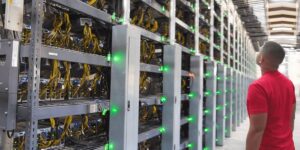
Mining pool definition
A Bitcoin mining pool is a collective group of miners who combine their hashrate to improve their chances of finding blocks. When the pool finds a block, the reward is divided among participants based on how much work each miner contributed.
The pool operator assigns work, validates shares, and calculates payouts. Miners do not need to find a full block themselves. Instead, they submit shares that prove they contributed valid computational work.
What are shares?
A share is not the same as a full Bitcoin block. It is a lower-difficulty proof that a miner is actively working on the pool’s assigned job. Shares allow the pool to measure each miner’s contribution fairly.
The more valid shares a miner submits, the larger their share of the pool’s payout.
How Does a Bitcoin Mining Pool Work?
Step one: the miner connects to the pool
The miner configures their ASIC with the pool server address, worker name and password. This is usually done through the ASIC’s web interface or hosting dashboard.
Step two: the pool assigns work
The pool sends mining jobs to connected ASICs. Each miner receives data to hash and begins testing nonce values.
Step three: the miner submits shares
The ASIC performs hashing and submits valid shares back to the pool. These shares prove that the miner has contributed work.
Step four: the pool finds a block
When one miner in the pool finds a valid block hash, the entire pool earns the block reward and transaction fees.
Step five: rewards are distributed
The pool distributes rewards according to its payout method. A miner with more contributed hashrate receives a larger portion of the payout.
A useful analogy is a lottery syndicate. Solo mining is like buying one ticket and hoping to win the jackpot alone. Pool mining is like joining a syndicate where everyone buys tickets together and shares any winnings. The payout is smaller, but the income is more consistent.
For Australian miners, this consistency is one of the biggest advantages of Bitcoin mining pools.
The Impact of Bitcoin Halving on Mining Pools

How Bitcoin halving works
Bitcoin’s halving occurs every 210,000 blocks, roughly every four years. The April 2024 halving reduced the block subsidy from 6.25 BTC to 3.125 BTC.
Why halving affects miners
Halving directly cuts the amount of new bitcoin miners receive from each block. Unless the Bitcoin price rises, transaction fees increase, or miners reduce costs, revenue can fall sharply.
This is especially important in Australia, where electricity costs can be a major barrier. Miners need efficient hardware, careful energy planning and realistic profit modelling.
How pools help after a halving
Mining pools do not remove halving risk, but they help reduce payout volatility. By spreading rewards across many miners, pools provide more predictable income than solo mining. Pools also distribute transaction fee revenue according to their payout method, which becomes increasingly important as block subsidies decline over time.
Common Bitcoin Mining Pool Payout Methods
PPS: Pay-Per-Share
PPS pays miners a fixed amount for each valid share submitted. It provides stable, predictable income. The pool operator bears the risk if the pool has bad luck and finds fewer blocks than expected.
PPS is useful for miners who want consistent cash flow.
PPLNS: Pay-Per-Last-N-Shares
PPLNS pays miners based on their contribution over a recent window of shares. Payouts vary depending on pool luck. If the pool finds more blocks than expected, miners can earn more. If the pool has poor luck, payouts can be lower.
PPLNS rewards loyalty and discourages pool hopping.
FPPS: Full Pay-Per-Share
FPPS is similar to PPS but includes an estimate of transaction fees. This can provide higher average returns than standard PPS while still offering predictable payouts.
PPS+: Pay-Per-Share Plus
PPS+ combines PPS for block subsidies with a PPLNS-style approach for transaction fees. It aims to balance stability with upside potential.
Australian miners should choose a payout method based on their risk appetite, cash flow needs and long-term mining strategy.
Reward Distribution Transparency
Why transparency matters
Miners must trust that the pool operator is accurately tracking shares and distributing rewards fairly. Poor transparency can lead to hidden fees, payout delays, underreported shares or unclear earnings.
How to read a pool dashboard
A good dashboard should show real-time hashrate, accepted shares, rejected shares, estimated earnings, payout history, worker status, and pool fee information. Miners should monitor these figures regularly.
Electricity and Cooling: The Australian Challenge
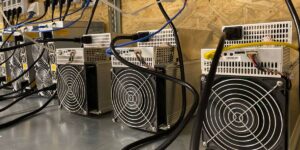
Cost of Electricity in Australia
Electricity is one of the biggest challenges for Bitcoin mining in Australia. ASIC miners run 24/7, so even small differences in power rates can have a major impact on profitability.
A home miner paying around $0.30/kWh may find that electricity costs wipe out most or all mining income. By contrast, miners with access to lower commercial or hosted energy rates may have a better chance of positive returns.
Cooling challenges
ASIC miners generate significant heat. In hot Australian climates, cooling is not optional. Poor cooling can reduce performance, shorten hardware lifespan and increase downtime.
Home miners must also deal with noise, ventilation, electrical safety and heat management. These challenges make professional crypto mining hosting attractive.
Hosting facility advantages
Hosting facilities offer industrial-grade cooling, bulk electricity arrangements, 24/7 monitoring, noise control, uptime management, and technical support. This can make mining more practical for Australians who want exposure to Bitcoin mining without running machines at home.
Profitability of Mining Pools in Australia
What determines profitability?
Bitcoin mining profitability depends on electricity cost, ASIC efficiency, Bitcoin price, mining difficulty, pool fees, hosting fees, cooling costs, and machine uptime.
Modern ASICs such as the Bitmain Antminer S21 XP and Antminer S21+ offer strong efficiency compared with older machines. Efficiency matters because post-halving mining rewards are lower and electricity costs take a larger share of revenue.
Example profitability scenario
If an Australian home miner pays $0.30/kWh, a high-powered ASIC may consume enough electricity to erase most expected earnings. The machine could still generate Bitcoin, but the net profit after power costs may be poor or negative.
By contrast, a hosted miner with access to more competitive energy rates, professional cooling and stable uptime may achieve better results. This is why many Australian miners evaluate Mining Store Australia’s hosting facilities as an alternative to home mining.
Bitcoin price cycles and halving risk
Mining profitability improves during strong Bitcoin bull markets and weakens during bear markets. Halving cycles add another layer of pressure by reducing block rewards. Pools help by smoothing payouts, but miners still need to plan for changing market conditions.
Advantages of Mining Pools
Stable and predictable payouts
The biggest advantage of pool mining is consistency. Instead of waiting for a rare solo block, miners receive smaller, regular payouts based on their hashrate contribution.
Lower barrier to entry
Even one ASIC miner can participate in a pool. This makes mining more accessible for individuals and small businesses.
Better monitoring tools
Most pools provide dashboards with real-time hashrate, earnings forecasts, auto-payouts and worker status. These tools help miners track performance and detect issues quickly.
Community and learning
Mining pools often have active communities where miners share strategies, troubleshooting tips and market insights.
Merged mining opportunities
Some pools support merged mining, allowing miners to earn rewards from more than one compatible network. For example, certain pools support combined Litecoin and Dogecoin mining. While this does not apply directly to Bitcoin’s SHA-256 mining in the same way, it shows how pools can provide extra earning structures across different coins.
Disadvantages and Risks of Mining Pools
Shared rewards
In a pool, miners share rewards with everyone else. You will not receive the full block reward unless you mine solo and find the block yourself.
Pool fees
Most pools charge fees, often in the range of 1–4%. These fees reduce net earnings, so miners should compare fee structures carefully.
Centralisation risk
If a small number of large pools control too much hashrate, Bitcoin may face centralisation concerns. In theory, an entity controlling more than 51% of hashrate could attempt harmful actions. This is why pool diversity and decentralisation matter.
Dependence on operators
Miners rely on the pool operator for uptime, accurate accounting and timely payouts. Technical problems, poor transparency, or weak security can affect earnings.
Pool hopping
Some miners switch pools frequently to chase short-term gains. This can affect fairness in some payout systems and is one reason PPLNS pools reward longer-term participation.
Mining Pools vs Solo Mining: A Direct Comparison
Solo mining
Solo mining offers the possibility of receiving the full block reward, but the odds are extremely low without industrial-scale hashrate. It requires significant infrastructure, high capital investment and tolerance for long periods with no payouts.
Pool mining
Pool mining provides smaller but steadier income. It is much more suitable for Australian miners who face high electricity costs, limited home mining practicality and lower individual hashrate compared with global mining farms.
For most Australians, Bitcoin mining pools are the practical choice. Solo mining is best viewed as a lottery-style activity or an option for very large-scale operations.
How to Join a Bitcoin Mining Pool in Australia
Step one: choose your cryptocurrency
Step two: select ASIC hardware
Choose efficient hardware. Bitmain Antminers are among the most popular options for Bitcoin mining. Compare hashrate, power consumption, efficiency, warranty and hosting compatibility.
Step three: set up mining software
Depending on your hardware and pool, you may use CGMiner, BFGMiner, ASIC firmware tools or pool-provided configuration settings.
Step four: select a mining pool
Global options include Foundry USA, F2Pool, ViaBTC and AntPool. Australian miners may also work through local hosting providers such as Mining Store Australia.
Step five: configure your miner
Enter the pool server address, worker name and password into your ASIC miner’s configuration panel.
Step six: connect your wallet
Add your Bitcoin wallet address so you can receive payouts. Always double-check withdrawal addresses before saving them.
Step seven: monitor performance
Use the pool dashboard to monitor hashrate, accepted shares, rejected shares, earnings and payout history.
Choosing the Right Mining Pool for Australian Miners
Reputation and transparency
Choose an established pool with a reliable track record, clear reporting and strong security.
Hashrate and pool size
Larger pools usually provide more stable payouts because they find blocks more often. Smaller pools may offer a larger share per miner when they find blocks, but payouts can be less frequent.
Payout method
Choose PPS or FPPS for stability. Consider PPLNS if you are comfortable with more variance and plan to mine long term.
Fee structure
Check pool fees, withdrawal thresholds and any hidden charges. A lower fee is not always better if uptime, transparency or support is poor.
Server location and latency
Australian miners should consider pools with Asia-Pacific servers to reduce latency and stale shares.
Support and community
Responsive support is valuable, especially for new miners. Hosting providers can also help with troubleshooting and pool setup.
The Australian Context: Energy Costs and Mining Hosting Solutions
Why home mining is difficult
Domestic miners in Australia face high retail electricity prices, heat, noise and space constraints. Many homes are not designed to run high-powered ASIC miners safely around the clock.
Why hosting can help
Crypto mining hosting facilities provide a practical alternative. They can offer reduced energy rates compared with home mining, professional cooling, noise management, uptime monitoring and technical support.
A hosting provider such as Mining Store Australia can help miners connect to major international pools while keeping machines in a professionally managed environment. Hosting can also provide bulk purchasing power, setup assistance and ongoing maintenance support.
Product Highlight: Bitmain Antminer S21+ 216TH/s
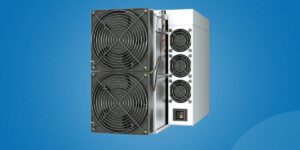
Featured product
Publisher note: confirm live pricing before publication, as ASIC prices can change quickly.
Key specifications
Model: Antminer S21+ 216TH/s from Bitmain Algorithm: SHA-256 Suitable coins: Bitcoin, Bitcoin Cash and other SHA-256 coins Hashrate: 216 TH/s ±10% Power consumption: 3,800W, according to the supplied product brief
Why it is ideal for Australian miners
The Antminer S21+ is designed for serious Bitcoin mining and offers a strong balance of hashrate and energy performance. In the post-halving environment, efficiency is everything. Higher-efficiency ASICs give miners a better chance of staying profitable as block rewards decline and network difficulty remains high.
For Australian miners, the S21+ is especially suitable when paired with professional hosting. Hosting can help offset domestic electricity challenges by providing better cooling, monitoring and more competitive energy arrangements.
Why buy from Mining Store Australia?
Mining Store Australia offers local support, transparent GST-inclusive pricing, setup assistance, hosting options and practical guidance for Australian conditions. The value is not only in selling hardware but in helping customers mine more efficiently and sustainably.
For beginners and experienced miners alike, this partnership approach can reduce technical friction and improve long-term mining outcomes.
Conclusion: Why Mining Pools Are the Future for Australian Miners
Bitcoin mining pools are now the realistic way for Australians to mine, because solo mining cannot compete with a network running near 830 EH/s. The payout method you choose, the pool’s reliability, your ASIC efficiency and above all your electricity rate decide whether mining is profitable. For most Australian miners, combining a global pool with professional hosting is the strongest strategy.
This is where Mining Store Australia fits. As Australia’s number one Bitcoin mining hardware supplier and a leading cryptocurrency mining hosting provider, the Melbourne based team, founded by Bitcoin miners William Wright and Callum Cameron, has helped over 6,000 Australians since 2016. Hosted Bitcoin mining at competitive rates, an on site service centre, the Live Income Estimation Tool and the Mining Strategy Calculator let you mine efficiently without managing heat, noise and uptime at home.
To get started, explore the hosting facilities, call 1300 644 978, or email [email protected] to book a free consultation and find the right ASIC and pool strategy for your goals.