
Energy Prices and Bitcoin Mining Profitability

Bitcoin mining is fundamentally an energy-intensive process, making electricity costs a key factor determining profitability. Miners essentially engage in an energy arbitrage business, converting electricity into computational power (or hashrate) to secure rewards in Bitcoin (BTC). For most mining operations, electricity represents between 70% to 90% of operational costs, highlighting its immense influence on BTC mining profitability.
Recent energy market volatility in regions like Texas, China, and Eastern Europe has illustrated the high sensitivity of mining operations to shifts in energy pricing. Even small fluctuations in electricity rates can dramatically affect whether a mining operation remains profitable or becomes unviable. This blog post delves into the core factors driving energy costs in Bitcoin mining and explores the impact of these costs on the broader mining ecosystem.
Understanding the Core Economics of Bitcoin Mining
What is Bitcoin Mining?
Bitcoin mining is a process by which miners use specialised hardware (ASIC miners) to solve complex mathematical puzzles that secure transactions on the Bitcoin blockchain. This process is called Proof of Work (PoW). As miners contribute to securing the network, they are rewarded with newly minted BTC and transaction fees.
Introduction to Proof-of-Work and How It Drives Energy Demand
Proof of Work (PoW) requires significant computational power, demanding substantial amounts of electricity. The energy consumption grows as the network’s hashrate (total computational power) increases, making energy pricing a crucial factor in a miner’s bottom line.
Components of Mining Profitability
Mining profitability hinges on several variables:
- BTC price: The value of Bitcoin directly influences mining rewards.
- Hash rate and difficulty: The more miners on the network, the harder it becomes to mine Bitcoin, which increases energy consumption.
- Block rewards and transaction fees: Rewards are halved approximately every four years, affecting the long-term profitability of mining.
- Hardware efficiency: More energy-efficient miners reduce operational costs.
- Electricity costs: The most significant and volatile factor.
These variables create a breakeven point for miners, where only those with low electricity costs and efficient hardware remain profitable. While BTC price garners significant attention, it is the cost of energy that continually drives competitiveness.
The Dominant Role of Energy in the Cost Structure
Cost Breakdown of Typical Mining Operations
Capital expenditures (CAPEX) for mining hardware and operational expenditures (OPEX) for electricity are the two primary cost categories. While CAPEX is a one-time investment, OPEX, particularly energy costs, are ongoing.
Electricity’s Dominance in OPEX
Electricity costs dominate the OPEX of any mining operation. For example, modern ASIC miners like the Antminer S19J Pro and S19 XP require significant power, with energy consumption ranging from 3,250W to 3,500W.
Energy Efficiency: The Key to Profitability
Energy efficiency is measured in Joules per Terahash (J/TH), and it directly translates into mining profitability. For instance, an Antminer S19J Pro has an energy efficiency of approximately 29.5 J/TH, meaning it consumes 29.5 Joules of energy for every Terahash of computational power.
Example Comparison: Energy Prices Impact on Profitability
Consider a mining operation paying $0.03/kWh vs $0.10/kWh. Under identical conditions, the operation paying lower electricity costs would be far more profitable, as energy costs directly affect BTC mining profits. Even a small shift in electricity prices (e.g., $0.01/kWh) can lead to a significant change in profitability, up to 20% or more.
How Energy Prices Shift in Bull vs. Bear Markets

Energy Pricing During Bull Markets
In a bull market, where Bitcoin prices are high, miners generally experience higher profits, making energy pricing somewhat less relevant. For instance, in 2021, as BTC prices surged, energy costs were often absorbed more easily due to increased profits across the board.
Return to Cost-Focused Discipline in Bear Markets
In contrast, during a bear market, when BTC prices decline, margins become squeezed. Miners must return to a cost-focused approach to maintain profitability. Historical data from sources like Hashrate Index shows how breakeven electricity prices dropped from $567/MWh to $79/MWh during the 2022 bear market.
Real-World Consequences: Bankruptcies and Shutdowns
As profits thin out, many miners face bankruptcies, hardware liquidations, or even forced shutdowns. Those who can’t stay competitive due to high energy prices often exit the market. This highlights the critical need for energy price discipline to ensure long-term survival.
The Influence of Global Energy Markets and Geopolitics
Energy prices vary significantly by region. For example:
- Iran and Paraguay offer ultra-low energy costs, making them attractive locations for mining.
- Canada and the U.S. also provide relatively low energy costs, especially in regions with abundant hydroelectric power.
- China’s mining ban led to miners relocating to more energy-friendly regions, such as Kazakhstan and Canada.
Impact of Global Crises on Energy Prices

Geopolitical events, such as the war in Ukraine and global supply chain disruptions, can cause energy price volatility. This affects the supply and demand of energy, leading to fluctuating costs for miners. Miners must stay agile, understanding how geopolitical dynamics can shape where mining is viable and profitable.
The ASIC Factor: Why Energy Efficiency of Hardware Matters More Than Ever
Introduction to ASIC Hardware Efficiency
The energy efficiency of ASIC hardware plays a crucial role in determining mining profitability. Joules per Terahash (J/TH) is a key metric used to measure the energy efficiency of ASIC miners. The more efficient the machine, the less electricity it requires to generate a certain amount of hash power.
How Newer Models Like the Bitmain S21 and S19 XP Offer Superior Energy Efficiency
Newer ASIC models, such as the Antminer S21 and S19 XP, deliver better energy-to-hashrate performance than older models. These miners allow operators to achieve greater efficiency, ultimately leading to more profitable operations.
Trade-Off: Higher Initial Cost vs. Better Long-Term Profitability
Upgrading to more energy-efficient miners often involves a higher initial cost. However, these miners provide better long-term profitability due to their lower power consumption, which becomes crucial in a market where electricity prices can fluctuate rapidly.
Network Dynamics: Hashrate, Difficulty & the Cost of Staying Competitive
How Rising Energy Prices Impact Hashrate and Difficulty
When energy prices rise, miners with higher electricity costs are often forced to shut down their operations. This decreases the network hashrate, triggering a difficulty adjustment by the Bitcoin protocol. Difficulty adjustments reward miners with lower operational costs, as the reduced competition makes it easier to mine Bitcoin.
The Importance of Staying Below the Cost Curve
Miners must stay below the cost curve to remain competitive, especially during difficulty adjustments. Staying profitable means making strategic decisions about energy pricing, hardware efficiency, and mining operations.
Breakeven Thresholds: What It Takes to Stay Profitable

Data from PLOS One Study
The PLOS One study identifies the key breakeven thresholds for Bitcoin mining:
- BTC price threshold: Around $61,313.
- Electricity price threshold: Approximately $0.054/kWh.
- Hardware costs and hash rate growth conditions: Essential for maintaining profitability in fluctuating markets.
Oversimplified Mining Calculators
Many miners use mining calculators that often oversimplify variables, leading to over-optimistic forecasts. It is essential for miners to understand their true breakeven point to make informed decisions about their operations.
Mining Strategies to Offset Energy Price Volatility
Long-Term Power Purchase Agreements (PPAs)
Miners can hedge against volatile electricity prices by securing long-term power purchase agreements (PPAs), ensuring stable energy rates for extended periods.
Locating Near Renewable Energy Sources
Miners are increasingly locating operations near stranded or renewable energy sources like hydropower in Paraguay and Canada, geothermal in Iceland, and solar/wind in regional Australia. These strategies help stabilise operating costs.
Transaction Fees and the Post-Halving Landscape
As block rewards halve, miners increasingly rely on transaction fees for revenue. In periods of high demand, fees can surpass 10-14% of miner revenue, highlighting the growing importance of the fee market.
Sustainability and ESG: Green Energy as Competitive Advantage
Growing Pressure for Sustainable Mining
As global interest in eco-conscious investing increases, Bitcoin miners are under increasing pressure to adopt sustainable energy practices. Low-carbon energy sources are becoming a competitive advantage and a differentiator for investors.
Examples of Sustainable Mining
Companies like Mining Store use geothermal and hydro energy in different facilities and integrates renewable energy with AI-powered infrastructure to minimise energy usage.
Practical Energy Cost Scenarios and Profitability Models
Using real-world data, miners can model scenarios showing how profitability changes with varying electricity rates, BTC prices, and ASIC types. Such models ensure that miners make data-driven decisions, not market-based hype.
The Role of Hosting Facilities in Managing Energy Risk
Hosted Mining: A Growing Trend
Hosted mining facilities offer miners access to bulk electricity rates and professional infrastructure management. These facilities help miners avoid energy price spikes and reduce overall operational costs.
ASIC Miner ROI: Why Energy Cost Must Be Calculated Before Buying

Calculating ROI with Energy Prices
Energy prices dramatically impact the ROI of ASIC miners. Miners must carefully evaluate the cost-effectiveness of their hardware under varying energy price scenarios to determine the time to ROI.
Energy Arbitrage Models
Miners can leverage demand response programmes or energy arbitrage models, where they mine during off-peak hours when energy prices are lower, maximising profitability.
ASIC Firmware and Underclocking for Energy Efficiency
What is ASIC Underclocking?
ASIC underclocking reduces power consumption by lowering the operating frequency of the miner. This adjustment decreases the hashrate but improves the energy efficiency.
Regional Electricity Cost Mapping: Where Are the Global Mining Hotspots Now?

A heatmap of mining costs highlights the most profitable regions for mining, such as Iran, Paraguay, and Texas, where electricity costs are comparatively low.
ASIC Lifespan vs. Energy Economics: When Does It Make Sense to Retire a Miner?
The lifespan of an ASIC miner is not indefinite. Over time, these machines experience thermal wear and degradation, which results in a decrease in hashrate. The energy efficiency of older machines diminishes, meaning they consume more power for less output, leading to diminished returns.
When Does the Cost per TH Outweigh Productivity?
The tipping point for when an ASIC miner should be retired depends largely on its cost per terahash (TH) and energy consumption. If the miner’s power consumption continues to rise, and the hashrate drops below an optimal threshold, its cost per TH becomes unsustainable. In such cases, the miner should be retired, sold, or repurposed, as continued operation becomes increasingly inefficient.
Energy as the Accelerating Factor
As energy prices rise, older ASIC miners become less viable. Even if the hardware is not fully depreciated, the high energy consumption will result in a negative return on investment (ROI). This is why energy is the accelerating factor in the decision to retire older models. For miners, the decision to keep an old machine running hinges on whether electricity prices remain low enough to offset the reduced output.
Introduce a Framework for:
- Retiring ASICs: Knowing when the machine no longer makes financial sense.
- Reselling ASICs: Evaluating market demand for second-hand mining hardware.
- Repurposing ASICs: Using older ASICs for other tasks or repurposing them for less profitable cryptocurrencies.
Why the MicroBT Whatsminer M60S is a Top Pick for Power-Conscious Bitcoin Miners
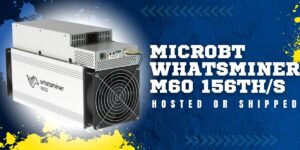
The Evolution of ASIC Performance
ASIC miners have evolved significantly over the past decade, with power consumption and hashrate being the most important factors for profitability. In this section, we introduce the MicroBT Whatsminer M60S, a new breed of ASIC miner that delivers impressive performance while keeping energy consumption in check. The Whatsminer M60S offers a hash rate of 170TH/s with an energy consumption of just 3145W, making it one of the most energy-efficient machines on the market.
Technical Specifications Breakdown
Hash Rate: 170 TH/s
The Whatsminer M60S delivers a hashrate of 170TH/s, providing an outstanding computational power output that enhances mining performance in Bitcoin’s competitive network.
Power Consumption: 3145W
With a power consumption of 3145W, the M60S maintains energy efficiency, achieving a J/TH rating of 18.5 J/TH. This makes it highly efficient for high-energy-cost environments, where power efficiency is a critical consideration.
Efficiency: ~18.5 J/TH
This high energy efficiency means that miners can maximise their profitability by using less energy for every unit of computational power, reducing operational expenses, particularly in regions where electricity prices are high.
Algorithm: SHA-256 (BTC, BCH mining)
The Whatsminer M60S operates on the SHA-256 algorithm, enabling it to mine Bitcoin (BTC) and Bitcoin Cash (BCH) effectively. This versatility is beneficial for miners looking to mine multiple cryptocurrencies using the same machine..
Performance vs. Competitors: How the M60S Stacks Up
Compare Against:
- Antminer S19 Pro (110–120 TH/s): While the Antminer S19 Pro is an established leader in mining, it falls behind in energy efficiency when compared to the Whatsminer M60S. The S19 Pro delivers 110–120TH/s but consumes more power.
- Antminer S21 (200 TH/s but higher power draw): The Antminer S21 offers an impressive 200TH/s, but its higher power draw means that in markets with high electricity costs, the Whatsminer M60S offers better profitability per watt.
Efficiency-to-Cost Ratio
The Whatsminer M60S offers a more balanced ratio of hashrate to energy consumption, ensuring that miners can achieve optimal profitability with a lower initial cost in the long run.
How M60S Performs in High Energy-Cost Environments
The Whatsminer M60S is especially well-suited for high energy-cost environments. Its low power consumption and superior efficiency make it an excellent choice for miners in regions where electricity rates are high, as it can maintain profitability even when energy prices are steep.
Ideal for Mid-to-Large Scale Farms or Hosted Clients Seeking Balance
This model is ideal for miners with mid-to-large scale farms or those using hosted mining services. It offers the best of both worlds: high hashrate and low energy consumption, making it an excellent investment for those looking to scale their operations sustainably.
Hosted or Shipped: Flexible Delivery Options

Hosted Option:
- Direct Shipping to Mining Store’s EU Data Centre: With hosted mining, miners can opt to have their Whatsminer M60S shipped directly to Mining Store’s EU data centre. This option ensures minimal setup time and immediate integration into the mining pool.
- Deployment in 3–4 Weeks: Hosted miners can expect their hardware to be deployed in 3–4 weeks, ensuring a quick start to their mining operations.
Shipped Option:
- Delivered Globally via FedEx/DHL/UPS: For those who prefer to host their miners onsite, the Whatsminer M60S can be shipped worldwide via FedEx, DHL, or UPS.
- 5–7 Business Day Fulfilment: The fulfilment time for direct shipping is 5–7 business days, allowing miners to start their operations in a timely manner.
Price, Availability, and Buying Process
Current Price: $6,399.00 Inc. GST
The Whatsminer M60S is priced at $6,399.00, including GST. This price reflects the machine’s high-end specifications, including its 170TH/s hash rate and 18.5 J/TH energy efficiency.
Enquiry-Only Items: Limited Supply Dynamics
Due to high demand, availability may be limited. The Whatsminer M60S is offered on an enquiry-only basis, with limited supply dynamics. Miners interested in purchasing should act quickly to secure their units.
Why Buy From Mining Store?
#1 ASIC Supplier in Australia
Proven Track Record with Over 100 Commercial Deployments
With over 100 commercial deployments under their belt, Mining Store has the expertise and experience to provide reliable and efficient mining solutions to businesses.
24/7 Support and Delivery Within 7 Days
Mining Store offers 24/7 support and ensures that miners receive their hardware within 7 days, allowing them to start mining with minimal downtime.
Access to Australia’s Largest Mining Community
Mining Store connects miners to Australia’s largest mining community, providing access to valuable resources, networking opportunities, and industry insights.
Hosting, Consultation, and Fleet Scaling Support
In addition to hardware sales, Mining Store offers hosting services, expert consultation, and fleet scaling support to help miners optimise their operations.
Ideal Use Cases: Who Should Consider the M60S?
Independent Miners with Low-Cost Energy Access
The Whatsminer M60S is ideal for independent miners who have access to low-cost energy. The machine’s high energy efficiency makes it an excellent choice for these miners to maximise profitability.
Investors Entering with a Budget of ~$6k per Unit
For investors looking to enter the Bitcoin mining space with a budget of approximately $6k per unit, the Whatsminer M60S offers a great balance of performance and cost-efficiency.
Enterprises Looking to Scale Fleets with Uniform Hardware
Larger mining operations seeking to scale their mining fleets with uniform, reliable hardware will benefit from the Whatsminer M60S’s high hash rate and low energy consumption.
Clients Seeking Low-Effort Hosting Solutions
For clients who prefer a hassle-free mining experience, hosted mining solutions offer a plug-and-play setup, with minimal effort required on the miner’s part.
Final Thoughts: Is the Whatsminer M60S the Right Investment for You?
The Whatsminer M60S offers an excellent combination of performance, efficiency, and cost for Bitcoin miners seeking a reliable and profitable mining solution. Whether you’re an independent miner with low-cost energy or a large-scale operation looking for uniform hardware for fleet scaling, the Whatsminer M60S is a top pick for power-conscious miners.
Conclusion: Profitability Starts With Power – And the Right Partners
Bitcoin mining profitability is intrinsically linked to energy pricing, and even small fluctuations in electricity costs can tip the balance between profit and loss. By selecting the right energy-efficient hardware and securing access to low-cost or renewable energy, miners can ensure sustained profitability. Mining Store provides essential resources, including hosting services and consultation, to help Australian miners maximise returns in an increasingly competitive market.
Tie-In with Mining Store
With Mining Store’s Bitcoin Mining Pool and Hosting Facilities, Australian miners can reduce their OPEX while scaling operations. Book a free 30-minute consultation today to learn how Mining Store can optimise your mining profitability and help you build a long-term, sustainable mining strategy.