
Bitmain Miners in Australia
Bitmain Miners in 2026 is very different from the “plug it in and print money” stories people still repeat online. After the 2024 halving, the block subsidy dropped to 3.125 BTC per block, which raised the bar for efficiency and pushed many older machines into loss-making territory for anyone paying standard grid power.
This guide answers one question for complete beginners in Australia:
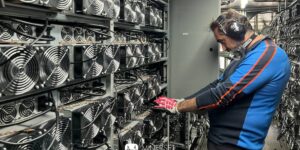
Which Bitmain Antminer models are actually sensible first buys in 2026 and why?
You’ll learn how mining revenue is calculated in today’s market, why efficiency (J/TH) matters more than headline hashrate (TH/s), how Australian electricity and climate affect real-world outcomes, and which current Bitmain models are the safest, most beginner-friendly choices to start with.
Bitcoin Mining in 2026: What Beginners Actually Need to Understand
How Bitcoin mining works (in plain English)
Bitcoin mining is a competition to find the next block by performing SHA-256 hashing. Miners contribute hashrate (measured in TH/s) to secure the network. When a valid block is found, the network pays a reward (the block subsidy) plus transaction fees.
Since the post-halving subsidy is smaller, miners need either:
- cheaper electricity,
- better hardware efficiency,
- or both.
Hashrate, difficulty, and hashprice
Beginners often focus only on TH/s. In 2026, that’s not enough.
- Hashrate (TH/s): your machine’s raw hashing speed.
- Network difficulty: the protocol’s adjustment that keeps block times at ~10 minutes; when more hashrate joins the network, difficulty rises, and each TH/s earns less BTC on average.
- Hashprice: a practical revenue metric that expresses the expected miner revenue per unit of hashrate per day, typically USD per TH per day.
Luxor’s Bitcoin hashprice definition (widely used across the industry) explains that it’s driven by Bitcoin price, difficulty, subsidy, and fees.
In early March 2026, public dashboards show hashprice hovering in the “few cents per TH per day” range (roughly $0.03–$0.06 USD/TH/day depending on market and fee conditions).
Practical translation: if hashprice is $0.05/TH/day, then a 200 TH/s machine earns about $10/day gross before electricity and fees.
Why efficiency beats raw power for Australians
Because Australia often has relatively high household tariffs, especially in major metro areas, the deciding variable for beginners is usually electricity cost ($/kWh), not TH/s.
Modern Bitmain miner units are designed around better J/TH (joules per terahash). Lower J/TH means you get more hashing for the same electricity spent.
A simple example (why margins can be thin at home)
Take a modern miner around 200 TH/s drawing about 3.5 kW (typical for an efficient air-cooled unit).
- Power draw: 3.5 kW
- Daily energy: 3.5 × 24 = 84 kWh/day
- Monthly energy: ~2,520 kWh/month
If your all-in home tariff is ~A$0.30–0.45/kWh, electricity alone can be A$750–A$1,130/month (before any cooling or electrical upgrades). This is why so many Australian beginners either:
- use a highly optimised home setup (solar, off-peak, rural tariffs, heat reuse), or
- Choose hosting from day one.
Post-Halving Economics: Why Beginner Miners Cannot Ignore Efficiency

The halving didn’t “kill mining”, but it did punish inefficient hardware.
Why do older generations (like much of the S19 era) struggle
Many second-hand bargains in Australia are older Bitmain Antminer S19 variants. Some are workable, but many sit around ~30 J/TH class efficiency (model-dependent), which is simply far less competitive in a post-halving world unless your electricity is unusually cheap.
Common beginner trap: buying a cheap used unit, then discovering that Australian power prices turn it into a monthly loss.
What do economics reward now
In 2026, selection is not “cheapest up front”. It’s:
- lowest J/TH you can afford,
stable, proven models (not risky early-batch experiments),
and a deployment plan that fits Australian power realities.
Key point: newer-generation miners like the S21 and S23 class are engineered specifically to stay viable under tighter margins, because they convert electricity to hashrate more efficiently than older stock.
Why Focus on Bitmain Miner for Beginners
Bitmain is still the default starting point for many newcomers because:
- Their Antminer line is widely supported,
- Spare parts and repairs are easier to source,
- Firmware tooling and community knowledge are extensive,
- And resale value is often stronger than obscure brands.
Strengths that beginners benefit from
- Mature ecosystem: guides, parts, community support
-
- Strong aftermarket: fans, PSUs, hashboards, control boards
- Broad pool compatibility and predictable configuration
Cautions (what a beginner should avoid)
- Avoid buying “mystery batch” machines from unverified sellers.
- Be careful with ultra-cheap older units: the economics may have moved on.
- Be wary of first-batch releases if independent performance data is thin (even for major brands).
If you’re buying in Australia, prioritise reputable retailers and hosting operators with clear warranty terms, transparent power pricing, and documented repair workflows.
Key Technical Concepts for Comparing Bitmain Miners
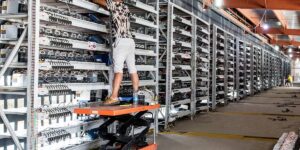
Beginners see big TH/s numbers and assume bigger is better. In 2026, the smarter approach is to read the entire spec sheet.
Hashrate (TH/s)
Higher TH/s generally means higher gross revenue potential. But it does not guarantee profit.
Power consumption (W) and efficiency (J/TH)
This is the heart of profitability.
A 200 TH/s miner at 17.5 J/TH is fundamentally in a different league than a 200 TH/s miner at 30 J/TH. The first spends far less energy per unit of income.
Voltage requirements (critical in Australia)
- Many modern miners operate best on 220–277 V ranges (more compatible with certain Australian circuits).
- Some “budget” or industrial-leaning models may require three-phase infrastructure, which is a deal-breaker for most beginners without a workshop, farm, or commercial site.
Heat and noise (the home-mining reality)
Air-cooled ASICs typically run loud often comparable to a vacuum cleaner. Heat output is also significant: a 3.5 kW miner is basically a 3.5 kW space heater running 24/7.
This matters in Australian summers, where garages and sheds can become heat traps.
PIC vs non-PIC design (uptime and repairability)
Some architectures allow safer isolation of a faulty hashboard (often described in the market as PIC-related board control). Practically, features that enable board-level isolation and monitoring can:
- reduce downtime,
- make troubleshooting easier,
- and prevent one failing component from taking the whole unit offline.
You don’t need to become an engineer just know that “serviceability and uptime” are part of the real cost of ownership.
Australian-Specific Factors: Power, Climate, Regulation, and Hosting
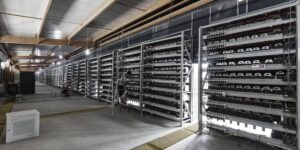
Australia can be a fantastic place to mine if your deployment matches the local constraints.
Electricity pricing and the beginner reality
Australian household electricity pricing varies by state, tariff type, retailer, and usage profile (time-of-use vs flat). Consumer guides and analysis frequently place household usage rates in the “dozens of cents per kWh” range, not the ultra-cheap industrial rates miners dream about.
This is why a beginner should treat home mining as:
- a learning project with careful power planning, or
- a semi-serious setup using solar/off-peak/heat reuse,
rather than assuming it will automatically be profitable.
Climate: summer heat is not optional
If ambient temps rise, miner fans ramp up, noise increases, and failure risk goes up. Without active ventilation, Australian sheds can exceed safe operating conditions.
Noise restrictions and neighbours
Even if you can power a miner safely, noise can end a home setup quickly. Suburban environments often aren’t friendly to 70+ dB continuous equipment, especially overnight.
Hosting: why many Australians choose it immediately
A mining hosting facility can provide:
- stable industrial power pricing,
- professional cooling/ventilation,
- monitoring and maintenance,
- and reduced household disruption.
Environmental & Regulatory Considerations for Bitcoin Mining in Australia
This matters more than beginners expect not because regulators are “anti-crypto”, but because high-load electrical devices intersect with safety, tariffs, and neighbourhood constraints.
Electricity regulation, tariffs, and how they hit miners
Australia’s tariff landscape can include:
- residential vs business supply differences,
- time-of-use windows,
- and (in some contexts) higher charges for peak consumption.
If your miner runs 24/7, you’re effectively committing to a constant base load — and you should assume it will be billed accordingly.
Environmental impact and public perception
Mining draws electricity. If your electricity comes from a fossil-heavy supply, emissions will be higher than if you use renewables or solar supplementation. Public perception can influence landlord decisions, neighbour complaints, and (over time) policy appetite.
Eco-conscious beginner options:
- Pair mining with rooftop solar and batteries where feasible.
- Run miners more heavily during off-peak windows where your tariff rewards it.
- Optimise efficiency first (better J/TH reduces wasted energy).
Compliance, permits, and safety for home miners
A 3–4 kW miner is not a normal household appliance. You should treat it like specialised equipment:
- appropriate circuit capacity,
- proper cabling and breakers,
- safe ventilation and dust control,
- and basic fire risk mitigation.
Also consider insurance: some policies may exclude damage from high-load devices or improper electrical work. If you’re not confident, consult a licensed electrician.
How hosting reduces the burden
Hosting centres typically provide industrial wiring, cooling, and monitoring systems, plus fire suppression and operational procedures. For beginners with limited space or urban living, hosting often removes the biggest friction points.
Overview of the Bitmain Line-Up Beginners Will See in Australia (2026)
Below are the Bitmain models commonly marketed to beginners right now. We’ll focus on miners suitable for Bitcoin mining (SHA-256), and explicitly warn against buying the wrong algorithm machine.
- Antminer S21 200 TH/s – balanced, efficient, beginner-friendly flagship entry point.
- Antminer S21+ (216 TH/s / 235 TH/s) – step-up options for beginners planning to scale.
- Antminer S21 XP 270 TH/s – premium efficiency for ambitious beginners.
- Antminer S23 318 TH/s – cutting-edge air-cooled efficiency for business-minded beginners.
- Antminer T21 190 TH/s – can look cheaper, but power requirements can make it less beginner-friendly.
- Antminer KS7 40 TH/s – not a Bitcoin miner (included here so you don’t buy the wrong thing).
Deep Dive: Is the Antminer S21 200 TH/s the Right First Miner for You?
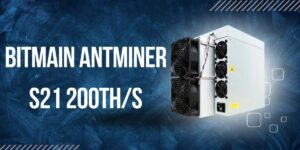
Why it fits beginners
The S21 is a SHA-256 ASIC rated around 200 TH/s at about 3,500 W, delivering roughly 17.5 J/TH efficiency.
That combination is strong enough to remain competitive while still being straightforward to deploy.
Real-world operating costs (what you should actually budget for)
- 24/7 energy use is typically in the 2,500–2,700 kWh/month ballpark (depending on tuning and environment).
- Profitability at home depends heavily on your tariff; in many metro tariffs, margins can be slim.
- Under hosting, the same unit can be significantly more viable due to lower effective power costs and better uptime.
Practical suitability
- Easy to set up for beginners (pool config + wallet + monitoring).
- Mature ecosystem support.
- Good platform to learn before scaling.
Downsides (don’t ignore these)
- Noise and heat are still serious.
- If your power is expensive, you may mine at break-even or a loss during low fee/price periods.
- Home setups can require ventilation build-out and electrical planning.
Beginner summary: If you want the most balanced entry point into Bitcoin mining with a modern Bitmain unit, the Antminer S21 200 TH/s is typically the first place to look.
Deep Dive: Antminer S21+ 216 TH/s and 235 TH/s – When to Step Up
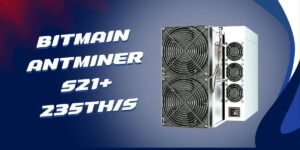
The S21+ variants are the “middle ground” for beginners who:
- have a slightly higher budget,
- want a bit more revenue potential,
- and are thinking about running multiple units over time.
S21+ 216 TH/s: a sensible incremental upgrade
This option makes sense if you’re confident about:
- your power plan (hosting or optimised home setup),
- your ventilation,
- and your intent to keep mining through market cycles.
S21+ 235 TH/s: for beginners building a small fleet
The 235 TH/s class typically comes with a higher power draw. That usually nudges it toward:
- hosting environments,
- rural/industrial power setups,
- or very deliberate home infrastructure.
Beginner summary: Choose S21+ when you already know you’ll scale beyond a single unit and you’re building a plan around power, cooling, and uptime — not just buying “more TH/s”.
Deep Dive: Antminer S21 XP 270 TH/s – High Efficiency for Ambitious Beginners
The Antminer S21 XP 270 TH/s is for beginners who aren’t treating mining like a hobby.
Why the S21 XP is attractive
The appeal is its premium efficiency class — widely positioned as a top-tier air-cooled miner intended for serious deployment. Higher efficiency can protect your downside when:
- difficulty rises,
- fees cool off,
- or BTC price chops sideways.
Who should buy it
- Beginners planning to use hosting from day one.
- Anyone who wants a “buy once, learn, then scale” approach.
Trade-offs
- Higher upfront cost.
- Greater sensitivity to capital risk (if your timeline is too short or you’re forced to sell early).
Beginner summary: The S21 XP is a strong choice if you’re approaching mining as a long-term business-style investment and you’re prepared to deploy it properly.
Deep Dive: Antminer S23 318 TH/s – The Cutting-Edge Option
What makes the S23 different
Public spec listings describe the S23 at about 318 TH/s with power around 3,498 W, delivering roughly 11 J/TH — a major leap in energy efficiency.
That efficiency means:
- less electricity per unit of revenue,
- better resilience as difficulty climbs,
- and more flexibility in where you can profitably deploy.
Why is it usually better hosted than home-run
Even if the power draw isn’t extreme, you still face the home realities:
- noise,
- heat exhaust,
- and electrical safety.
Hosting tends to unlock the S23’s advantages by keeping uptime high and operating conditions stable.
Beginner summary: The Antminer S23 318 TH/s is ideal for beginners who want a top-tier machine and are willing to treat mining like a disciplined investment rather than an experiment.
Deep Dive: Antminer T21 190 TH/s – When “Budget Rigs” Aren’t Beginner-Friendly
Why the T21 often causes headaches
Many T-series deployments are lean industrial. If a miner requires a specialised three-phase supply or specific PDUs, you can end up spending more on infrastructure than you saved on the miner.
Performance isn’t “bad” — but it’s not the point
Even if its efficiency is reasonable, it may still lose out to S21/S23 class units when you factor:
- home electrical limitations,
- deployment complexity,
- and long-term competitiveness.
Beginner summary: Avoid the T21 as a first miner unless you already have the correct power infrastructure or you’re hosting from day one.
A Note on the Antminer KS7 40 TH/s: Avoid Buying the Wrong Algorithm
This is a crucial beginner warning:
Quick clarity
- KS7 → Kaspa (not BTC)
- Not compatible with Bitcoin mining pools
- Only buy it if your explicit goal is Kaspa mining (a different strategy entirely)
New vs Second-Hand Bitmain Miners: Lessons from the “Cheap Used ASIC” Trap
Second-hand ASICs can work, but beginners are the easiest targets for disappointment.
Why used miners often underperform in the real world
- Hashboard wear and corrosion (especially if stored poorly)
- Fan degradation and thermal stress history
- Dust buildup and micro-damage from heat cycles
- Hidden repairs, unstable boards, or “Frankenstein” units made from mixed parts
The post-halving problem with old gear
Even if a used unit “runs”, older efficiency often means it’s economically obsolete. You don’t just buy a miner you buy its efficiency against the network’s future difficulty.
When used, it can make sense
- You can verify performance and board health.
- You have cheap electricity (rare for urban beginners).
- You accept that it’s a learning tool, not necessarily a profitable investment.
Beginner rule: if you’re buying your first ASIC and you want the highest chance of a smooth start, prioritise a newer, proven unit from a reputable seller, with clear warranty and return terms.
Firmware, PIC Architecture, and Keeping Your Bitmain Miner Healthy
A miner that’s “on” isn’t necessarily a miner that’s earning efficiently. Firmware, tuning, and monitoring are where beginners can protect uptime.
Stock firmware first, optimisation second
For your first month, stability matters more than squeezing an extra 2–5% hashrate. Start with stock firmware, learn:
- temperature norms,
- reject rate,
- fan behaviour,
- and pool configuration.
Firmware options (and why they matter)
After you’re stable, advanced firmware (for some models) can enable:
- undervolting / efficiency tuning,
- better temperature management,
- deeper monitoring.
If you don’t know what you’re doing, aggressive tuning can reduce hardware lifespan. Treat optimisation like a careful, measured upgrade.
Why PIC-style board control matters in practice
Architectures that support board-level isolation and control can:
- keep you online if one board misbehaves,
- reduce cascading failures,
- and simplify troubleshooting.
Beginner monitoring checklist
- Hashrate stability (hourly/daily)
- Reject/stale share rate
- Inlet and exhaust temperature
- Fan RPM and fan error events
- Power draw consistency
- Pool downtime alerts
Hosting providers often handle much of this, which is one reason beginners prefer hosting.
Long-Term Maintenance, Upkeep, and Miner Lifecycle — What Beginners Should Expect
Mining is not “set-and-forget”. It’s closer to running a small industrial appliance continuously.
Typical ASIC lifespan (realistic expectations)
A well-managed ASIC can run for years, but the economically useful lifespan is often shorter because:
- network difficulty rises,
- better ASICs arrive,
- and efficiency becomes the survival metric.
Common failure modes
- Fan failures (the most common)
- PSU degradation
- Dust-related overheating
- Hashboard instability over time
- Corrosion risk in humid or coastal environments
Maintenance vs replacement: how to decide
Repairs make sense when:
- the unit is still efficient enough to compete,
- parts are accessible and affordable,
- and your downtime cost is lower than the replacement cost.
Upgrading makes sense when:
- Your unit’s J/TH is no longer competitive,
- repair costs approach a meaningful fraction of the unit’s value,
- You’re planning to scale and want standardised fleet management.
Resale value dynamics
Newer, efficient, widely adopted Bitmain models tend to hold value better than obscure or obsolete gear — largely because buyers care about efficiency and predictable uptime.
Operational hygiene for Australian conditions
- Use dust filters where possible (but maintain airflow)
- Clean regularly (compressed air with care)
- Keep miners shaded and ventilated
- Avoid running in enclosed garages during heatwaves
- Check and replace fans proactively
Home Mining versus Hosted Mining in Australia with Bitmain Rigs
This decision is often the biggest determinant of beginner success.
Home mining: when it can work
Home mining can be viable if you have:
- appropriate wiring and circuit capacity,
- strong ventilation,
- tolerance for noise,
- and a competitive, effective electricity rate (solar, off-peak, rural).
Best home-friendly picks: typically the more manageable units like S21 200 TH/s or modest S21+ variants — but only if your setup is safe and realistic.
Hosted mining: why it’s beginner-friendly
Hosting typically provides:
- stable cooling,
- industrial monitoring,
- better uptime,
- and fewer lifestyle disruptions.
Best hosted picks: S21+ 235 TH/s, S21 XP 270 TH/s, and especially S23 318 TH/s, where efficiency really shines under controlled power pricing.
The “hidden cost” that hosting often solves
At home, the extra costs aren’t just electricity. They’re:
- ventilation builds,
- noise control,
- downtime from overheating,
- and risk from incorrect electrical work.
For many Australians, hosting is effectively paying for professional infrastructure.
Step-by-Step Framework for Choosing Your First Bitmain Miner in Australia
If you follow nothing else, follow this.
Step 1: Define Your Purpose
Before buying a Bitmain miner, clearly define why you want to mine. Are you mining for education and learning, for long-term BTC accumulation, or for profit optimisation? Understanding your goal will help you choose the right model and deployment strategy.
Step 2: Calculate Your Effective Power Price
Next, calculate your real power cost ($/kWh). For home setups, include supply charges and time-of-use variations, while for hosting, check what the rate covers — just power or power plus management.
Step 3: Set a Realistic Hardware Budget
Determine how much you can spend in AUD while including all ancillary costs. This should cover shipping, insurance, spare fans, cabling/PDU costs, and any ventilation or hosting setup fees. Planning your budget upfront prevents surprises and ensures your miner fits your financial plan.
Step 4: Match Bitmain Models to Your Infrastructure
Choose a miner that matches your power and space setup. Beginners on single-phase circuits are best suited to the S21 200 TH/s, while those using hosting or industrial setups can consider the S21+, S21 XP, or S23 318 TH/s. Avoid the T21 unless you have three-phase power, and never buy the KS7 for Bitcoin mining.
Step 5: Run Profitability Scenarios
Simulate different scenarios using realistic hashprice ranges, including base, optimistic, and conservative projections. This helps you understand potential earnings, factoring in network difficulty, Bitcoin price, and pool fees. Running these calculations prevents overestimating profits and prepares you for market fluctuations.
Step 6: Choose a Firmware Strategy
Start with stock firmware to ensure stability and reliability. Once you are familiar with the machine’s performance, consider optimising with advanced firmware for better efficiency and temperature management. This approach reduces risk and protects your hardware during early operation.
Product Highlight: Bitmain Antminer S21 200 TH/s — Australia’s Best Entry-Level Bitcoin Miner
If you want the “most balanced” beginner choice, this is usually it.
Why the S21 200 TH/s is ideal for Australian beginners
The Antminer S21 200 TH/s offers:
- Efficient by design: ~17.5 J/TH at ~3,500 W
- Practical performance: strong hashrate without extreme power draw
- Beginner-proof operation: straightforward configuration and wide community support
- Scalable foundation: start with one, then expand or upgrade once you’ve learned the basics
The honest trade-off
At typical metro household tariffs, home profitability can be marginal in low-fee periods. That’s not a flaw in the miner it’s the economics of mining in a high-cost power region. Hosting can significantly improve viability.
Conclusion: Choosing the Right Bitmain Miner and Getting Started (Australia 2026)
In 2026, efficiency is the cornerstone of profitable Bitcoin mining — especially in Australia, where household electricity costs can be high, and summer heat adds operational stress. Beginners should prioritise modern, proven Bitmain miners that combine strong hashrate with excellent J/TH.
Best beginner picks (recap)
- Best first miner overall: Antminer S21 200 TH/s (balanced, efficient, accessible)
- Best step-up options: S21+ 216 TH/s and S21+ 235 TH/s (for scaling plans)
- Best for ambitious beginners: S21 XP 270 TH/s (premium efficiency path)
- Best cutting-edge option: Antminer S23 318 TH/s (~11 J/TH class efficiency)
- Usually not beginner-friendly: T21 (infrastructure complexity)
- Avoid for Bitcoin: KS7 (wrong algorithm)
If you want a smooth start, pair the right hardware with the right deployment model: a safe, ventilated home setup or a reputable hosting environment that removes the biggest Australian constraints (power pricing, heat, and noise). And above all, build your expectations around real mining economics — not outdated pre-halving assumptions.