
Bitcoin Mining Payouts in Australia 2026

A Bitcoin mining payout is the BTC a bitcoin miner receives from their pool: a share of the current 3.125 BTC block subsidy plus transaction fees, split by the pool’s payout method. In Australia the number that matters is the AUD left after electricity, hosting, hardware depreciation and ATO tax.
Key takeaways:
- The Bitcoin block subsidy in 2026 is 3.125 BTC per block, and it halves again to 1.5625 BTC at around block 1,050,000 in April 2028.
- FPPS is the payout method best suited to predictable AUD cash flow, because it pays a fixed rate per share that covers the subsidy plus an averaged transaction-fee estimate.
- For Australian business miners the ATO treats mined crypto as trading stock, while hobby miners are taxed under capital gains rules when they dispose of coins.
- The three profit levers Australian miners actually control are ASIC efficiency in joules per terahash, electricity price in AUD per kWh, and uptime measured as share acceptance rate.
- Hosting at around AUD 0.12 per kWh, such as the Mining Store facility, can save a single 3.5 kW machine more than AUD 6,000 a year against a 33 c/kWh home tariff.
This guide explains how Bitcoin mining rewards are created, how pools distribute them, and how those payouts translate into AUD profit in the Australian operating environment.
Bitcoin Mining Basics: From Hashes to Block Reward
How proof of work creates Bitcoin mining payouts
Bitcoin mining secures the network through proof of work. Miners hash block data repeatedly until one produces a valid result roughly every ten minutes, and that miner earns the 3.125 BTC subsidy plus transaction fees. Every pool payout is a slice of that reward.
Bitcoin mining is the process that secures the network and finalises transactions through proof of work. Miners compete to build each new block by hashing data repeatedly until they produce a result that meets the network difficulty target. About every ten minutes one miner finds a valid hash and earns the block subsidy plus transaction fees. This is not puzzle solving in the human sense, it is computational brute force at scale.
How hashrate affects your payout
Your hashrate is the rate at which your machine produces guesses, shown in TH/s for a single ASIC and in EH/s or ZH/s at fleet and network scale. Higher hashrate means more chances per second to find a valid block, but you are competing with everyone else on the network at the same time.
How difficulty keeps block times steady
Bitcoin adjusts difficulty every 2,016 blocks, roughly a fortnight, to keep the average block time close to ten minutes even as total network hashrate changes. When the world adds more powerful ASICs, Bitcoin becomes harder to mine. This is a main reason mining revenue tends to compress over time unless you upgrade hardware and lower costs.
What mining actually achieves
- It validates transactions and prevents double spending.
- It adds new blocks to the public ledger.
- It issues new bitcoin into circulation.
- It secures the network by making attacks prohibitively expensive.
Every payout you receive is your slice of the block subsidy plus fees, filtered through your hashrate share, your pool’s method and its fees.
What is hashrate and how does it affect mining payouts?
Your hashrate is the rate at which your machine produces guesses. You will usually see this in TH/s for individual ASICs and PH/s or EH/s at fleet and network scale. In simple terms, higher hashrate means more chances per second to find a valid block. But there is a catch. You are competing with everyone.
How does Bitcoin difficulty adjustment work?
Bitcoin adjusts difficulty every 2,016 blocks, which is roughly a fortnight if blocks average ten minutes. The purpose is to keep the average block time close to ten minutes, even if total network hashrate rises or falls. So if the world adds more powerful ASICs, Bitcoin becomes harder to mine. This is one of the main reasons that mining revenue tends to compress over time unless you upgrade hardware and improve costs.
What mining actually achieves?
Mining serves four crucial roles.
- It validates transactions and prevents double spending.
- It adds new blocks to the public ledger.
- It issues new bitcoin into circulation.
- It provides security by making attacks prohibitively expensive.
What is the Bitcoin halving and how does it affect mining payouts?
The Bitcoin halving is a protocol-level event that cuts the block subsidy by 50% every 210,000 blocks (roughly four years). The most recent halving occurred at block height 840,000 in April 2024, reducing the block subsidy from 6.25 BTC to 3.125 BTC per block. The next halving is expected in April 2028, when the subsidy will drop to 1.5625 BTC.
The halving path so far:
| Halving | Block height | Approx date | Subsidy after halving |
|---|---|---|---|
| Genesis | 0 | January 2009 | 50 BTC |
| 1st | 210,000 | November 2012 | 25 BTC |
| 2nd | 420,000 | July 2016 | 12.5 BTC |
| 3rd | 630,000 | May 2020 | 6.25 BTC |
| 4th | 840,000 | April 2024 | 3.125 BTC |
| 5th (projected) | 1,050,000 | April 2028 | 1.5625 BTC |
Halvings disproportionately affect higher-cost operators, including many Australian home miners on residential tariffs, because the subsidy revenue per TH/s drops overnight while electricity costs do not.
Bitcoin’s fourth halving occurred at block height 840,000 in April 2024, cutting the subsidy from 6.25 to 3.125 BTC.
How did the 2024 Bitcoin halving affect Australian miners?
For miners operating in higher cost regions, including many Australian home miners on residential tariffs, the halving forced a rapid shift in behaviour.
- Upgrading to more efficient ASIC miners became urgent.
- Operators who could not access competitive power had to reduce scale or stop.
- Hosting and financial tools that smooth revenue became more attractive.
From a payout perspective, the key point is simple. Every pool payout you receive, whether daily or weekly, is ultimately your slice of the subsidy plus fees, filtered through pool accounting, your hashrate share, pool method, and pool fees.
From Solo Mining to Mining Pools: Why Most Australians Rely on Pools

Is solo Bitcoin mining viable in Australia in 2026?
In solo mining, you only get paid if you personally find a full block. That means long periods of nothing punctuated by a rare jackpot. If the network hashrate is enormous and you have only a small fraction of it, your expected time to find a block can be many months or years. For most Australians, that is not a viable way to manage electricity bills or business costs.
Lottery mining still exists, but it is mostly a hobby
A small but growing niche is lottery mining, where people run tiny devices for the fun of it and to support decentralisation. The point is not predictable income. It is the excitement of non-zero odds plus hands-on learning. In payout terms, it is usually closer to a hobby than a business.
Why do most Australian miners use Bitcoin mining pools?
Mining pools exist because most miners cannot tolerate the variance of solo mining.
Here is what a pool does.
- Your ASIC connects to the pool server.
- The pool assigns work, and your miner submits shares, which are proofs of work at reduced difficulty.
- When the pool finds a valid block at full network difficulty, it receives the full reward.
- The pool distributes the reward to miners based on the shares contributed and the chosen payout scheme.
Foundry USA holds roughly 26% of global Bitcoin hashrate and AntPool about 20%, so the two largest pools together produce close to half of all blocks. Source: Hashrate Index, 2026.
In May 2026, seven of the largest mining pools, representing close to 75% of global hashrate, agreed to adopt the Stratum V2 protocol, which lets individual miners rather than pool operators choose which transactions go into a block
How Network Difficulty Shapes Long-Term Mining Payouts in Australia
Difficulty adjusts roughly every two weeks
Difficulty is not a background detail. It is one of the strongest forces shaping long-run payout outcomes. Because Bitcoin adjusts every 2,016 blocks, a miner’s revenue per TH/s can trend down over time as the network grows.
Difficulty uptrends compress profitability
If your hashrate stays fixed and difficulty rises, your slice of the reward stream shrinks. In a bull market, difficulty can rise quickly as operators deploy newer fleets and previously unprofitable machines switch back on. That means that a BTC price rally can still disappoint miners if global competition grows even faster.
Fleet upgrades push difficulty higher
When the market deploys new, more efficient ASIC generations, total network hashrate tends to rise, increasing difficulty. This is why Australian miners must think in cycles.
- Buy too early, and you overpay for gear.
- Buy too late, and you miss profitable months.
- Hold older machines too long, and your net payouts collapse when difficulty rises.
How difficulty interacts with payout methods
Difficulty affects all payout methods, but the experience differs.
- Under PPS and FPPS, your per-share payout rate updates as network conditions change. You feel difficulty as a slow drift in the “salary rate”.
- Under PPLNS, difficulty affects how often the pool finds blocks and how large the pie is, which can amplify perceived volatility.
Tools Australians can use to track difficulty
Most miners track difficulty projections using mining dashboards and public metrics sites. The exact tool matters less than the habit. If you are not watching difficulty, you are not forecasting your payout trajectory.
Strategies to mitigate the risk
Australian miners use a mix of levers.
-
- More efficient ASIC miners and planned fleet refresh cycles.
- Hosting in facilities with strong uptime and lower effective operating costs.
- Pool methods that smooth variance, especially FPPS for predictable income.
- Revenue management tools, including fixed payout products offered by some providers.
Key Mining Pool Concepts: Hashrate, Shares, Luck, and Pool Fees

Before you can compare payout methods, you need the accounting vocabulary pools use.
Hashrate contribution
Your expected long-run share of pool rewards is roughly proportional to your share of the pool’s total hashrate. If you contribute 1 percent of the pool hashrate, you should expect about 1 percent of pool rewards over time, minus fees, assuming no anomalies.
Shares: proof you are doing real work
A share is a proof of work at a lower difficulty than the network’s difficulty. It is not a block. It is evidence that your machine is hashing honestly. Pools count valid shares to attribute rewards. If your share submission quality is poor, your effective payout falls even if your machine reports full hashrate.
Pool luck
Pool luck compares how many shares the pool needed to find a block versus the theoretical average.
- If a pool finds blocks faster than expected, luck is high.
- If blocks take longer, luck is low.
Payout methods differ mainly in how they allocate this luck. Some methods push variance onto miners. Others push it onto the pool in exchange for higher fees.
Pool fees
Pool fees typically sit around 0.5 to 3 percent, although the structure varies. Fees pay for infrastructure, variance risk, support, and software. Methods like PPS and FPPS often charge more because the pool is effectively insuring miners against bad luck.
Stale shares and why server geography matters in Australia
A stale share occurs when you submit work too late because the pool has already moved on to the next block. Stales can reduce your payout because you are doing real hashing that does not get credited as valid work. Latency is a common cause.
This matters for Australians because geographic distance to pool servers can increase latency, especially on home internet. Hosting facilities with stronger routing and redundancy can reduce stales, which can slightly but consistently improve effective payouts.
Latency, Connectivity, and Data Routing: How Australian Location Affects Pool Payout Accuracy
Australia’s distance can show up as payout leakage
Many of the largest pool infrastructures are in North America, Europe, or Asia. Australia’s physical distance means higher baseline latency to some endpoints, and that can raise stale share rates if your setup is not optimised.
How stale shares reduce payouts
When your miner produces a valid share work but submits it after the pool has moved to the next job, that share may be rejected or marked stale. Over time, this is direct revenue leakage. Even small percentages can matter on larger fleets.
Why do hosted facilities often do better than home connections
Professional hosting facilities typically have better upstream connectivity, redundancy, and routing than a standard residential connection. They are designed to keep acceptance rates high and downtime low. Hosting providers such as Mining Store describe their offering as including power, cooling, and operational support aimed at stable performance and uptime. What Australian miners should measure
If you want to treat payouts as a business, measure what drives them.
- Share acceptance rate
- Stale rate
- Hashrate consistency on the pool dashboard versus the ASIC dashboard
- Downtime minutes per month
If you are seeing even a 1 to 2 percent stale rate, it is worth investigating routing, endpoints, firmware stability, and whether hosting or a better network path would pay for itself.
The Main Types of Bitcoin Mining Pool Payouts: PPS, FPPS, PPLNS, PPS+ and Beyond

This is the section that most Australians need, because payout method selection is a cash flow decision.
Pay-Per-Share (PPS)
PPS is the salary-like model.
- For every valid share you submit, you receive a fixed payout based on the current subsidy and network difficulty.
- You are paid whether or not the pool finds a block during that period.
- The pool takes the risk, so fees are usually higher.
- Transaction fees may be excluded or handled separately depending on the pool.
For Australian miners, the appeal is predictable income. It helps you pay regular electricity bills and meet business obligations. The trade-off is less upside in lucky periods, and you may not fully benefit from fee spikes.
Conceptually, the logic is simple. Your payout equals the number of accepted shares multiplied by the PPS value per share, minus the pool fee.
Full Pay-Per-Share (FPPS)
FPPS is PPS plus fees.
- You are paid a fixed rate per share that includes the subsidy plus an averaged estimate of transaction fees.
- Pools calculate an average fee income over a recent period and bake it into the share value.
- This tends to produce stable, more complete revenue capture.
In a post-halving world where fees can be meaningful, FPPS can be attractive for forecasting and financing. It aligns well with hosted mining and professional operations that prefer smoother cash flow.
Pay-Per-Last-N-Shares (PPLNS)
PPLNS is the commission-like model.
-
- You only get paid when the pool finds a block.
- The pool looks back at the last N shares before that block and distributes rewards proportionally.
- It includes subsidies and transaction fees.
- Fees are often lower, but income volatility is higher.
For Australians, the key trade-off is psychological and financial. Your electricity and hosting costs are steady, but PPLNS payouts can arrive unevenly. In the long run, it can outperform on fees, but you must tolerate dry spells.
Pay-Per-Share Plus (PPS+)
PPS+ is a hybrid.
-
- Block subsidy is paid PPS-style, meaning stable per share.
- Transaction fees are distributed PPLNS-style, meaning they depend on blocks found and pool luck.
- This offers a stable base with exposure to fee upside.
Many miners like PPS+ because it covers the predictable part of revenue while still letting you participate in periods of high fee income.
Other and newer payout innovations
You may also encounter.
-
- Proportional methods are now less common.
- Score-based methods are designed to discourage pool hopping.
- Financialised models such as fixed payouts or upfront payouts offered by some providers, where miners lock in revenue characteristics by committing to the hashrate.
For sophisticated Australian operators, these can function as revenue-smoothing tools around halving cycles or during high volatility.
Comparing Mining at Home vs Hosting in Australia: Detailed Payout Scenarios

The payout method is only one layer. Your operating model changes how much of the payout you keep.
Home mining scenario
Home mining in Australia often involves.
- Residential tariffs can be expensive, especially compared with mining hotspots.
- Noise and heat constraints limit the number of ASICs you can run.
- Limited scalability due to electrical capacity.
- Higher stale share rates if your home internet and routing are not ideal.
Home mining can still make sense when you value learning, decentralisation, or heat reuse. But for payout outcomes, home mining is often the hardest mode to make consistently positive, unless you are running very efficient hardware and managing heat well.
Industrial warehouse mining in Australia
Larger operators can sometimes achieve.
- Better power pricing through negotiation or load management.
- Dedicated electrical infrastructure.
- On-site technicians and higher uptime.
- The ability to scale multiple ASICs reliably.
The main difference is operational professionalism. Better uptime and better power economics mean more of your BTC payout turns into AUD profit rather than disappearing into operating costs.
Hosted ASIC mining through Mining Store
Hosted mining means you own the ASIC but it runs in a professional facility. Providers such as Mining Store describe hosting as including power supply, cooling, and maintenance support, with published indicative rates for different regions and claims of high uptime.
The payout improvements typically come from.
- Reduced downtime and faster repairs.
- Better cooling and stable operating conditions.
- Improved connectivity and lower stale shares.
- Lower effective operating costs than many home setups, even after hosting fees.
The key insight is that two miners with identical hashrate can have meaningfully different net payouts because uptime, efficiency, and rejected share rates compound over time.
Selecting the Right ASIC for Your Payout Strategy: Efficiency, Firmware, and Future-Proofing
TH/s is not the only number that matters
It is tempting to shop by hashrate. In Australia, the decisive number is usually efficiency.
- J/TH measures joules per terahash.
- Lower is better.
- Lower J/TH means you spend less electricity per unit of output, which directly increases net payouts.
In a high-cost electricity environment, efficiency is the difference between mining as a business and mining as a hobby.
Failure rates and thermal stability influence payouts
A miner that looks good on paper can perform poorly if it is unstable.
- Thermal throttling reduces effective hashrate.
- Dust and humidity can increase failure rates.
- Firmware stability affects share submission quality.
Payouts respond to effective hashrate and acceptance rate, not marketing hashrate.
Difficulty growth punishes older machines faster
As difficulty rises, older and less efficient ASICs tend to fall off profitability first. That means fleet lifecycle management matters.
- Depreciation and resale value are real.
- Planned upgrades can stabilise long-run payouts.
- Used miners can be profitable if priced correctly and vetted well, but they add operational risk.
How a Mining Payout Is Actually Calculated: Step-by-Step Example for an Australian Miner
Let’s connect the dots with a practical walkthrough.
Step 1: Hardware and pool configuration
Assume you run a modern ASIC at 200 TH/s and roughly 3.5 kW, connected to an FPPS pool with a 2 percent pool fee.
If you are hosted, your provider will typically configure networking and ensure stable operation while you choose the pool destination.
Step 2: Network context
The network hashrate is extremely large, and the reward per block is the subsidy plus fees. The subsidy is 3.125 BTC per block post-2024 halving.
Transaction fees vary, but FPPS pools incorporate an average fee estimate into the per-share payout rate.
Step 3: Your expected share of rewards
Your long-run expected share is proportional to your hashrate relative to the pool and network. FPPS translates this into a steady per-share rate. That means you are not directly exposed to pool luck for the core subsidy component.
Step 4: Daily BTC payout
Your pool dashboard effectively computes.
- Accepted shares per day
- Share value under FPPS
- Minus pool fee
Public calculators can compute expected BTC per day, but the structure always follows the same chain: hashrate → shares → expected reward share → payout method → fees.
Step 5: Electricity cost in Australia
Now translate power into cost.
- 3.5 kW running 24 hours is 84 kWh per day.
- Multiply by your effective electricity price.
This is where Australian economics bite. Many households face materially higher cents-per-kWh pricing than industrial miners, which is why home mining profitability is often tight unless you have very efficient gear or can reuse heat.
Step 6: Tax and cash-out reality
In Australia, tax treatment depends heavily on whether you are a hobbyist or carrying on a business.
The ATO states that if you are carrying on a business of crypto mining, the crypto assets you receive are treated as trading stock of your business, with relevant accounting and tax implications.
In practice, many miners convert a portion of mined BTC to AUD to pay bills while holding some as a speculative asset. Your payout timing and record-keeping discipline influence how cleanly you can report and manage this.
ASIC Hardware, Efficiency, and Their Direct Impact on Payouts in Australia
What an ASIC miner is
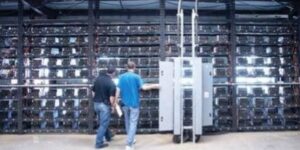
An ASIC miner is an application-specific integrated circuit designed to do one thing extremely well. For Bitcoin mining, that is SHA-256 hashing. ASICs replaced CPUs, GPUs, and FPGAs for Bitcoin because they are vastly more efficient.
Efficiency is a payout multiplier in Australia
Because electricity is often a large share of operating costs, every watt saved per TH/s directly improves net payout.
A move from a high J/TH machine to a lower J/TH machine can materially change your break-even electricity rate. In Australia, that can be the difference between running profitably in a hosted facility and running at a loss at home.
Mini-miners and home-friendly devices
Home-friendly devices trade raw hashrate for very low power draw and educational value. They can produce small but steady pool payouts, but they are not usually designed for maximum profit. Their value is often in learning, decentralisation, and experimentation.
For serious payout optimisation, Australian miners tend to focus on efficient modern hardware plus stable operating conditions, often through hosting arrangements.
Power Prices, Hosting, and Operating Models: Mining in the Australian Energy Landscape
Australia’s power economics shape payouts
Australian residential electricity averaged about 33.5 c/kWh in January 2026, with most households paying between 30 and 35 c/kWh depending on state. South Australia is consistently the most expensive, while Victoria and Tasmania are the cheapest
A 3.5 kW ASIC running 24 hours uses 84 kWh per day. At 33 c/kWh that is about AUD 27.72 per day, or roughly AUD 10,100 per year, before you account for a single satoshi of revenue. The same machine in a hosted facility at around 12 c/kWh costs about AUD 10.08 per day, close to AUD 3,680 per year. That gap of more than AUD 6,000 a year is what decides whether mining is a business or a hobby in Australia.
Three operating models and how they affect payouts
Home mining
- High tariffs and limited capacity
- Noise and heat constraints
- Often higher rejected share rates due to residential internet variability
Home mining can be justified if you reuse heat or treat it as a learning project, but it is rarely the easiest way to maximise net payouts.
Industrial mining in Australia
- Better infrastructure and potentially better power pricing
- Operational discipline and maintenance access
- Higher uptime
This mode is closer to a business baseline, but it requires capital and execution skill.
Hosted mining
Hosting providers such as Mining Store position their facilities as a way to secure competitive power pricing and operational stability, with power and hosting rates published by region and an emphasis on uptime and support.
Using Bitcoin Mining Profitability Calculators as an Australian Miner
What calculators do well
Profitability calculators turn hashrate and power into expected revenue using network data. The key inputs you must supply include.
- Hashrate in TH/s
- Power consumption in watts
- Electricity cost in AUD per kWh
- Pool fee and payout method assumptions
- Network difficulty and BTC price
Common pitfalls Australians should avoid
-
- Assuming static difficulty and static BTC price
- Ignoring downtime and stale shares
- Ignoring capex, depreciation, and repair costs
- Using unrealistic electricity pricing
How Australian Tax Rules Treat Mining Payouts
Hobby versus business is the critical distinction
The ATO approach hinges on whether you are carrying on a business.
Mining as a business
The ATO states that if you are carrying on a business in crypto mining, the crypto assets you receive are treated as trading stock, and businesses must account for trading stock values at the end and start of income years.
This generally implies.
- The AUD value of received crypto can be assessable under business rules.
- Expenses such as electricity, hosting, depreciation, and maintenance may be deductible if they are incurred in carrying on the business, subject to general tax principles and your circumstances.
Hobby or small-scale activity
If you are not carrying on a business, tax treatment can differ and may lean toward capital gains concepts when disposing of assets. The practical message is not to guess. Classification depends on facts: scale, intention, regularity, and business-like behaviour.
Payout timing affects reporting and records
Pool payouts happen frequently. Under any payout method, good record-keeping matters.
- Each payout transaction
- AUD value at receipt time
- Pool statements
- Hosting invoices and electricity bills
Poor record keeping can erase mining gains through errors and compliance pain. For many miners, working with a crypto-literate accountant is not optional.
Risk Management for Mining Payouts: Volatility, Halving, and Hashprice Hedging
The three main payout risks
BTC price volatility
Your payout arrives in BTC. Your costs are often in AUD. If you sell immediately, you are exposed to price drops. If you hold, you are exposed to price volatility and timing risk.
Difficulty increases and hashrate growth
Even if BTC price rises, difficulty can rise faster, reducing your BTC per TH/s. This is why miners focus on efficiency and fleet refresh cycles.
Halving events
The halving cuts subsidy revenue overnight. That is why miners often upgrade ASICs and improve power economics ahead of halvings, rather than after.
Hashprice as a useful mental model
Many miners track hashprice, which is revenue per TH per day. Hashprice bundles price, difficulty, and the fee environment into one number. If hashprice falls, your payout per TH falls unless you have offsetting advantages such as cheaper power or better efficiency.
Practical hedging and smoothing approaches
- Using more stable payout schemes, such as FPPS, for baseline cash flow.
- Splitting hashrate across methods for a mix of stability and upside, depending on risk tolerance.
- Consider fixed payout or structured hosting products if available and trustworthy.
- Using disciplined sell strategies, such as converting a set portion of mined BTC to cover costs.
Choosing a Bitcoin Mining Pool from Australia: What to Look For

Payout method fit
Start with your cash flow needs.
- If you need predictability, prioritise PPS or FPPS.
- If you can tolerate variance and want lower fees, consider PPLNS.
- If you want a stable base plus fee participation, consider PPS+.
Fee structure and thresholds
Look beyond the headline fee.
- How are transaction fees treated
- What are minimum payout thresholds
- Are there withdrawal fees
Reputation and transparency
Choose pools with transparent reporting, uptime history, and community scrutiny. Pools are infrastructure, not just software.
Server locations and latency
Latency affects stale shares and, therefore, payouts. For Australians, it can be worth selecting pools with Asia-Pacific endpoints or using hosting facilities with strong international routing.
Compliance stance
Some pools require KYC and maintain stricter compliance practices. If you want your payouts to move smoothly through exchanges and banks, a more compliance-forward path can reduce friction later.
Home Bitcoin Mining Payouts in Australia: Mini-Miners, Heat Re-Use, and Realistic Expectations
What home miners can expect from payouts
Home miners often expect too much. A small device can produce BTC, but at household electricity prices, it is rarely a path to “income” unless you are very intentional about efficiency and heat reuse.
Mini devices can.
- Produce small pool payouts
- Teach you how pools and shares work
- Support decentralisation
They generally do not create life-changing monthly profits.
Heat reuse can change the equation
A more powerful home unit that produces meaningful heat can offset other heating costs. In cooler months, mining as space heating can improve effective profitability because you are displacing another energy expense. This does not make mining free, but it can change the economic comparison versus simply buying BTC.
When hosting is a better fit
If your goal is consistent mining payouts that translate into AUD outcomes, professional hosting can reduce the operational penalties of home mining: heat, noise, downtime, and connectivity variability. Providers such as Mining Store describe hosting as an all-in service that bundles power, cooling, and support.
Sustainable and Compliant Mining Payouts: Environmental and Regulatory Considerations
Sustainability affects long-term viability
Payout methods do not change energy use. Hardware efficiency and power source do.
If you care about sustainability, the practical levers are.
- More efficient ASICs, meaning fewer watts per TH/s.
- Cleaner power sources where available.
- Operational practices that reduce waste and extend hardware life.
Hosting facilities can sometimes improve sustainability outcomes by running better cooling and more stable operations. That can translate into higher effective payouts and less wasted energy.
Compliance affects payout usability
Mining payouts are increasingly visible to exchanges and regulators. Pools and hosting arrangements that provide clear statements and operational transparency can make tax reporting and banking interactions less painful. This is especially relevant for anyone trying to run mining as a legitimate, documented business in Australia.
Product Highlight: Bitmain Antminer KS7 40TH/s (Hosted or Shipped) and a Critical Accuracy Note

Bitmain Antminer KS7 40TH/s: what the specs say
Mining Store lists the Bitmain Antminer KS7 at 40TH/s with 3080W power consumption, with both hosted and shipped options, and notes that hosted miners are not subject to GST on their site’s offering.
Important: Confirm the algorithm before buying for Bitcoin mining
Here is the critical detail that affects payout expectations.
Multiple independent ASIC specification sources describe the Antminer KS7 as a KHeavyHash miner designed for Kaspa, not a SHA-256 Bitcoin miner.
That matters because a Kaspa-focused miner will not produce Bitcoin mining payouts on SHA-256 pools in the way a Bitcoin ASIC does. The safest practical approach is to verify the exact algorithm and target coin before purchase, using manufacturer documentation and multiple independent spec sources, and then match the hardware to the appropriate pool and payout model.
Why the KS7 product framing still matters for payout strategy
Even with the algorithm clarification, the broader strategic lesson stands.
- Hardware capabilities determine which networks you can mine.
- Power consumption determines how much of any payout you keep.
- Hosted versus shipped changes operational reliability and net returns.
If your target is Bitcoin, ensure you are buying a true SHA-256 ASIC miner. If your target is Kaspa or another compatible network, then evaluate payouts and pools in that context.
Conclusion: The bottom line on Bitcoin mining payouts in Australia
Every Bitcoin mining payout in Australia is the end of a chain: the 3.125 BTC block subsidy plus fees, divided by the pool’s payout method, minus pool fees, minus your electricity and hosting costs, minus ATO obligations. Australian miners cannot control the protocol or the global hashrate, but they can control three levers that decide whether mining is profitable: ASIC efficiency (J/TH), effective electricity price (AUD per kWh) and uptime (share acceptance rate). The miners who treat these three as a system, usually through hosted infrastructure with FPPS payouts and disciplined ATO record-keeping, are the ones still profitable in 2026.
Providers such as Mining Store position themselves as an Australian option for ASIC sourcing and hosting facilities, aiming to improve operational uptime, provide predictable operating conditions, and simplify deployment for miners who prefer not to run infrastructure at home.
If you want, I can turn this into a version optimised for a specific keyword target, such as “Bitcoin mining payouts Australia” or “FPPS vs PPLNS for Australian miners”, and tailor the examples to a specific ASIC model you plan to run, your state, and whether you prefer home mining or hosting.