Bitcoin Mining Payouts in Australia 2026
A Bitcoin mining payout is the BTC you receive from your pool. It is a share of the 3.125 BTC block subsidy plus transaction fees, split by your pool’s payout method. In Australia, though, the number that really matters is the AUD you keep after electricity, hosting, hardware depreciation and ATO tax. So this guide explains how Bitcoin mining payouts work, how pools share them, and how they turn into real profit here.

Key takeaways
- The Bitcoin block subsidy in 2026 is 3.125 BTC per block. It halves again to 1.5625 BTC at around block 1,050,000 in April 2028.
- FPPS suits predictable AUD cash flow, because it pays a fixed rate per share that covers the subsidy plus an averaged fee estimate.
- For business miners, the ATO treats mined crypto as trading stock. Hobby miners instead pay capital gains tax when they sell.
- The three levers you actually control are ASIC efficiency in joules per terahash, electricity price in AUD per kWh, and uptime as your share acceptance rate.
- Hosting at around 12 c/kWh can save a single 3.5 kW machine more than AUD 6,000 a year against a 33 c/kWh home tariff.
Bitcoin Mining Basics From Hashes to Block Reward
Bitcoin mining secures the network through proof of work. In simple terms, miners hash block data over and over until one machine finds a valid result. This happens about every ten minutes. That winning miner then earns the 3.125 BTC subsidy plus transaction fees. Every payout you receive is simply a slice of that reward.
It helps to picture the process as brute force, not clever puzzle solving. Miners compete to build each block by hashing data until a result meets the network difficulty target. As a result, more computing power means more attempts per second.
How Hashrate Affects Your Payout
Your hashrate is the speed at which your machine makes guesses. You will see it in TH/s for a single ASIC, and in EH/s at network scale. Naturally, a higher hashrate means more chances to find a block each second. However, you compete against the entire network at the same time. Over the long run, your share of rewards tracks your share of total hashrate.
How Difficulty Keeps Block Times Steady
Bitcoin adjusts its difficulty every 2,016 blocks, which is roughly a fortnight. The goal is simple: keep the average block time near ten minutes. So when the world adds faster ASICs, mining gets harder. This is a key reason payouts shrink over time, unless you upgrade hardware or cut costs.
What Bitcoin Mining Achieves
Mining does four useful things at once. First, it validates transactions and blocks double spending. Second, it adds new blocks to the public ledger. Third, it issues new bitcoin into circulation. Finally, it secures the network by making attacks extremely expensive. In short, every payout is your slice of the subsidy plus fees, filtered through your hashrate share and your pool’s fees.
How the Bitcoin Halving Affects Payouts
Bitcoin halving cuts the block subsidy in half every 210,000 blocks, or about every four years. The fourth halving hit block 840,000 in April 2024. As a result, the subsidy dropped from 6.25 to 3.125 BTC. The next halving should arrive around April 2028, when it falls again to 1.5625 BTC.
| Halving | Block height | Approx date | Subsidy after |
| Genesis | 0 | January 2009 | 50 BTC |
| 1st | 210,000 | November 2012 | 25 BTC |
| 2nd | 420,000 | July 2016 | 12.5 BTC |
| 3rd | 630,000 | May 2020 | 6.25 BTC |
| 4th | 840,000 | April 2024 | 3.125 BTC |
| 5th (projected) | 1,050,000 | April 2028 | 1.5625 BTC |
Halvings hurt higher cost miners the most. Many Australian home miners run on residential tariffs, so their subsidy income per terahash falls overnight while their power bill does not. Therefore, efficiency and low power costs matter even more after each halving.
Why Most Australian Miners Use Mining Pools
Most Australians mine through a pool rather than alone. The reason is variance. Solo mining can mean months of nothing, followed by a rare, large reward. For a business with steady bills, that swing is hard to manage.
Solo Mining Is Rarely Viable in Australia
In solo mining, you only get paid when you personally find a full block. With today’s enormous network hashrate, a small miner might wait months or even years. So for most people here, solo mining does not cover the power bill. Lottery mining still exists, but it is a hobby rather than an income plan.
What a Mining Pool Actually Does
A pool combines many miners so rewards arrive more often. First, your ASIC connects to the pool server. Then your miner submits shares, which are proofs of work at reduced difficulty. When the pool finds a block, it shares the reward based on the work you contributed. As of July 2026, Foundry USA holds roughly 25% of global hashrate and AntPool about 19%, so the two largest pools together produce close to half of all blocks (Hashrate Index, July 2026).
There is also a bigger shift under way. In May 2026, seven of the largest pools, together about 75% of hashrate, committed to the Stratum V2 protocol (CoinDesk, 11 May 2026). In practice, it lets individual miners, not pool operators, choose which transactions go into a block.
The Main Bitcoin Mining Payout Methods
Bitcoin payout method is really a cash flow decision. The four common models are PPS, FPPS, PPLNS and PPS Plus. They mainly differ in who carries the luck of finding blocks. The table below compares them at a glance.
| Method | How you are paid | Variance to miner | Typical fee | Best suited to |
| PPS | A fixed amount per valid share, paid whether or not the pool finds a block | Lowest, pool absorbs luck | Higher, 2 to 4% | Miners who need predictable income |
| FPPS | A fixed rate per share, covering the subsidy plus an averaged fee estimate | Low | Higher, 2 to 4% | Hosted and business miners wanting smooth revenue |
| PPLNS | Paid only when the pool finds a block, shared across the last N shares | Highest, miner carries luck | Lower | Miners who accept dry spells for lower fees |
| PPS Plus | Subsidy paid PPS style, fees paid PPLNS style | Moderate | Moderate | Miners wanting a stable base plus fee upside |
FPPS Usually Suits Australian Miners Best
For most Australians, FPPS is the sensible default. It pays a fixed rate per share that covers the subsidy plus an averaged fee estimate. As a result, your revenue stays smooth and close to complete. That predictability makes it far easier to cover power, hosting and tax.
Key Mining Pool Concepts You Need to Know
Before you compare pools, learn a few core terms. They explain why two miners with the same hardware can earn different amounts.
Shares Luck and Pool Fees Explained
A share is proof that your machine is doing real work. Pools count your valid shares to work out your reward. Pool luck then measures how quickly the pool finds blocks against the expected average. Finally, pool fees usually sit between 0.5% and 3%. Methods like PPS and FPPS often charge more, because the pool absorbs your bad luck.
Stale Shares and Why Location Matters in Australia
A stale share happens when you submit work after the pool has moved on. That work earns nothing, so stale shares quietly reduce your payout. Distance is the usual culprit. Because many pool servers sit overseas, Australian miners can face higher latency on home connections. Hosting facilities with strong routing keep stale rates low, which lifts your effective payout.
How Network Difficulty Shapes Long Term Payouts
Difficulty is one of the strongest forces on your long run income. When difficulty rises and your hashrate stays fixed, your slice of the rewards shrinks. In a bull market, difficulty can climb fast as operators switch on newer machines. So a rising Bitcoin price can still disappoint miners if global competition grows even faster.
To manage this, Australian miners pull a few levers. They run more efficient ASICs, they refresh their fleet on a plan, and they favour hosting with high uptime. Many also choose FPPS to smooth the income curve.
Home Mining Versus Hosted Mining in Australia
Your operating model decides how much of each payout you keep. Home mining, industrial mining and hosted mining all behave differently. The table below sums up the trade offs for Australian miners.
| Factor | Home mining | Hosted mining |
| Electricity price | Residential tariff, about 30 to 45 c/kWh by state | Around 12 c/kWh through Mining Store hosting |
| Uptime | Variable, tied to home power and internet | High, with professional power, cooling and monitoring |
| Stale share rate | Higher on residential routing and latency | Lower with redundant, optimised routing |
| Scale | Limited by household power, heat and noise | Scales across many ASICs |
| Net AUD payout | Often tight, unless very efficient gear or heat reuse | More BTC converts to AUD profit after hosting fees |
Two miners with identical hashrate can keep very different amounts. Uptime, efficiency and rejected shares all compound over time. In a high power cost country like Australia, that gap usually favours hosting. You can explore Mining Store hosted mining facilities to compare your options.
Choosing the Right ASIC for Better Payouts
It is tempting to shop by hashrate alone. In Australia, though, efficiency is the number that decides profit.
Efficiency Beats Raw Hashrate in Australia
You measure efficiency in joules per terahash, and lower is better. A lower J/TH means you spend less power for the same output. As a result, your break even electricity rate improves. In a high cost market, that difference can separate a profitable business from a loss making hobby. Firmware stability and cooling matter too, since payouts follow effective hashrate, not the number on the box.
Product Highlight Antminer S21 XP for Australian Miners
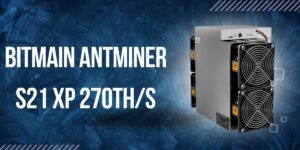
The Bitmain Antminer S21 XP is a SHA-256 Bitcoin miner. It runs at 270 TH/s and about 3,645 W, which works out to roughly 13.5 J/TH. That efficiency is exactly the figure that drives Australian payouts.
Importantly, it mines Bitcoin directly. That sets it apart from Kaspa machines like the KS7, which run the KHeavyHash algorithm and cannot earn Bitcoin payouts at all. So if Bitcoin is your target, always choose a true SHA-256 ASIC. You can view the current Antminer range at Mining Store Australia on shipped or hosted terms.
| Specification | Value |
| Algorithm | SHA-256 (Bitcoin, BCH, BSV) |
| Hashrate | 270 TH/s |
| Power draw | About 3,645 W |
| Efficiency | About 13.5 J/TH, best in class for air cooled in 2026 |
| Cooling and power | Air cooled, 200 to 240 V single phase |
| Chip | Bitmain BM1370 |
How a Mining Payout Is Calculated Step by Step
Let us connect the parts with a simple Australian example.
- Set up your hardware and pool. Assume a modern ASIC at about 200 TH/s and 3.5 kW, joined to an FPPS pool with a 2% fee.
- Add the network context. The block subsidy is 3.125 BTC, and FPPS builds an average fee estimate into your share rate.
- Estimate your share of rewards. Your long run share tracks your hashrate against the pool and network, and FPPS turns that into a steady per share rate.
- Work out your daily BTC. Your dashboard multiplies accepted shares by the share value, then subtracts the pool fee.
- Convert power into cost. A 3.5 kW machine uses about 84 kWh a day, so multiply that by your electricity rate.
- Account for tax. Business miners include the AUD value of mined coins as income, while hobby miners face capital gains tax on disposal.
You can model your own numbers with the Mining Store profitability calculator before you commit.
How Australian Tax Rules Treat Mining Payouts
Tax depends on one key question: are you running a business or a hobby. The Australian Taxation Office decides this on scale, intent and how business like you are.
Mining as a Business
If you carry on a mining business, the ATO treats the crypto you receive as trading stock. In practice, you include its AUD value in your income. You can then usually deduct related costs, such as electricity, hosting and hardware depreciation. Good records make all of this far easier.
Mining as a Hobby
If you mine casually, the rules differ. Your coins become a capital asset, often with a cost base of zero. You then pay capital gains tax when you sell, swap or spend them. However, you generally cannot deduct expenses. Because the line can blur, a crypto literate accountant is worth the fee. Mining Store’s crypto tax resources are a useful starting point, but always seek licensed advice.
Managing the Risks to Your Mining Payouts
Three risks shape your payouts the most. First, Bitcoin’s price can swing while your costs stay in AUD. Second, difficulty can rise faster than price, which cuts your BTC per terahash. Third, each halving cuts the subsidy overnight.
Many miners track hashprice, which is revenue per terahash per day. It bundles price, difficulty and fees into one number. To smooth the ride, you can favour FPPS, sell a set portion of coins to cover costs, or model reinvestment with the Mining Store Compound Calculator.
How to Choose a Bitcoin Mining Pool from Australia
Start with your cash flow needs. If you want predictability, pick PPS or FPPS. If you can handle swings for lower fees, consider PPLNS. Beyond the headline fee, check minimum payout thresholds and any withdrawal fees. Also look at server locations, since Asia Pacific endpoints cut latency for Australian miners. Finally, favour pools with transparent reporting and a solid uptime record.
The Mining Store Australia Approach to Bitcoin Mining Payouts
Every Bitcoin mining payout in Australia is the end of one chain. You start with the 3.125 BTC subsidy plus fees.Then subtract the pool’s cut, your power and hosting costs, and your ATO obligations. You cannot control the protocol or the global hashrate. However, you can control three levers: ASIC efficiency, electricity price and uptime.
This is where Mining Store Australia fits. As Australia’s largest cryptocurrency mining hosting provider, this Melbourne based Bitcoin mining specialist was founded by miners William Wright and Callum Cameron. It pairs efficient SHA-256 ASIC miners, such as the Bitmain Antminer S21 series, with hosted Bitcoin mining at around 12 c/kWh. In short, it targets the two levers that home setups struggle with most: low power cost and high uptime.
Ready to run your numbers? New miners can start with the free education hub or book a free consultation. You can also explore hosted mining facilities, call 1300 644 978, or email [email protected].