
Bitmain S21+ Bitcoin Mining Introduction
The world of cryptocurrency mining continues to evolve rapidly, and Australia is no exception. With favourable regulatory shifts, increasing interest from institutional and hobbyist miners alike, and the constant march of technological innovation, Australia remains a compelling location for mining operations. Recent data show that mining in Australia is gaining traction with both on-shore power advantages (especially in states with renewable energy surpluses) and increasing awareness of environmental and cost pressures.
At the heart of this industry stands Bitmain, a global leader in ASIC mining hardware. Bitmain’s dominance in the ASIC (application-specific integrated circuit) mining space means their equipment is often the benchmark against which all other mining rigs are judged.
Without a comprehensive evaluation, one may invest in top-end machinery only to find the margins eroded by rising power bills or unfavourable local conditions. This guide takes you through everything you need to know about the Bitmain S21+ in the Australian context, offering a deep dive into its specifications, comparative analysis, profitability frameworks, deployment considerations, and much more.
Understanding ASIC Mining and Bitmain’s Market Leadership
What is ASIC Mining?
In the cryptocurrency mining ecosystem, there are various hardware approaches: CPU mining, GPU mining and ASIC mining. ASIC mining refers to mining using application-specific integrated circuits — hardware built exclusively for one algorithm (for example, SHA-256 in the case of Bitcoin). The advantages of ASICs are clear: they deliver far higher hash rate per watt than general-purpose GPUs, meaning better performance, better efficiency, and lower ongoing electricity cost per unit of hashrate.
Why ASIC > GPU (in most Bitcoin/ SHA-256 use cases)
While GPUs remain popular for alt-coin mining and when flexibility is important, in pure Bitcoin mining (the dominant SHA-256 chain) ASICs dominate because:
- They are purpose-built for SHA-256: higher hashrate, lower latency, optimised internal architecture.
- They typically consume less power for a given hashrate (measured often in J/TH — joules per terahash).
- They tend to have longer life‐spans in professional operations thanks to better cooling, construction, and chip optimisation.
- Over time, GPU mining for SHA-256 becomes uneconomic as ASICs’ benchmark advances push margins down for older hardware.
Bitmain’s Dominance in ASIC Technology
Bitmain was among the pioneers of high-efficiency Bitcoin mining hardware. Their Antminer family has repeatedly defined the standards for performance, efficiency, and scale. From early S9 and S17 units to the S19, S19 XP, and now the S21 series, Bitmain continues to press the boundary. Their market penetration, firmware, and ecosystem support (including pool compatibility, spare parts, and global distribution) give many miners confidence in investing in their units.
Evolution of the Antminer Series (S19 → S19 XP → S21 → S21+ → S21 XP)
Briefly, here’s an overview of how the Antminer line has progressed:
- Antminer S19: Provided a major step-up in hashrate and efficiency for its era.
- Antminer S19 XP: Improved efficiency further, lower J/TH, higher stability for large-scale farms.
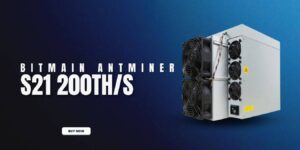
- Antminer S21: Next-gen model with improved cooling, chip architecture, hashboard design, and further efficiency gains. Specifications suggest around 200 TH/s with ~3550W power consumption (~17.5 J/TH) for S21. (ASIC Miner Value)
- Antminer S21+: The enhanced version of S21, pushing the hashrate up (216-235 TH/s) and efficiency lower (~16.5 J/TH) according to modeling. (Mining Now)
- Antminer S21 XP (and variants including hydro/immersion cooling): For more industrial deployments, larger scale, sometimes liquid/Hyd cooling. In short, as the series advances, miners get better performance/energy efficiency, which is especially vital in a high-electricity-cost environment like Australia.
Comprehensive Specifications of Bitmain Antminer S21+
Hashrate Performance (216 – 235 TH/s)
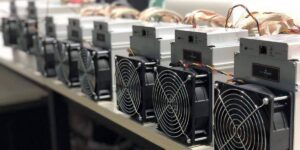
The Antminer S21+ is reported to have a hashrate of around 216 TH/s in its standard form. Some sources reference variations up to 235 TH/s, depending on firmware, fan/cooling conditions, and factory settings. For Australian conditions (higher ambient temperatures, possibly higher altitude), the practical effective hashrate may be slightly lower, but the benchmark is still 216 TH/s. Having that hashrate means this unit is positioned to deliver significant mining power, which is important because the more terahashes you produce, the larger your slice of the reward pool (all else equal).
Efficiency Breakdown (~16.5 J/TH)
Efficiency is often given in joules per terahash (J/TH) and the S21+ is noted at approximately 16.5 J/TH in Mining Now’s spec sheet (3564 W power draw at 216 TH/s).Compared to earlier models (for example, S21 at ~17.5 J/TH), this is a meaningful improvement. In the Australian context, where electricity tariffs can vary significantly by region and time of day, improved efficiency can be a key competitive advantage.
Power Consumption (3564W – 3877W)
For the 216 TH/s configuration, the power draw is specified as around 3564 W. Some scenarios suggest higher draws depending on ambient temperature, altitude, humidity or overclocking — so one might budget up to ~3877 W under less ideal conditions. It’s important to account for the full power draw (including PSU inefficiencies, overheads, cooling fans, rand oom ventilation) when estimating operating cost.
Internal Hardware & Software Improvements
The S21+ builds on improvements seen in the S21 series: next-gen hashboards, refined chip layout, better cooling/fan design, possibly improved firmware. For example, reviews of the S21 note that new PSU units (e.g., APW12) and elevated cooling fan capacity are part of the hardware enhancements. These internal improvements matter.
Comparative Analysis: Bitmain Antminer S21+ vs Other ASIC Models
Side-by-Side Comparison
Let’s compare the S21+ to a few other leading models: the Antminer S19 XP, Antminer S21 XP, and the Whatsminer M60S.
- Antminer S19 XP: A well-regarded previous-generation miner. While reliable, it has a lower hashrate and slightly higher J/TH than the S21+ (specific numbers vary).
- Antminer S21 XP: The next step after S21+. It may offer even higher hashrate and/or better cooling (immersion or hydro), but often at greater cost and power infrastructure requirements.
- Whatsminer M60s: Competes in the same space but may lag slightly in efficiency or support ecosystem compared to Bitmain units. Using the S21+ with ~16.5 J/TH and ~216 TH/s gives it a strong competitive edge in environments where electricity cost is significant.
Efficiency & Profitability Scenarios Under Australian Energy Rates
In Australia, electricity tariffs vary by state and by commercial vs residential status. Let’s assume a residential tariff around A$0.20/kWh (for example, actual cost may vary; commercial rates may be lower). Using the S21+ specs: 3564 W draw ≈ 3.564 kW × 24 hours = ~85.5 kWh/day. At A$0.20/kWh, this is ~A$17.10/day. If the miner produces at 216 TH/s, the revenue side needs to cover that electricity cost plus capital amortisation, maintenance, and cooling. In contrast, older or less efficient models might consume, say, 3500 W for 200 TH/s (~17.5 J/TH), which would mean a higher cost per TH/s.
Decision-Making Framework for Selecting Optimal Mining Hardware
When deciding which miner to choose, consider:
- Electricity cost: Lower tariffs favour less efficient miners; higher tariffs demand the most efficient hardware.
- Infrastructure capacity: Power supply, cooling, ventilation, space, and noise constraints in your location.
- Time-to-market and delivery time: Newer hardware often has a premium price and lead time.
- Resale value/obsolescence risk: More efficient machines retain value longer and can be redeployed or resold.
- Total cost of ownership (TCO): Capital cost + operating cost (electricity, cooling, maintenance) + downtime risk.
- Scalability & support: If you plan to scale, you’ll need hardware with robust firmware, supply chain, parts and service support. In many Australian cases the S21+ strikes a balanced choice: cutting edge enough to give margin headroom, but not so extreme (and infrastructure hungry) as to be prohibitive for serious small-to-mid-scale miners.
Detailed Profitability Calculation Framework for ASIC Miners

The Profit Formula
A common formula for mining profitability is:
Profit = (Hashrate × Block Reward / Network Difficulty × Blocks per Day) − Electricity Costs
This is a simplification but captures the key levers. Let’s break down the inputs.
Importance & Accuracy of Each Input
- Hashrate: How many hashes your machine can compute per second (for example 216 TH/s)
- Block Reward: For Bitcoin this is currently 6.25 BTC (plus transaction fees) and will drop after each halving event.
- Network Difficulty: A measure of how hard it is to find a block; higher difficulty means you earn less Bitcoin for the same hashrate.
- Blocks per Day: For Bitcoin, one block is mined approximately every 10 minutes, so around 144 blocks/day (absent large shifts).
- Electricity Costs: Your cost is based on power draw (in kW), hours of operation, tariff (A$/kWh) and any additional overheads (cooling, ventilation). Each of the above can fluctuate: Bitcoin price, network difficulty, electricity tariff, hardware efficiency. Estimating profitability demands frequent updates of these parameters.
Real-World Profitability Scenarios for Bitmain S21+ in Australia
Electricity Rates by Australian State
Electricity tariffs vary by state and by whether you’re on a residential or commercial rate; some large miners negotiate special industrial tariffs or deploy in regions with surplus renewables. For example:
- Queensland, Western Australia, and parts of Tasmania may offer lower commercial tariffs or incentives.
- In urban residential areas, A$0.20-0.30/kWh is common (or higher if peak times, demand charges, etc).
- Commercial/industrial tariffs might drop to A$0.10-0.15/kWh if large power loads and off-peak agreements exist. Given this spread, you might model:
- Scenario A (residential): A$0.25/kWh
- Scenario B (commercial favourable): A$0.12/kWh
Breakeven and Return on Investment (ROI) Considerations
If you pay, say, A$10,000 per unit (new S21+ or slightly used), plus shipping/import, setup, ventilation and cooling infrastructure (say another A$2,000), total capex ~A$12,000. At net ~A$670/month (Scenario A), breakeven ~18 months. At net ~A$1,002/month (Scenario B), breakeven ~12 months. ROI also depends on depreciation, hardware failure risk, BTC price drops, difficulty increases, and power cost escalation. Therefore, conservative modeling should include a margin of safety. In summary: Selecting a low power-tariff region, ensuring efficient cooling/infrastructure, and high uptime are key to maximising profitability in Australia.
Key Influencers of Bitmain S21+ Mining Profitability in Australia
Electricity Tariffs: Residential vs Commercial Rates
As demonstrated, even a small difference in tariff (e.g., A$0.12 vs A$0.25) dramatically changes net profit. For Australian miners, securing favourable commercial/industrial power rates (or being located in renewable-rich regions with surplus power) is one of the most important levers. If you’re mining at home on a residential rate, the margin may shrink (or disappear) unless your hardware is extremely efficient, and cooling/humidity/power factors are well controlled.
Impact of Increasing Bitcoin Network Difficulty
As more miners join the network (or existing miners deploy newer hardware) the network difficulty increases. Higher difficulty means fewer BTC earned per TH/s over time (assuming constant BTC price). This is a major risk for hardware owners. Thus owning a high-efficiency miner (like the S21+) is advantageous — you have more headroom to absorb difficulty increases than someone on older/less efficient equipment.
Bitcoin Market Volatility and Price Trend Analysis
Much of mining profitability depends indirectly on the price of Bitcoin (BTC). If BTC price falls significantly, revenue drops. Conversely, if BTC rallies, margins increase. Miners must manage this volatility through risk mitigation strategies (e.g., hedging, diversifying into hosting services, or choosing equipment with lower cost basis). Given Australia’s energy cost environment, you need to assume conservative scenarios (modest BTC price, gradual difficulty increases) rather than overly optimistic ones.
Infrastructure Requirements for Effective S21+ Deployment
Power Infrastructure Guidelines
To deploy the S21+ effectively, you need to account for:
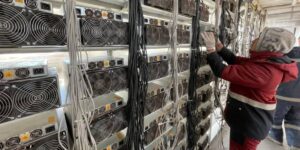
- Circuit specification: at ~3.6 kW draw per unit, the power circuit must handle sustained load plus startup surge.
- Power Distribution Units (PDUs): Ensure appropriately rated breakers, wiring, voltage stability, surge protection.
- Voltage considerations: Many ASICs expect 220-277V single phase (or in some cases three-phase for larger/hydro units) — check the local wiring standard and ensure the infrastructure supports the miner without power drop or excessive heating. The S21+ spec shows AC input voltage 220-277V (single phase).
- Cooling load: The heat generated is roughly equal to the power consumed minus conversion inefficiencies. So if you draw 3.6 kW, you must remove ~3.6 kW of heat from the room continuously.
Cooling Systems (Air Cooling, Immersion Cooling)
Since Australia can have high ambient temperatures (depending on location), cooling becomes more challenging. The S21+ is air-cooled, which suits many operations but needs excellent ventilation, dust control, and temperature management. If you operate in a hot environment (e.g., above 35°C ambient) consider additional cooling measures or choose a location with cooler ambient (e.g., basement, shaded warehouse).
Networking Setup, Security & Best Practices
Mining rigs must be connected to the internet (Ethernet preferred). Avoid poor network reliability or latency (especially if you plan to compare solo mining vs pooled mining). Security considerations: ensure the firmware is up to date, change default passwords, isolate the mining network (so your rigs do not introduce vulnerabilities into your home or business network), use UPS/backup for network connectivity, and monitor for unusual behaviour (rigs going offline, hashboard drop, fan drop). Best practices: keep written logs of uptime/maintenance, monitor hashrate daily, verify warranty and spare parts availability, schedule regular cleaning (remove dust), and plan for replacement of consumables (fans, filters) over time.
Importance of Firmware and Software Customisation
Stock Firmware vs Third-Party (e.g., Braiins OS)
While the stock Bitmain firmware is robust and well supported, many miners elect to use third-party firmware (for example, Braiins OS) or custom firmware to unlock advanced features: improved monitoring, dynamic performance scaling (adjusting power/hasrate to optimise efficiency), finer control over fan curves, better logging, and sometimes lower downtime.
Step-by-Step Firmware Setup & Optimisation Process
- Download the latest firmware (stock or third-party) compatible with S21+.
- Backup original firmware/metadata before flashing.
- Flash firmware via the miner’s web interface (often root/root credentials by default – change immediately).
- Configure mining settings: pool(s), wallet address, worker name, frequency/power parameters (if allowed).
- Adjust fan curves: in hot ambient Australian summer conditions, you may want more aggressive fan usage to keep chip temps safe (though this may increase power draw slightly).
- Monitor performance: log the hashrate, power draw (via smart meter or clamp meter), board temperatures, fan speeds and ambient temperature.
- Review profitability: if you can reduce power draw slightly while maintaining hashrate, you improve margin. For example, under-clocking or undervolting if safe to do so.
- Schedule regular firmware updates, and keep spare parts ready (fans, filters, PCBs) to avoid extended downtime.
Comprehensive Guide to Mining Pool Selection and Setup
Mining Pool Payout Models (PPS, FPPS, PPLNS)
- PPS (Pay-Per-Share): You receive a fixed payout for each share your miner contributes, regardless of whether a block is found. Lower risk, lower reward variance.
- FPPS (Full Pay-Per-Share): includes transaction fees in addition to block reward. Slightly higher payout but usually higher fees.
- PPLNS (Pay-Per-Last-N-Shares): you are paid based on the last N shares when a block is found; higher variance but potentially higher payout if you’re lucky. In Australia, selecting a mining pool that has good latency, a respectable reputation, geo-proximity or redundancy (Asia-Pacific region) is important.
Configuring Mining Pools for the S21+
- Choose your pool
- In the miner’s web interface: go to Miner Setting → Pool.
- Enter the stratum server address, wallet address and worker name/password.
- Example: stratum+tcp://asia-pool.example.com:port1 etc.
- Save and reboot the miner, then monitor the status page to verify that it is hashing and shares are accepted.
- Set up fail-over pool in case primary pool goes down, and schedule monitoring alerts (email, SMS) for rig offline or hashrate drop.
Benefits of Selecting Local or Asia-Pacific Mining Pools
-
- Local regulatory and tax implications may differ (but Australian miners can mine globally).
- Pool payout currency (BTC) is universal, but local currency conversion and tax treatment need to be considered.
Cost Management and Profit Optimisation Strategies
Electricity Management Techniques
- Use time-of-use tariffs: run more rigs during off-peak hours if your tariff allows.
- Use smart power meters and data logging to identify inefficiencies (e.g., over-cooling or excessive ventilation).
- Deploy undervolting or under-clocking features to reduce wattage slightly (and improve J/TH) if acceptable for uptime.
- Use local renewable generation (solar plus battery) if your location and investment permit — you could offset daytime consumption and reduce grid draw.
Renewable and Hybrid Energy Solutions
Given Australia’s abundant solar and wind resources, miners can consider hybrid energy: e.g., solar arrays + battery + grid backup to reduce net electricity cost. This may make the mining operation more sustainable (and generate better public perception) and reduce exposure to rising grid tariffs.
Financial Strategies for Managing Initial Investment & Expenses
- Depreciate hardware over, say, 2-4 years (depending on expected useful life).
- Set aside contingency reserves for hardware failure, component replacement, downtime.
- Monitor the dollar cost per TH/s (including power) and compare across months to detect drifts.
- Evaluate leasing or hosting options (instead of owning hardware outright) if you prefer lower upfront capex and less infrastructure overhead.
- Use hedging tools (if available) to lock in electricity contracts or set aside part of BTC earnings for future equipment upgrade. By practising disciplined cost management, you enhance your margin and resilience to market fluctuations.
Legal, Regulatory, and Environmental Considerations for Australian Miners
Australian Cryptocurrency Regulations & Taxation Policies
In Australia, miners must consider the rules set out by the Australian Taxation Office (ATO):
- Revenue from mining (once coins are realised) is taxable as income.
- Capital-gains tax may apply when coins are sold.
- Depreciation of hardware can be claimed (subject to rules).
- If operating at industrial scale, you may be subject to energy-usage reporting, environmental licensing, or state regulations (for example noise, cooling water discharge). Staying compliant is essential to avoid unexpected liabilities.
Environmental Impact & Sustainable Mining Practices
Mining rigs consume significant electricity and produce heat and noise. In Australia, where public and regulatory scrutiny of energy-intensive industries is rising, sustainable crypto mining practices matter. These may include:
-
- Locating in regions with high renewable power supply or using off-grid renewables.
- Implementing high efficiency hardware (like S21+).
- Managing heat and noise so that neighbours or communities are not adversely affected. Using good environmental practices can also help in securing favourable power contracts or local approvals.
Building, Noise & Environmental Regulations
If you operate from a home or warehouse, you need to check local council regulations relating to industrial use (including electricity load, ventilation, noise above e.g., 70-80dB, heat discharge). Some local jurisdictions may require building licences for large power installations, or impose noise reduction measures (especially residential or mixed use areas). Failure to comply may result in fines, shutdowns or compromised neighbour relations, which will hit your profitability.
Practical Challenges Faced by Australian Miners and Solutions
Operational Challenges: Noise, Heat Dissipation, Hardware Maintenance
- Noise: ASIC miners typically generate 70-80 dB or more (comparable to a lawnmower). In residential or shared spaces, this can be a real issue. Use acoustic insulation, locate in a detached or separate space, or use immersion cooling if noise is critical.
- Heat Dissipation: In the Australian summer, ambient temperatures, ventilation/AC load becomes significant. Ensure your facility is designed to constantly remove the heat load of 3.6 kW per unit, without overspending on cooling.
- Maintenance: ASIC fans, air filters, dust build-up, and chip degradation all affect uptime. Schedule regular cleaning, have spare fans and filters, monitor board temps, and hashrate drop. A 1-2 % drop in hashrate across dozens of rigs can materially reduce profitability.
Best Practices for Equipment Maintenance and Monitoring
- Logging daily uptime, hashrate, and error rates.
- Setting up alerts for fan failure, power drop, and hashrate below threshold.
- Cleaning dust monthly or per season (especially if in a dusty Australian inland region).
- Keeping firmware current and optimised while preserving uptime.
- Having spare parts (especially fans) and plan to replace units every 3-4 years (or when power efficiency becomes sub-competitive).
- Backup power (UPS) for short outages, and surge protection for lightning-prone regions.
Tailored Solutions for Australian Climate and Infrastructure Challenges
- Use shaded or climate-controlled facilities, avoiding direct sunlight, especially in hotter states (Queensland, Western Australia).
- Consider south-facing orientation (southern hemisphere) for ventilation design.
- If dust/dirt is a problem (e.g., remote rural areas), consider sealed racks or positive-pressure filtered rooms.
- Use remote monitoring (VPN, dashboards) so you can manage rigs from afar — Australia’s mining sites may be remote or unmanned. By proactively tailoring the infrastructure to the locale, you reduce operational risk and improve lifetime uptime.
Risk Management Strategies in Cryptocurrency Mining

Common Risks: Price Volatility, Hardware Failures, Regulatory Changes
- Price volatility: If BTC price drops, your revenue drops even if hashrate and difficulty remain constant.
- Hardware failures: Crashes, fan failures, board faults or power supply issues cause downtime and loss of revenue.
- Regulatory changes: Government policy on cryptocurrency, energy usage or taxation may change and increase cost or reduce net margin.
- Difficulty and competition: As other miners join, difficulty increases and margins shrink over time.
Security and Operational Risk Mitigation
- Cyber-security: Ensure your mining infrastructure is isolated, secure, with strong passwords, firmware updates, and monitored logs to prevent hijacking (for example, someone redirecting mining to their own wallet).
- Physical security: In remote installations ensure secure access, surveillance, fire detection (ASICs generate heat, risk of fire if dust + poor ventilation), and power surge protection.
- Contract risk: If you enter hosting agreements, make sure you understand revenue split, uptime commitments, penalty clauses, and support response times.
Planning for Market Fluctuations and Unforeseen Disruptions
- Stress test your model: What happens if BTC price falls 50 %? Electricity cost increases 20 %? Difficulty jumps 20 %?
- Maintain reserve cash to cover fixed power and maintenance costs for perhaps 3-6 months of lower revenue.
- Consider diversifying: hosting services, participation in pool dividends, or switching some rigs to mine other SHA-256 coins if possible.
- Have an exit strategy: If hardware becomes non-competitive, you’ll want to know your resale options, or redeploy into hosting/colocation rather than manual operation.
Enhancing Profitability through Community and Industry Networking
Benefits of Engaging with Australian Mining Communities & Forums
- Access to collective knowledge: Many Australian miners share insights on power tariffs, cooling solutions, and regulatory developments.
- Bulk buying power: Community networks may secure discounted hardware shipments, freight, or spare parts.
- Shared services: Co-hosting, shared cooling systems, shared space may reduce individual cost.
- Peer support: Troubleshooting, firmware tweaks, local compliance support.
Networking Strategies: Sharing Resources, Knowledge, Pooling Capabilities
- Join online communities (Discord, Telegram) specific to Australian miners.
- Attend industry meet-ups or conferences (such as those focusing on energy, mining, crypto tech) to stay ahead of regulatory/technology changes.
- Partner with local power suppliers or renewable energy firms to negotiate favourable rates.
- Collaborate on maintenance or spare-parts pools, e.g., community hosting spare PSU fans or boards to reduce downtime cost.
Recommended Australian Online/Offline Communities & Industry Events
- Local mining forums specific to ASIC mining and Bitcoin mining in Australia.
- Renewable energy & industrial power user associations (since mining is a heavy-load industry).
- Crypto-mining trade shows or workshops in major cities (Sydney, Melbourne, Brisbane). Participating actively can keep you informed of changes (e.g., state energy regulation, power rate negotiation, local council policies) that might impact profitability.
Strategic Planning for Scalability and Growth
Guidelines on Scaling Mining Operations Efficiently & Sustainably
- Begin with a pilot small-scale deployment (e.g., 1-5 units) to test infrastructure, cooling, and operational model in your local context.
- Once systems are proven (power reliability, cooling, network, monitoring), scale step-wise to perhaps 10-50 units, considering use of commercial/industrial space.
- Use modular design: racks, PDUs, and cooling units that can be replicated.
- Monitor cost per TH/s, power cost per TH/s, downtime rates, and maintenance cost. If metrics drift unfavourably, reassess before scaling further.
Strategic Planning for Future Upgrades and Mining Portfolios
- Budget for hardware upgrades every 2-4 years (as newer ASICs come to market). The S21+ is top-tier now, but may be supplanted by more efficient units.
- Consider diversification beyond Bitcoin mining: e.g., SHA-256 altcoins, hosting services, or offering mining infrastructure to third parties.
- Evaluate energy sourcing strategies: secure longer-term contracts with power suppliers, consider moving to renewable opportunities, or co-locate near cheap surplus energy.
- Incorporate risk buffers for changing regulations, difficulty increases and competition.
Buying Considerations: Hosted vs Shipped ASICs in Australia
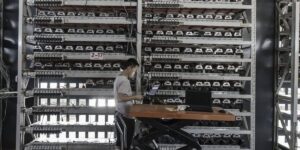
Comparison of Hosted Mining vs Direct Home/Warehouse Mining
Hosted Mining: The ASIC is located in a remote facility (EU/Asia/USA or even Australia), the provider handles power, cooling, network, and support. Advantages: minimal setup, less operational burden, often bulk pricing, and possibly better power rates. Disadvantages: less control, monthly hosting fees, latency or distance issues, possible import/contract risk, longer time to delivery decisions.
Shipped Mining: You purchase the ASIC (for example, from Australia or import), ship it to your location (home, warehouse), set up the infrastructure yourself. Advantages: full control, possible faster ROI if you have all infrastructure ready, ability to inspect hardware. Disadvantages: you bear full infrastructure cost, power/cooling risk, technical and operational burden, import/custom duty issues, shipping risk.
Pros & Cons for Australian Buyers
- Latency: For mining pool connectivity, latency matters less than for some other crypto applications, so hosting abroad is often okay — but remote monitoring and local support may be less ideal.
- Compliance/Customs: Shipping ASIC units to Australia may incur import duty, GST, freight cost. Unless the vendor handles it, you need to factor it.
- Setup Time: If you have ready facility, shipped may be faster; if you need facility build-out, hosted may make sense to begin earning earlier.
- Scale & Expertise: If you are small scale or less technically experienced, hosted gives a turn-key solution. If you are technically savvy and want full control, shipped may be better.
Who Should Choose Hosted vs Shipped Options
- Choose hosted if you want low operational burden, limited upfront infrastructure, perhaps want to test mining without building a facility.
- Choose shipped if you havea ready facility, technical experience, wish to control everything, and want faster ROI by capturing full margin (no hosting fees). In the Australian context, ensure any hosted option acknowledges Australian tax/residency issues (earnings in AUD, local tax implications) and that shipping/import duty is handled if you go shipped.
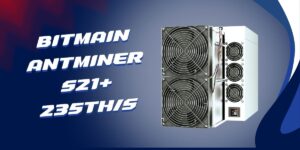
Product Highlight Outline: Bitmain Antminer S21+ 235 TH/s | Hosted or Shipped
- Overview
The Bitmain Antminer S21+ (≈235 TH/s, 3800 W, 16.17 J/TH) delivers top-tier efficiency for Australian miners. Available via vendors like Mining Store Australia with both hosted and shipped options. - Key Features
- Air-cooled: Works well in Australian environments.
- Smart hashrate control: Firmware adjusts for ±10% variation.
- 24/7 durability: Built for high temps and continuous operation.
- Local stock: Faster delivery and lower import costs.
- Hosted vs Shipped
- Hosted: Hassle-free setup, steady uptime, but lower margins due to fees.
- Shipped: Full control and profit potential if you have cheap power and space.
Choose based on experience, infrastructure, and risk tolerance.
- Pricing
Approx. A$8,999 (incl. GST) — confirm warranty, stock, and delivery before purchase. - Warranty & Support
- 12-month Bitmain warranty; no-refund policy is typical.
- Reputable vendors offer 24/7 support and spare parts access.
- Why Mining Store (Example Vendor)
- Trusted by 1000+ miners.
- Fast local delivery and consulting for scaling.
- Financing and bulk discounts available.
- Verdict
A strong choice for Australian miners seeking high efficiency, reliability, and ROI potential. Early purchase recommended due to limited stock and rising demand.
Conclusion: Maximising Bitmain Antminer S21+ Profitability for Australian Miners
Profitability in Australian Bitcoin mining with the Antminer S21+ hinges on a blend of hardware efficiency, electricity cost, cooling and infrastructure, network difficulty/BTC price, and operational discipline. The S21+ suits Australian conditions well: its high hashrate, improved efficiency, and robust design create margin headroom in higher electricity-cost jurisdictions. Yet owning the miner is only half the battle—how you deploy, manage, and maintain it will dictate whether you break even, earn modest profits, or achieve strong returns. Selecting the right power tariff, ensuring optimal cooling, choosing an appropriate mining pool, monitoring firmware/uptime, and managing risk (price, regulation, infrastructure) are all critical.
From a purchasing standpoint, sourcing the S21+ via a reputable Australian supplier such as Mining Store (or an equivalent) is advisable—local availability, Australian support, warranty clarity, and streamlined logistics reduce friction and startup delays. In short, if you secure a competitive commercial/industrial electricity rate, operate in a cool, well-ventilated location, maintain diligent monitoring and maintenance, and treat mining as a serious operation, the S21+ is a highly viable investment. With careful planning and execution you can build an Australian mining setup that delivers sustained profitability so research thoroughly, model conservatively, and stay flexible as electricity prices, difficulty, and regulations evolve.